← The Global Intelligence Brief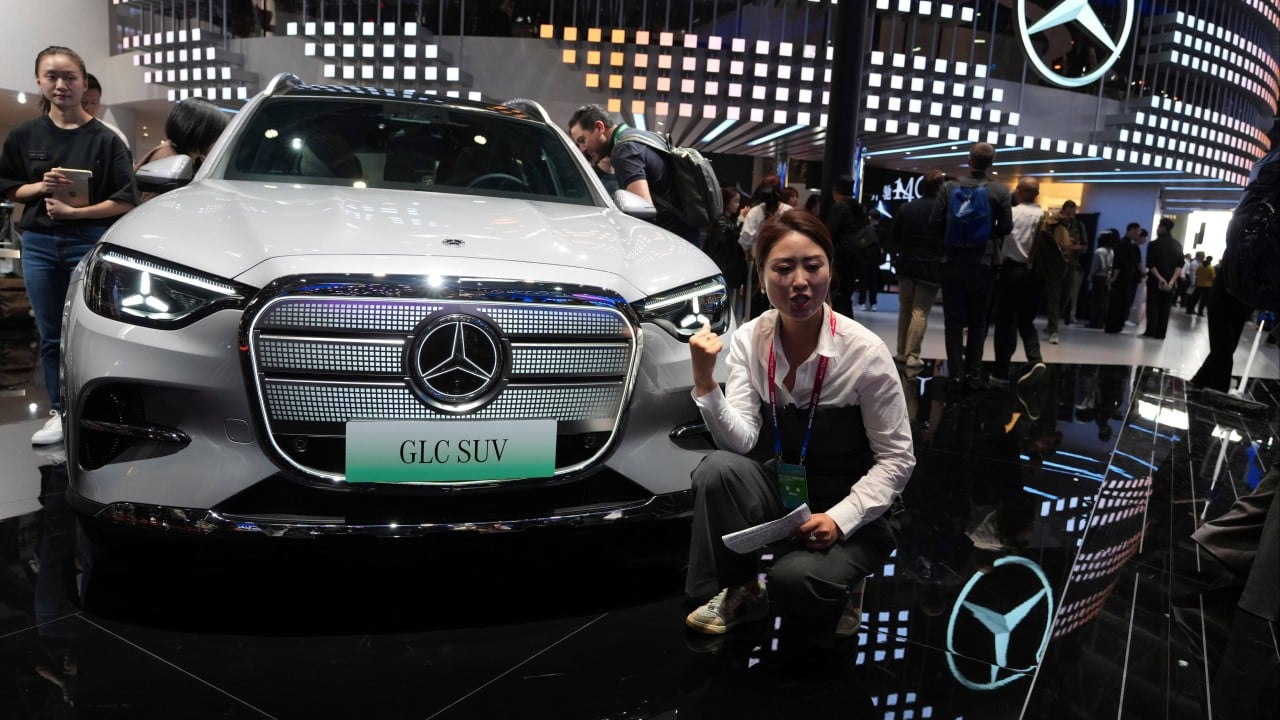

 3 sources
Morning Edition · Wednesday, July 22, 2026Published at 1:31 AM EDT · New York
Foreign Carmakers Lose More Ground in China as EV Powerhouses Erode the Luxury Segment
Mercedes-Benz and Land Rover saw sales fall further last month as wealthy Chinese buyers shift away from expensive petrol vehicles toward domestic electric brands.
International luxury car brands lost further ground in China last month, the South China Morning Post reported, as affluent consumers continued to move away from expensive petrol-powered models made by Mercedes-Benz, Land Rover and their peers. The luxury tier had been the last part of the market that foreign automakers still held, in a country where domestic electric-vehicle (EV) makers already dominate the mass segment.
The shift is part of a broader Chinese industrial strategy. The country is pushing to make electric trucks at least 40 percent of new heavy-goods vehicle sales by 2030, the Post reported separately, a target that would put at least 1.6 million electric heavy vehicles on the road and further extend China's lead in electrified transport.
The Financial Times, examining what it called a contest of neo-mercantilists, argued that China's high degree of self-sufficiency reduces its vulnerability to economic coercion by others. A domestic auto industry that can supply its own market, and increasingly export the surplus, is one expression of that insulation.
For foreign manufacturers, the erosion of the premium segment removes a source of profit that had offset weakness elsewhere in China. The same competitiveness that captures the home market drives an export push, sending Chinese vehicles into Europe and the Global South and increasing the trade friction that tariffs on both sides are meant to address.
Veracity: Corroborated
85/100- If true, who benefits
Chinese domestic electric-vehicle makers capturing the premium tier at home, while German and British automakers lose the China margins that subsidized their global profit.
- The nuance
The sharp sales declines are well documented, but the framing that China is deliberately exporting deflation understates that the shift is also driven by weak Chinese luxury demand and faster domestic EV technology, not strategy alone.
An open-source-intelligence read of how likely this story is true with its real nuance, not a judgment of any outlet. It assesses the claim, weighing independent and adversarial reporting. How we label confidence.
What this means
The loss of the luxury segment directly reduces the margins of German and British automakers, because premium sales in China carried a disproportionate share of their global profit, and there is no comparably large market to replace it. As Chinese EV capacity outruns domestic demand, the surplus flows abroad as cheap exports, pressuring rival automakers' pricing and adding to the deflation China is exporting to trading partners.
What to watch
Synthesized from: South China Morning Post · Financial Times · South China Morning Post
Townsquare
Start a discussion in Townsquare.
More from this edition
- Trump Imposes 50% Tariffs on About $20 Billion of Canadian Goods, Reviving a 1930 Law
- Yen Falls Past 163 Per Dollar to Its Weakest Since 1986 as Chip Rally Lifts Risk Assets
- Houthis Declare Naval Blockade of Saudi Arabia and Say They Struck Two Oil Tankers Near Bab el-Mandeb
- Trump Sets Generic-Drug Tariffs Rising to 100 Percent in 2028 and 200 Percent a Year Later
- Iran Fires Missiles and Drones at Jordan as US-Iran Ceasefire Talks Collapse
- Bitcoin Holds Near $66,300 as AI-Driven Risk Appetite Steadies Crypto
- US Plans Civilian Nuclear Pact With Saudi Arabia That Omits Enrichment Safeguards
Comments
0No comments yet.