← The Global Intelligence Brief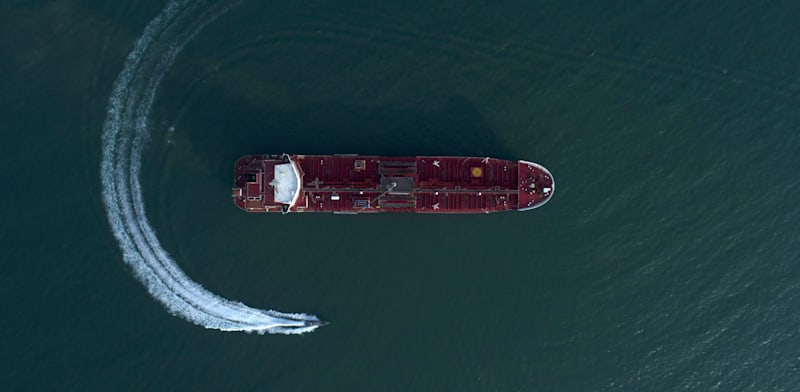


 4 sources
Morning Edition · Thursday, August 20, 2026Published at 1:10 AM EDT · New York
United States Military Runs a Nightly Convoy Corridor Through Hormuz Carrying About 10 Million Barrels a Day
Gulf exporters are bidding up available tankers to secure their own fleets, with only three vessels crossing the strait last Sunday against roughly 130 a day before the war.
The United States military has operated an undisclosed shipping corridor through the Strait of Hormuz for several weeks, moving roughly 10 million barrels of oil a day out of the Gulf through a southern channel along the Omani coast. Globes summarized the reporting, which originated with Axios and which Xinhua also carried. Between 15 and 20 tankers move each night in coordinated inbound and outbound convoys, scheduled by a task force working with Gulf partners. That volume is about half of pre-war exports.
Publicly tracked traffic shows a different picture. Three ships crossed the strait on Sunday against a five-day average of 12, and about 130 vessels crossed daily before the conflict began in February.
Exporters are responding by buying control of their own logistics. The Financial Times reported that oil-producing states seeking their own fleets are driving tanker prices higher, with the sharpest increases in vessels available immediately.
Importers are pursuing a diplomatic response. Japan's foreign minister and his Saudi counterpart agreed in Riyadh that passage through Hormuz must be safe and must not carry additional cost, The Japan Times reported. Brent crude held near $92 a barrel.
Part of a tracked trend
Hormuz Chokepoint Repricing
Recurring Gulf conflict forces energy exporters and importers to build costly workarounds around the Strait of Hormuz, permanently raising the risk premium embedded in Gulf trade and infrastructure.
Veracity: Plausible
54/100- If true, who benefits
The United States government gains a narrative of restored control over the Strait of Hormuz, tanker owners gain scarcity pricing, and Gulf producers gain a claim that their exports still move even as public tracking shows almost none.
- The nuance
The corridor rests on two unnamed United States officials speaking to Axios, with Xinhua, Globes and Israeli outlets recirculating that single account rather than confirming it independently, and the 10 million barrel figure sits against commercial tracking data showing daily transits in the low single digits, a gap that vessels switching off their transponders could partly but not obviously fully explain.
An open-source-intelligence read of how likely this story is true with its real nuance, not a judgment of any outlet. It assesses the claim, weighing independent and adversarial reporting. How we label confidence.
What this means
When a navy schedules commercial convoys, the cost of moving oil stops being set by freight markets and starts being set by military allocation. Tanker owners gain from scarcity pricing and Gulf producers pay for it, either through freight rates or through buying ships outright. Asian importers, led by Japan, China and India, ultimately bear the added cost. The corridor also turns a market function into a political one. Access to the convoy schedule now depends on a country's relationship with Washington, the exact dependence Gulf states have spent years trying to reduce.
Synthesized from: Globes (Hebrew) · Financial Times · Japan Times · Xinhua
Townsquare
Start a discussion in Townsquare.
More from this edition
- Treasury Doubles Long-Bond Buybacks Days After Federal Debt Passes $40 Trillion
- Bitcoin Tops $69,000 and Ether Gains 18% After the Treasury Enlarges Its Bond Buybacks
- United Arab Emirates Suspends All Trade With Iran as Trump Threatens Countries That Keep Dealing With Tehran
- Japan's Exports Rise 23.2% on Chip Equipment and Cars, but Volumes Grow Only 5.2%
- Israel's Growth Data Shows a National Economy Leaning on a Single Chip Company
- Russian Missiles and Drones Strike Kyiv as Ukraine Sends 250 Drones Toward the Moscow Region
- India's Market Regulator Prepares Trading Rule Changes to Reverse Record Foreign Selling
Comments
0No comments yet.