← The Global Intelligence Brief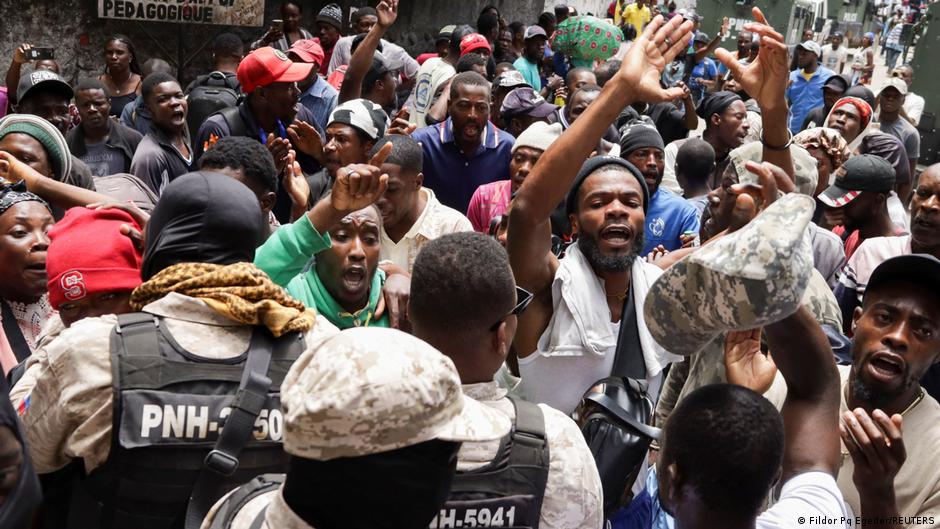


 3 sources
Morning Edition · Saturday, August 29, 2026Published at 1:10 AM EDT · New York
Nearly 200,000 People Have Been Forcibly Returned to Haiti This Year, the United Nations Says
The figure was presented to an emergency Security Council session called after gangs killed 47 people and abducted more than 50 near Port-au-Prince.
A United Nations official told an emergency meeting of the Security Council on Friday that nearly 200,000 people have been forcibly returned to Haiti in the first eight months of 2026, at least 20,000 more than in the same period last year, Deutsche Welle reported. Most returns come from the Dominican Republic, with a growing number from the United States, according to Reuters.
The session was called after an attack on Kenscoff, a hillside community near Port-au-Prince, in which gangs killed 47 people, abducted more than 50 and displaced more than 2,600. Houses were set on fire and people who fled into a church were attacked there. Diplomats at the meeting argued that the killings show the need to accelerate deployment of the United Nations-backed multinational force mandated to support the Haitian police.
The attack came days after Haiti received its first United States deportation flight since the administration won a legal case ending temporary protected status for roughly 350,000 Haitians. United Press International reported that a further 57 people were deported on Friday.
Veracity: Corroborated
90/100- If true, who benefits
Advocates of faster deployment of the multinational security force gain their strongest argument, and Dominican and American authorities carrying out the returns face the reputational cost that the United Nations count assigns to them.
- The nuance
The figure comes from a United Nations official's statement to the Security Council reported by Reuters and counts border returns from the Dominican Republic, which can include the same person more than once, so the American share is a small part of the total, and deportation flights had already resumed earlier in August after the protected status ruling rather than only in the past few days.
An open-source-intelligence read of how likely this story is true with its real nuance, not a judgment of any outlet. It assesses the claim, weighing independent and adversarial reporting. How we label confidence.
What this means
Haiti's economy depends heavily on remittances from the diaspora, and forced returns move people from earning positions abroad to a country with no capacity to employ them, cutting the transfers that fund household consumption. The Dominican Republic absorbs the spillover directly, through border security costs and through labor supply in its construction and agricultural sectors. For the wider Caribbean, a state that cannot control its territory raises shipping and insurance costs along nearby routes and complicates every regional security arrangement.
Synthesized from: Deutsche Welle · Reuters (via Internazionale) · United Press International
Townsquare
Start a discussion in Townsquare.
More from this edition
- Warsh Says Inflation Is Too High, and Traders Move to Price a September Rate Increase
- Trump Says the United States Has Taken Majority Control of 65 Billion Barrels of Venezuelan Oil
- Iran's President Says Foreign Trade Has Fallen About 35 Percent as Washington Targets Dubai
- Debate Over Forcing Investors to Hold Government Bonds Moves Into the Mainstream
- Nepal Doubles Its Estimate of the Missing After Himalayan Flood, With More Than 2,400 Unaccounted For
- China Removes Its Highest-Ranked General From the State Military Commission
- Attackers Strike Niamey's Airport and the Perimeter of Niger's Presidency
Comments
0No comments yet.