← The Global Intelligence Brief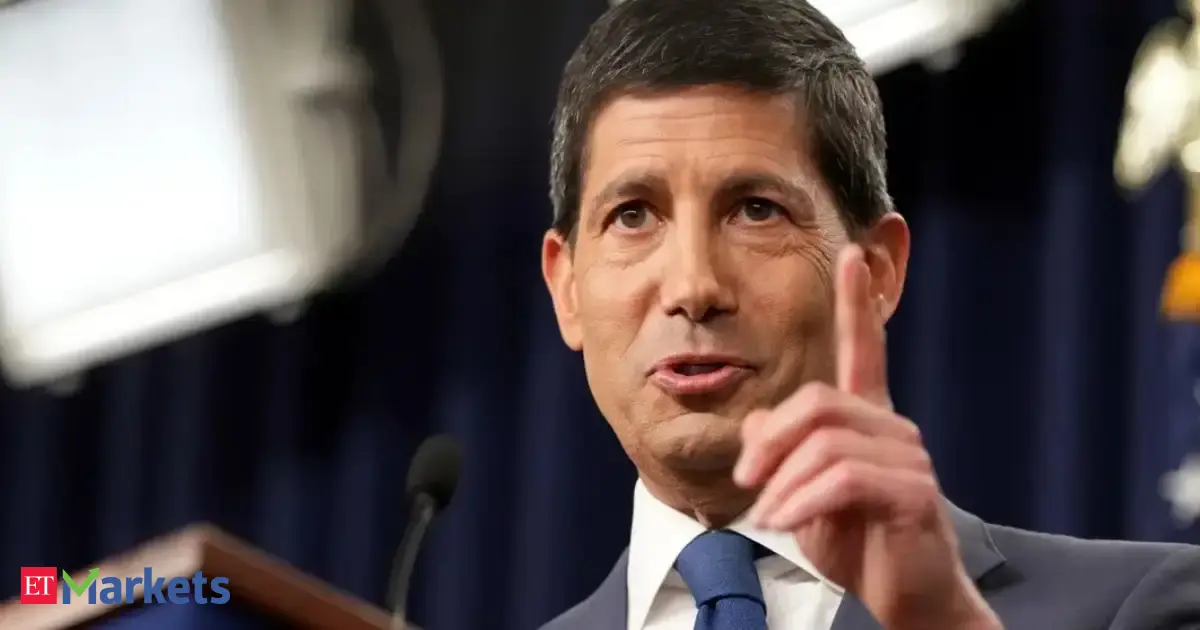

 4 sources
Morning Edition · Saturday, August 29, 2026Published at 1:10 AM EDT · New York
Warsh Says Inflation Is Too High, and Traders Move to Price a September Rate Increase
Odds of a Federal Reserve rate rise next month jumped to about 57 percent from roughly 35 percent a day earlier, and gold fell more than 3 percent.
Kevin Warsh, the chair of the Federal Reserve, used his first Jackson Hole keynote to put price stability ahead of every other objective. "We must be confident that underlying inflation is moving to our objective, clearly and at sufficient speed. Otherwise, we have work to do," he said, according to CNBC. Fortune reported that he pointed to 65 months of elevated inflation as the signal policymakers cannot ignore.
Traders responded immediately. The implied probability of a rate increase at the September meeting rose to 57.5 percent from about 35.5 percent the previous day on CME Group's FedWatch measure, The Motley Fool reported. Gold dropped more than 3 percent as those bets built, Economic Times reported, with Trading Economics putting the metal at about $4,454 an ounce. Silver had been trading near $70 an ounce before the speech.
Equity indexes barely moved. The S&P 500 closed 0.25 percent lower at 7,711.76, the Nasdaq Composite fell 0.52 percent to 26,402.42, and the Dow Jones Industrial Average was almost unchanged at 53,559.99, according to Yahoo Finance. All three finished the week higher. European shares rose as French stocks recovered, Economic Times said, even after France reported flat second-quarter output.
The consumer price index was up 3.4 percent in the twelve months to July, and the Federal Reserve's preferred gauge (the personal consumption expenditures price index) rose 3.7 percent, NPR reported. Investors remain unsure whether Warsh will follow his words with an actual rate increase, Economic Times said.
Part of a tracked trend
Renewed Fed Tightening Fears Rattle Global Markets
Over the next 3-6 months stronger US data revives expectations of Fed rate hikes, driving a firmer dollar, equity selloffs in export-heavy markets, and pressure on hard assets as the IMF warns of recurring economic shocks.
What this means
A Federal Reserve that raises rates into a slowing economy tightens the credit that sustained the current expansion, and the first losers are borrowers who financed long-lived assets at short-term rates: leveraged property owners, private credit funds and highly indebted governments refinancing at 4.67 percent on the ten-year note. Gold's fall shows the metal still trades against real yields in the short run, even while its longer monetary case rests on the same inflation Warsh is describing. A firmer dollar transmits the tightening abroad, raising the cost of dollar debt for emerging-market borrowers who did not choose it.
What to watch
- The August employment report on September 4. Payrolls near the 80,000 forecast with unemployment at 4.2 percent would let Warsh argue the labor market can absorb a rate increase, while a sharp drop would force him to choose between his inflation language and rising joblessness.
- Whether the two-year Treasury yield, near 4.24 percent late in the week, climbs toward the level implied by an actual hike. That is the clearest market measure of whether investors believe Warsh will act rather than talk.
- Gold's behavior if a hike is delivered. A rebound despite higher policy rates would show buyers are pricing a central bank that cannot get inflation back down, not one that will.
Observations to monitor, not financial advice.
Synthesized from: Economic Times · Economic Times (Commodities) · Economic Times (Global Markets) · CNBC
Townsquare
Start a discussion in Townsquare.
More from this edition
- Trump Says the United States Has Taken Majority Control of 65 Billion Barrels of Venezuelan Oil
- Iran's President Says Foreign Trade Has Fallen About 35 Percent as Washington Targets Dubai
- Debate Over Forcing Investors to Hold Government Bonds Moves Into the Mainstream
- Nepal Doubles Its Estimate of the Missing After Himalayan Flood, With More Than 2,400 Unaccounted For
- China Removes Its Highest-Ranked General From the State Military Commission
- Attackers Strike Niamey's Airport and the Perimeter of Niger's Presidency
- Decade-Old Bitcoin Wallets Moved $40 Million, but Dormant-Coin Activity Is at Its Lowest Since 2022
Comments
1Aug 29, 5:10 AM · edited
Because this is Warsh's inaugural Jackson Hole keynote, a September hike would mark his first rate action as chair and give markets a strong prior for how aggressively he will weight inflation over employment.