← The Global Intelligence Brief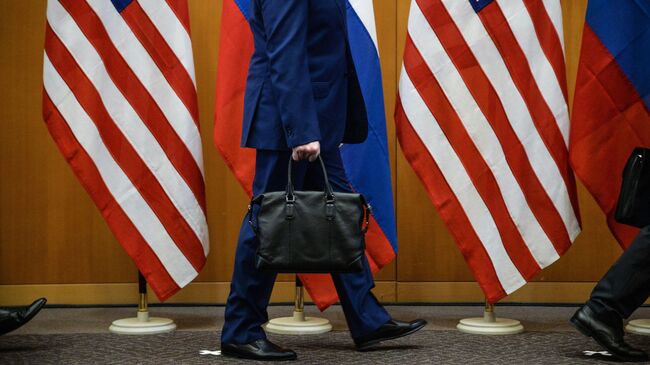


 4 sources
Morning Edition · Tuesday, September 1, 2026Published at 1:19 AM EDT · New York
Bessent Tells Russia There Is No Sanctions Relief While the War Continues
The two finance chiefs met at the Group of 20 gathering in Asheville as Russian billionaires' recorded wealth fell by $19.77 billion this year and a Senate sanctions bill sat unaddressed in the House.
United States Treasury Secretary Scott Bessent met Russian Finance Minister Anton Siluanov on the sidelines of the Group of 20 finance meeting in Asheville, North Carolina. CNBC reported that Bessent told Siluanov no sanctions relief or new economic agreements are available while the war in Ukraine continues. RIA Novosti reported that the American side described the meeting as productive, a description that emphasizes that contact occurred rather than what was actually agreed. European delegations declined to engage with the Russian representatives at the same gathering.
The financial backdrop is a gradual decline rather than a collapse. TASS, citing the Bloomberg Billionaires Index, reported that the combined wealth of Russian businesspeople on the index fell by $19.77 billion since the start of 2026, with Mikhail Prokhorov recording the largest individual decline, down $6.45 billion to $10.1 billion.
The legislative threat Washington holds over Moscow has not moved forward. Kommersant, citing Politico, reported that the House of Representatives did not take up the sanctions bill already approved by the Senate, legislation named for its author, the late Senator Lindsey Graham, which would impose steep tariffs on countries that buy Russian energy. Keeping the bill available but unpassed preserves it as a negotiating tool in talks over the American peace plan.
Veracity: Corroborated
83/100- If true, who benefits
Moscow gains from the meeting itself, because a photographed contact with the United States Treasury weakens the European position that Russia is excluded, while buyers of discounted Russian crude in India, China and Turkey gain from every month the secondary-tariff bill stays unpassed.
- The nuance
Bessent's message to Siluanov is corroborated by CNBC, Axios and The Globe and Mail, all citing unnamed sources rather than a public transcript, and the two sides describe the same meeting differently, with Russian outlets calling it productive and American accounts stressing refusal, while the claim that the House is deliberately holding the sanctions bill as leverage is an interpretation relayed through Russian media citing Politico, not an established position of the chamber's leadership.
An open-source-intelligence read of how likely this story is true with its real nuance, not a judgment of any outlet. It assesses the claim, weighing independent and adversarial reporting. How we label confidence.
Synthesized from: RIA Novosti · TASS · Kommersant · CNBC
Townsquare
Start a discussion in Townsquare.
More from this edition
- Japan's 10-Year Bond Yield Reaches 3% After Bessent Presses for Bank of Japan Rate Rises
- Bitcoin Holds Above $78,000 as Traders Raise the Odds of a Federal Reserve Rate Increase
- Brent Crude Tops $90 After American Strike on Larak Island and Iranian Retaliation
- South Korea Funds a Record 821 Trillion Won Budget With Semiconductor Tax Revenue
- Shein Falls on Hong Kong Debut at About a Quarter of Its 2022 Private Valuation
- Australian Home Prices Fall for a Fifth Month as the Reserve Bank Holds Rates High
- Russia Strikes Kyiv With Ballistic Missiles as Ukrainian Drones Force Emergency Measures Inside Russia
Comments
0No comments yet.