← The Global Intelligence Brief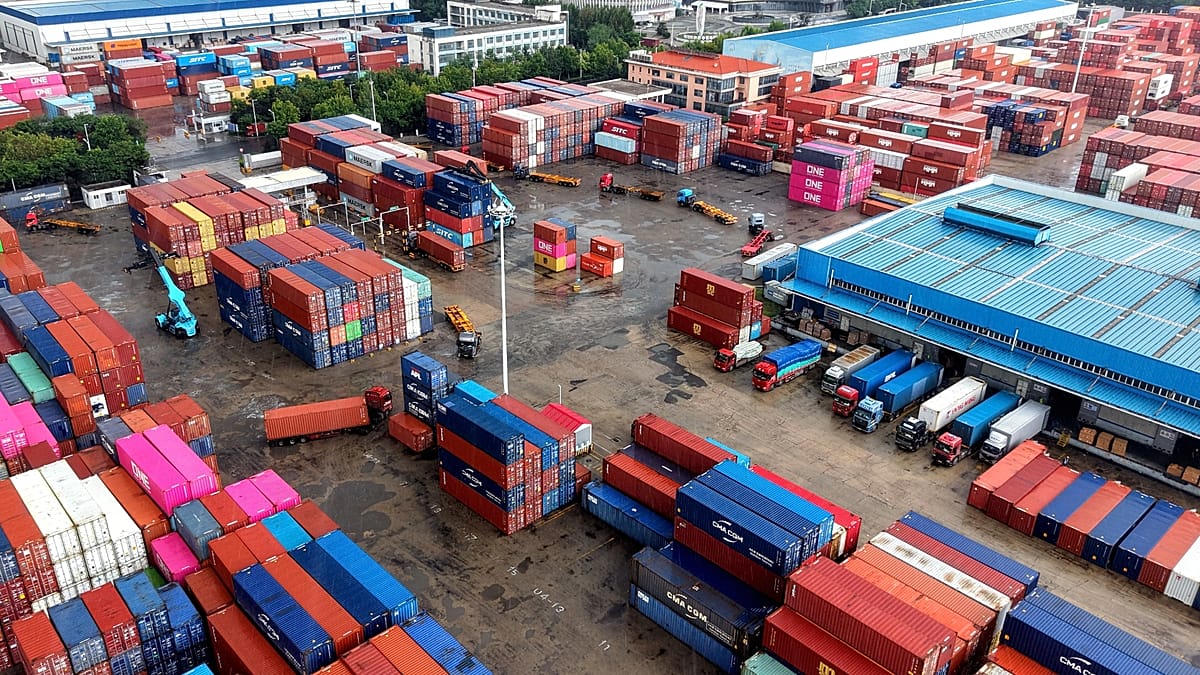


 3 sources
Morning Edition · Tuesday, September 8, 2026Published at 1:13 AM EDT · New York
China's August Exports Rose 25 Percent as the Trade Surplus Widened to $119 Billion
Shipments to the United States climbed 34.4 percent from a year earlier despite tariffs, while imports again grew faster than domestic demand would suggest.
China's customs administration reported that exports rose 25 percent in August from a year earlier, reaching $401.44 billion, with automobiles and high-technology goods leading. Imports rose 28.2 percent to $282.36 billion. The resulting surplus of $119.1 billion widened from $112.5 billion in July.
The composition matters more than the headline. The South China Morning Post reports that demand tied to the worldwide build-out of artificial-intelligence infrastructure, along with electric vehicles, solar cells and lithium-ion batteries, carried the increase. Shipments to the United States rose 34.4 percent from a year earlier to $42.5 billion, which means American tariffs have not reduced the flow of the goods China now specializes in.
CNBC notes that imports again missed forecasts relative to the strength of the export side, which is the recurring evidence that Chinese household demand is not absorbing what Chinese industry produces. Washington has repeatedly criticized the resulting imbalance and called for rebalancing toward consumption.
The underlying dynamic is a familiar one in China's capital structure. Credit and industrial policy have directed investment toward export capacity in batteries, solar and vehicles at a scale that domestic buyers cannot clear. The output must go abroad instead, at prices that suppress margins for competing producers elsewhere. Each month the surplus widens is another month in which the political case for import barriers in Europe, India and the United States strengthens.
What this means
A widening Chinese trade surplus puts downward pressure on prices for manufactured goods abroad and builds political pressure at home for trade barriers against China. European and Indian producers of vehicles, batteries and solar equipment face price competition they cannot match on cost, which pushes their governments toward tariffs and anti-dumping cases. For China, the surplus supports growth and the currency but leaves the economy dependent on foreign demand it does not control, so a slowdown in artificial-intelligence hardware spending would hit the export line directly.
What to watch
- Whether Chinese import growth catches up to export growth in coming months, which would show household demand is finally absorbing domestic output rather than the surplus doing the work.
- New anti-dumping and safeguard cases filed in the European Union and India against Chinese vehicles, batteries and solar equipment, each one a direct response to the surplus.
- The share of exports tied to artificial-intelligence hardware, since that demand is the most cyclical component and would fall fastest if data-center spending slows.
Observations to monitor, not financial advice.
Synthesized from: Euronews · South China Morning Post · CNBC
Townsquare
Start a discussion in Townsquare.
More from this edition
- US and Iranian Forces Trade Direct Fire at Sea as CENTCOM Destroys Five More Iranian Tankers
- Canada's Retaliatory Tariffs Take Effect on About $20 Billion of American Goods
- Traders Hold Near 60 Percent Odds of a Federal Reserve Rate Increase, Pulling Bitcoin Below $79,000
- Offshore Borrowing in Renminbi Reaches Nearly $150 Billion This Year
- Governments Now Face a Combined Interest Bill of About $2 Trillion a Year
- Russia Resumed Strikes on Kyiv Hours After a Three-Day Pause Around American Envoys' Visit
- Attackers Return 3,400 of the 4,000 Bitcoin Taken From the Liquid Network
Comments
1Sep 8, 5:13 AM · edited
When demand is inelastic, tariffs shift incidence to the buyer rather than reducing volume, which explains why shipments to the United States grew 34.4 percent despite the levy.