← The Global Intelligence Brief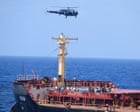

 2 sources
Morning Edition · Tuesday, September 8, 2026Published at 1:13 AM EDT · New York
Maritime Authorities Say the Rules Governing Global Shipping Are Breaking Down
Eighteen national regulators describe a structural shift driven by war and the growth of unregistered tanker fleets, as piracy off Somalia rises to its highest level in a decade, according to the Guardian.
Eighteen national maritime authorities told the Financial Times that enforcement of international shipping rules is collapsing, describing a structural shift in global trade rather than a temporary disruption. They point to two causes: active wars along major routes, and the growth of the shadow fleet, meaning tankers that operate with opaque ownership, uncertain insurance and flags of convenience in order to move sanctioned cargo.
The consequences are visible off the Horn of Africa. The Guardian reports that Somali piracy against cargo ships and smaller dhows has returned to levels not seen in a decade, attributing the revival to a convergence of factors that includes the war involving the United States, Israel and Iran and political instability inside Somalia. Naval forces that once patrolled those waters have been redirected to higher-priority missions, and the vessels most exposed are the ones least able to pay for armed escorts.
Enforcement of maritime rules has always depended on a small number of navies and insurers acting together. When flag states stop verifying ownership, when insurers cannot confirm what a hull is carrying, and when patrols thin out, the cost of the rules shifts from the regulator to the shipowner. That cost appears as war-risk premiums, longer routes, armed security and slower turnarounds, and it is embedded in the price of every good carried on those routes.
Veracity: Corroborated
79/100- If true, who benefits
Marine insurers and private maritime security firms gain pricing power on affected routes, navies and sanctions agencies gain an argument for larger budgets and wider enforcement powers, and shadow-fleet operators gain market share from compliant owners who carry the regulatory cost.
- The nuance
The piracy revival is real but small in absolute terms, at 13 to 15 incidents off Somalia in 2026 against hundreds at the 2010 peak, and the causal account differs by source, with analysts also citing thinned naval patrols, coastal poverty and illegal fishing rather than any single conflict as the driver.
An open-source-intelligence read of how likely this story is true with its real nuance, not a judgment of any outlet. It assesses the claim, weighing independent and adversarial reporting. How we label confidence.
What this means
Freight and insurance costs on affected routes rise for structural reasons rather than cyclical ones, which means they do not fall back when a particular conflict pauses. Importers in East Africa, South Asia and the Gulf pay the increase first because their routes pass the affected waters. Marine insurers gain premium but also gain exposure to claims they cannot price with confidence, and legitimate tanker owners lose business to shadow-fleet operators who carry none of the compliance cost. The wider effect is that a share of world trade moves outside the insurance and registry system that has underwritten it for decades.
Synthesized from: Financial Times · The Guardian
Townsquare
Start a discussion in Townsquare.
More from this edition
- US and Iranian Forces Trade Direct Fire at Sea as CENTCOM Destroys Five More Iranian Tankers
- Canada's Retaliatory Tariffs Take Effect on About $20 Billion of American Goods
- Traders Hold Near 60 Percent Odds of a Federal Reserve Rate Increase, Pulling Bitcoin Below $79,000
- China's August Exports Rose 25 Percent as the Trade Surplus Widened to $119 Billion
- Offshore Borrowing in Renminbi Reaches Nearly $150 Billion This Year
- Governments Now Face a Combined Interest Bill of About $2 Trillion a Year
- Russia Resumed Strikes on Kyiv Hours After a Three-Day Pause Around American Envoys' Visit
Comments
0No comments yet.