← The Global Intelligence Brief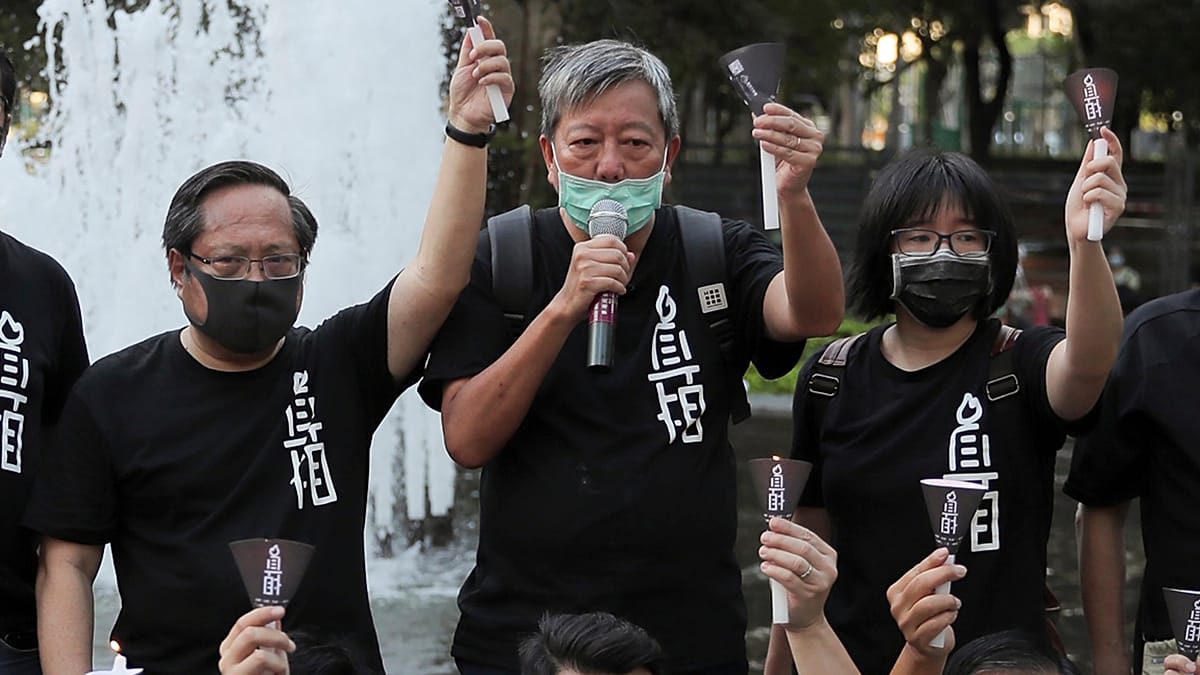


 3 sources
Morning Edition · Friday, September 11, 2026Published at 1:17 AM EDT · New York
Hong Kong Jails Three Tiananmen Vigil Organisers for Five to Seven Years
The sentences under the national security law arrived in the same week a local restaurant group cleared its listing hearing for an offering of up to HK$400 million.
A Hong Kong court sentenced three organisers of the city's annual Tiananmen vigil to between five and seven years in prison. Euronews reported the sentences were handed down under the national security law and that the convictions drew condemnation from the United Nations, human rights groups and foreign governments. The Japan Times reported that Lee Cheuk-yan, Chow Hang-tung and Albert Ho have been in custody since they were charged in 2021, meaning roughly five years already served before sentencing.
Hong Kong's government has consistently said the national security law restored stability after the 2019 protests and that prosecutions follow evidence rather than politics. Critics, including the United Nations human rights office, say the law criminalises ordinary political expression.
Hong Kong's role as a financial market keeps functioning independently of these prosecutions. The South China Morning Post reported that Yuen Kee Food Group, owner of the Yuen Kee Dumpling brand, cleared its listing hearing with Hong Kong Exchanges and Clearing and aims to raise between HK$300 million and HK$400 million, roughly $38 million to $51 million. The exchange has kept attracting listings from the mainland and from Central Asia.
That combination is the point. Hong Kong is demonstrating that a jurisdiction can enforce political control and operate a functioning international listing venue simultaneously. Whether international capital eventually prices in the risk of that political control is a separate question from whether it keeps using the exchange.
Part of a tracked trend
China Anchors a Parallel Bloc
China keeps deepening ties with neighbors and Global South states through high-level diplomacy, assembling a bloc that runs parallel to Western-led alliances and hardens a multipolar order.
Veracity: Corroborated
92/100- If true, who benefits
Hong Kong and mainland authorities, who demonstrate that political prosecution and an operating listing venue coexist, and foreign governments that gain a fresh basis for criticism without bearing commercial cost.
- The nuance
The sentences are confirmed by CNN and Bloomberg, though the range is slightly understated: Lee Cheuk-yan received seven years, Chow Hang-tung seven years and three months, and Albert Ho five years and two months after pleading guilty, and the article's juxtaposition with a small initial public offering is an interpretive pairing rather than a demonstrated link between the two events.
An open-source-intelligence read of how likely this story is true with its real nuance, not a judgment of any outlet. It assesses the claim, weighing independent and adversarial reporting. How we label confidence.
What this means
Investors in Hong Kong-listed assets are effectively making a judgement that commercial contract enforcement and political prosecution stay separate from each other, and that judgement has held so far, which is why listings continue while the United Nations criticises the courts. The exposure sits with foreign firms and their staff in the city, whose legal risk depends on where authorities draw the line between political and commercial conduct. If a national security case ever touches a commercial dispute or a research firm's published work, the pricing of that separation changes quickly and affects the cost of stationing people and capital there.
Synthesized from: Euronews · The Japan Times · South China Morning Post
Townsquare
Start a discussion in Townsquare.
More from this edition
- Treasury's $6bn Buyback Fails to Stop Yields Rising Before Inflation Data
- Houthis Take Perim Island and All of Yemen's Red Sea Coast, With Brent Near $108
- Bitcoin Falls Below $77,000 as Traders Position for a Federal Reserve Hike
- Iran and Gulf States Meet to Turn a Temporary Hormuz Arrangement Into a Reopening
- Dubai Airports Plans Underground Fuel Tanks to Withstand Missile Strikes
- BRICS Leaders Gather in New Delhi as Road Closures and Evictions Anger Residents
- Drone Attack Sets Fire to Ozon Logistics Centre in Saratov
- Manila Says Chinese Forces Fired Flares at a Coast Guard Aircraft Over the Spratlys
Comments
0No comments yet.