← The Global Intelligence Brief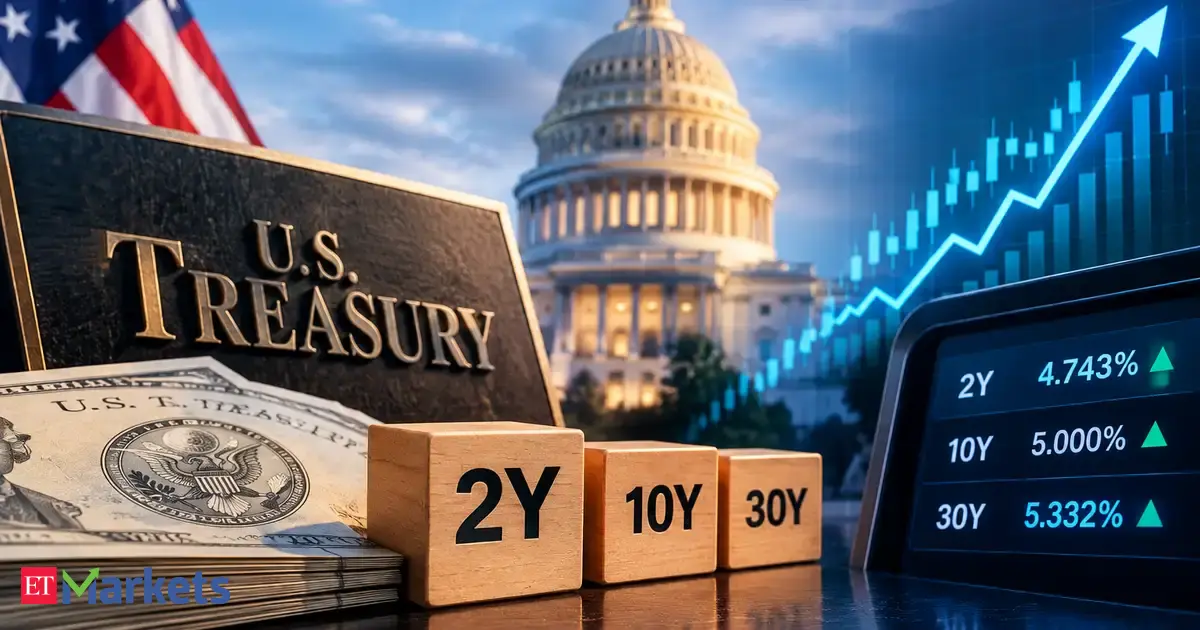
 3 sources
Morning Edition · Saturday, September 19, 2026Published at 1:10 AM EDT · New York
Two-Year Treasury Yield Reaches 4.74% as Warsh Fed Signals Another Increase
Sixteen of eighteen Federal Reserve officials now project at least one more quarter-point increase this year, and short-dated debt is repricing faster than equities.
Bond investors spent Friday adjusting to the Federal Reserve's decision on Wednesday. The two-year Treasury yield rose to 4.744% after policymakers raised the federal funds target range by a quarter point to 3.75% to 4.00% and published projections showing that 16 of 18 officials expect at least one more increase before year end. Four expect two.
This marks the first shift in the tightening cycle since 2023, under Kevin Warsh, the Federal Reserve chair who has argued the central bank moved too slowly against inflation over the past decade. The decision was unanimous. More significant to traders was the removal of expected rate cuts from the 2027 projections, which raises the entire forward path of dollar funding costs.
Hard assets did not move the way conventional theory predicts after a hawkish surprise. Gold reached a one-week high and was headed for a weekly gain, with dealer reports putting spot bullion back near $4,400 an ounce and silver up about 3%. Bitcoin rose roughly 5% to above $80,000, its first time at that level since September 7, after the Commodity Futures Trading Commission sent digital-asset rules to the White House.
The pattern is instructive. Metals gained because falling crude oil prices reduced the inflation the Fed is trying to bring down. Bitcoin moved on a regulatory headline rather than on monetary conditions, which is how a liquidity-sensitive risk asset behaves, not how a monetary metal behaves. Equity investors now enter a week in which they must weigh both the rate path and artificial-intelligence capital spending.
Part of a tracked trend
Renewed Fed Tightening Fears Rattle Global Markets
Over the next 3-6 months stronger US data revives expectations of Fed rate hikes, driving a firmer dollar, equity selloffs in export-heavy markets, and pressure on hard assets as the IMF warns of recurring economic shocks.
What this means
A higher front end of the Treasury yield curve raises the discount rate applied to every long-duration cash flow and the funding cost of every leveraged position. That is why growth equities, emerging-market borrowers with dollar debt, and anyone rolling over short-term debt are affected first. Savers holding cash instruments benefit. The deeper point is that after years of credit expansion, the Fed is now trying to price money closer to what the real economy can support, and the assets built on cheap funding are the ones that must now reprice.
What to watch
- Whether the next round of US inflation and payroll data supports the two additional increases some officials project, since that will determine whether 4.74% on the two-year note marks a peak or an early stop on the way to a higher level.
- Whether gold holds its gains while short-term yields rise, which would suggest buyers are treating it as protection against policy error rather than as a bet on falling rates.
- Dollar funding stress in emerging markets, visible in central banks selling reserves to defend their currencies, as the clearest channel through which US monetary tightening spreads internationally.
Observations to monitor, not financial advice.
Synthesized from: Economic Times · Economic Times (Wall Street Week Ahead) · Economic Times (commodities)
Townsquare
Start a discussion in Townsquare.
More from this edition
- Brent Falls Toward $102 as Saudi Arabia Moves to Restore Its East-West Pipeline
- Yen Weakens Past 157 Per Dollar Even After the Bank of Japan Raises Rates to 1.25%
- Trump Signs Russia Sanctions Law Targeting the Shadow Tanker Fleet and Buyers of Russian Oil
- US and Chinese Ministers Meet in New York on Sunday to Prepare a Leaders' Summit
- Explosions Over Riyadh Bring the Yemen War to the Saudi Capital for the First Time Since July
- European Stocks Fall 1.1% as Volkswagen Flags €10 Billion of One-Off Charges
- Bolivia Ends Diesel Subsidies Hours After Congress Approves a $1.9 Billion IMF Programme
Comments
1Sep 19, 5:10 AM · edited
The dot plot median terminal rate is 4.25% given 12 of 18 officials expect exactly one more hike, placing the two year yield at 4.744% nearly 50 basis points above the median projection.