← The Global Intelligence Brief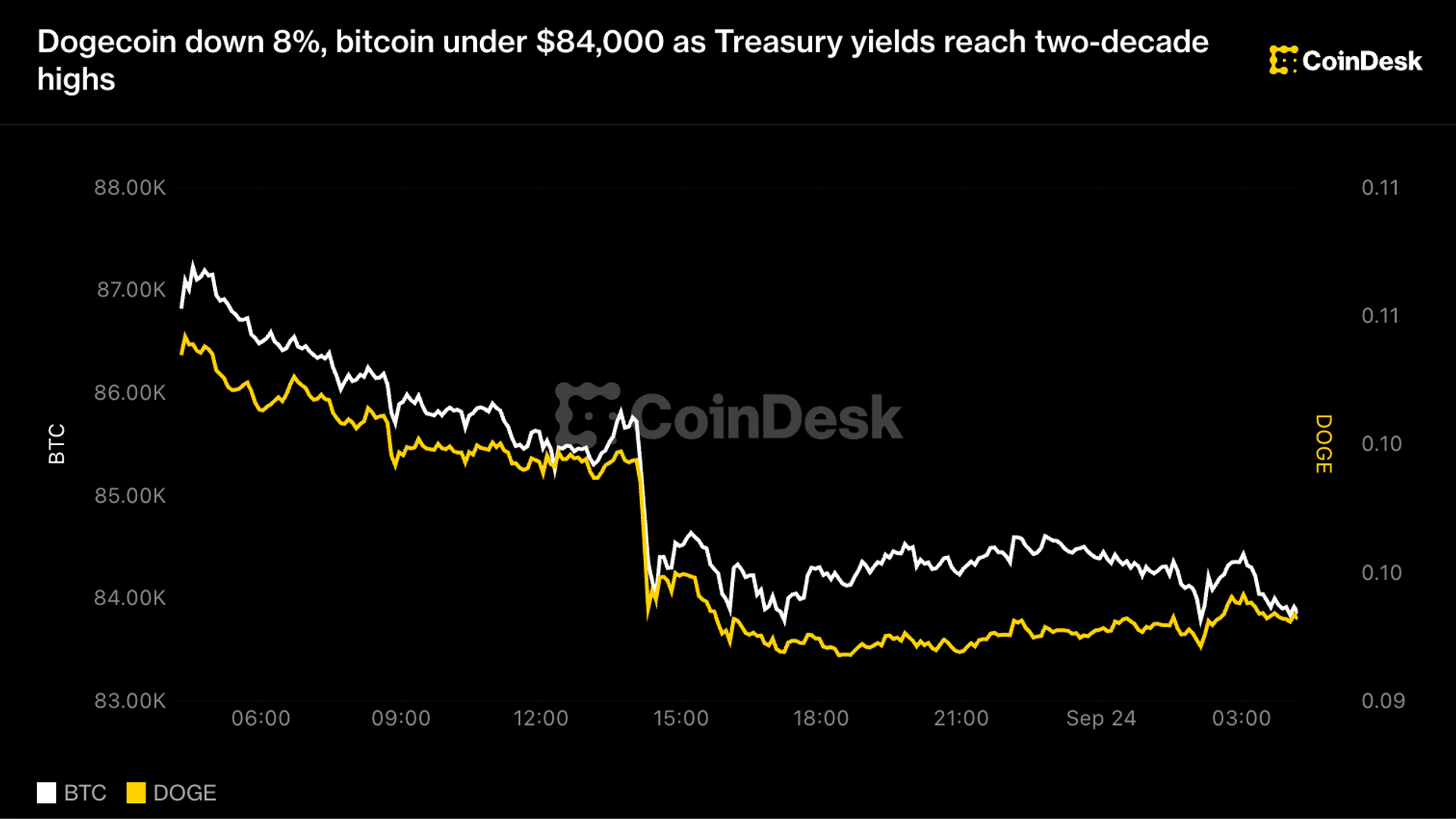


 3 sources
Morning Edition · Thursday, September 24, 2026Published at 1:14 AM EDT · New York
Bitcoin Falls Below $84,000 as Rising Yields Drain Liquidity From Digital Assets
Dogecoin led losses with an 8 percent decline, and the sell-off tracked equities and the bond market rather than the monetary metals.
Bitcoin traded below 84,000 dollars and Dogecoin fell 8 percent as United States Treasury yields reached their highest level since 2007. CoinDesk attributed the move to a rebound in oil, the strongest American business survey in five years and a poorly received five-year note sale, the same three inputs that lifted borrowing costs across the curve.
The direction of the move is the point. Bitcoin fell on a day when the risk-free rate rose and the dollar reached a two-month high, which is the behaviour of a liquidity-sensitive risk asset. Globes reported the same combination across markets, with futures in New York pointing lower on concern about further rate increases and tension with Iran. The Financial Times tied the broader repricing to strained public finances and higher energy costs.
Gold and silver also fell, by roughly 1.2 percent and 3.6 percent respectively, which complicates any simple contrast between the metals and the digital asset. The difference is in the mechanism. Bullion fell because the currency it is priced in strengthened. Bitcoin fell alongside high-beta equities and the most speculative tokens, with Dogecoin losing twice as much as the market leader, a pattern that appears when leveraged positions are reduced rather than when investors reassess an asset's monetary properties.
For an investor who bought the asset as insurance against monetary debasement, the sequence is awkward. Bitcoin's worst sessions this year have arrived during exactly the episodes, energy shocks, inflation surprises and geopolitical escalation, in which the debasement argument is loudest.
Part of a tracked trend
Bitcoin Trades as a Risk Asset, Not Digital Gold
At each geopolitical or inflationary stress point, bitcoin keeps trading with liquidity-sensitive risk assets rather than with monetary metals, so the digital-gold framing continues to fail exactly when investors most want it to hold.
What this means
When real yields rise, the marginal buyer of long-duration speculative assets steps back, and digital assets sit at the far end of that spectrum. Holders of leveraged crypto positions and the exchanges and treasury companies whose earnings depend on trading volume are the most exposed. The distinction matters for anyone who allocated to bitcoin as a hedge against currency debasement, because the asset is currently trading on dollar liquidity, which moves the opposite way from that thesis during a tightening scare.
What to watch
- Whether bitcoin and gold move in opposite directions during the next inflation release, which would separate the liquidity effect from the monetary-hedge argument.
- Flows into and out of spot bitcoin exchange-traded products, since sustained redemptions would show institutional allocators treating the asset as a risk position to be trimmed.
- The gap between Dogecoin's losses and bitcoin's, because a widening gap indicates forced deleveraging rather than a considered reassessment of the asset class.
Observations to monitor, not financial advice.
Synthesized from: CoinDesk · Globes (Hebrew) · Financial Times
Townsquare
Start a discussion in Townsquare.
More from this edition
- Treasury Yields Return to 2007 Levels as Traders Price a Fed Hike in October
- Brent Holds Above $100 and European Oil Majors Post Gains of Up to 87 Percent This Year
- Trump and Xi Open Washington Summit With Tariff Truce Extended Past Its November Expiry
- SoftBank Pays Its Highest Dollar Bond Yields to Fund a $10 Billion OpenAI Payment
- Emerging Market Borrowers Keep Selling Foreign-Currency Debt Through the Iran War
- India's National Stock Exchange Lists After a $2.4 Billion Offering That Retail Buyers Barely Covered
- Tokyo Used Apartment Prices Fall for the First Time in More Than Two Years
Comments
1Sep 24, 5:14 AM · edited
That gold and Bitcoin both declined on a day of strong inflation data indicates that rising real yields, not inflation per se, are the dominant force, undercutting the hedging rationale for both assets simultaneously.