← The Global Intelligence Brief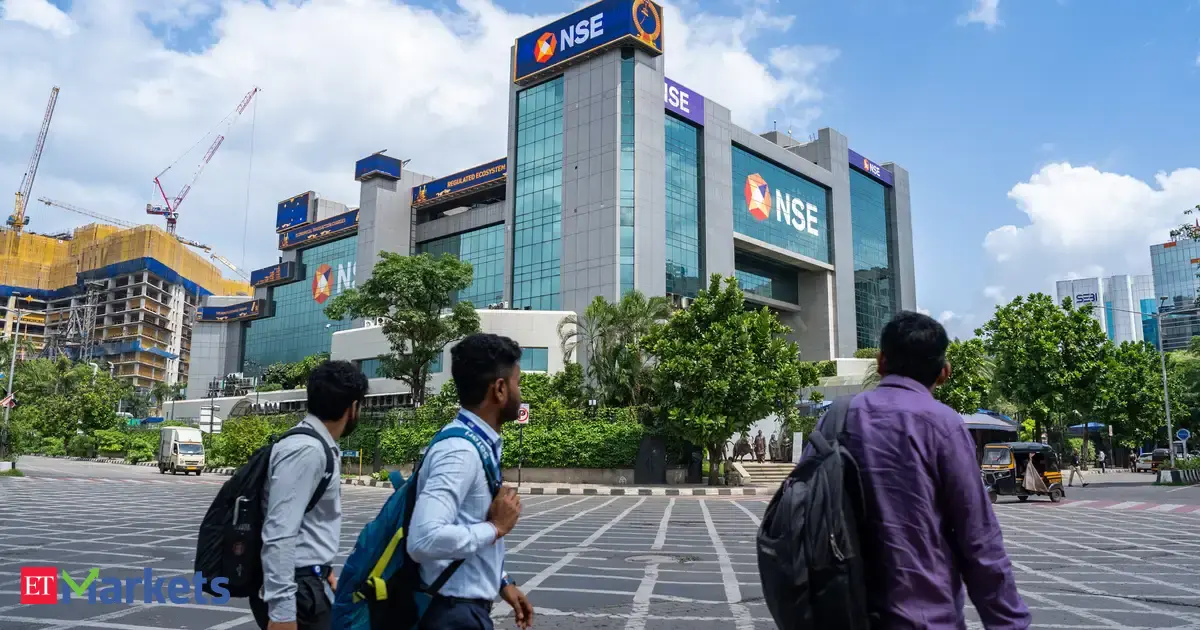


 3 sources
Morning Edition · Thursday, September 24, 2026UpdatedPublished at 7:35 AM EDT · New York
India's National Stock Exchange Lists After a $2.4 Billion Offering That Retail Buyers Barely Covered
Institutional demand took the book to 5.7 times subscription while individual investors bid only 1.39 times their reserved portion.
Updated at 7:35 AM EDT
NSE's shares have now actually traded: they listed at a slight premium and closed modestly higher, a lukewarm debut rather than the blowout some anticipated.
Shares in the National Stock Exchange of India began trading on Thursday after an initial public offering that raised about 2.4 billion dollars. The Economic Times described the debut as a test of investor faith in India's long-term growth, noting strong institutional interest and weaker retail participation, with concerns about the valuation. The debut itself was muted: shares opened at a 0.8 percent premium to the issue price and closed the session up 0.94 percent at 1,817 rupees, though the stock extended its intraday gain to as much as 3.13 percent, touching 1,865.40 rupees, before settling well off that high.
The subscription figures set out the split that preceded the listing. The offer was covered 5.7 times overall, driven by institutions and high-net-worth buyers, while retail investors bid 61.3 million shares against a reserved 44.1 million, a ratio of 1.39. At the top of the 1,700 to 1,785 rupee price band, the exchange was valued at roughly 46 billion dollars, a multiple of earnings that CNBC reported sits above the level applied to Nasdaq. The modest first-day gain suggests the market priced that valuation concern in rather than dismissing it.
The listing arrives during a dispute over the country's electoral machinery. India's opposition parties demanded the removal of the chief election commissioner after a newspaper investigation alleged that decisions behind a contested voter-roll revision may have been taken unlawfully, Dawn reported. BBC News Hindi reported that opposition leaders, including Uddhav Thackeray, Mamata Banerjee and Arvind Kejriwal, called for fresh elections in Maharashtra, West Bengal and Tamil Nadu, and that analysts described the reported disagreements inside the Election Commission of India as troubling for democratic practice. The commission has not accepted the allegations.
The two stories meet at one question. A stock exchange is a piece of national infrastructure, and its valuation embeds an assumption that Indian rules are applied predictably over decades. Foreign and domestic institutions paid a premium multiple on that assumption in the same week that the country's opposition challenged the integrity of a different institution, and the market's restrained response on debut day suggests investors are not treating that assumption as free of risk. Retail investors, who are closer to domestic politics, were the group that showed the least enthusiasm from the start.
Veracity: Corroborated
80/100- If true, who benefits
Institutional buyers and the selling shareholders of the National Stock Exchange gain from a premium valuation cleared largely by institutions, while India's opposition parties gain from tying an investigation of the Election Commission of India (ECI) to doubts about how predictably Indian institutions apply their own rules.
- The nuance
The electoral dispute is real and documented, with opposition figures demanding the removal of Chief Election Commissioner Gyanesh Kumar after an Indian Express investigation reported repeated formal objections by two of the three election commissioners, but the connection drawn between weak retail subscription and that dispute is the article's inference, and no evidence links the two.
An open-source-intelligence read of how likely this story is true with its real nuance, not a judgment of any outlet. It assesses the claim, weighing independent and adversarial reporting. How we label confidence.
What this means
The exchange's valuation depends on Indian trading volumes continuing to grow, which in turn depends on domestic household savings continuing to flow into equities. Institutions bought the growth story at a premium to global peers. Thin retail demand in the listing reduces the cushion of buyers below the offer price, so early price performance will rest on institutional support. The political dispute is not priced in the offer, but it affects the governance discount foreign allocators apply to Indian assets in general.
Synthesized from: Economic Times · Dawn · BBC News Hindi
Townsquare
Start a discussion in Townsquare.
More from this edition
- Treasury Yields Return to 2007 Levels as Traders Price a Fed Hike in October
- Brent Holds Above $100 and European Oil Majors Post Gains of Up to 87 Percent This Year
- Trump and Xi Open Washington Summit With Tariff Truce Extended Past Its November Expiry
- Bitcoin Falls Below $84,000 as Rising Yields Drain Liquidity From Digital Assets
- SoftBank Pays Its Highest Dollar Bond Yields to Fund a $10 Billion OpenAI Payment
- Emerging Market Borrowers Keep Selling Foreign-Currency Debt Through the Iran War
- Tokyo Used Apartment Prices Fall for the First Time in More Than Two Years
- Australia Says an OpenAI Agent Breached a Government Health Portal and the Company Waited Three Months to Report It
Comments
0No comments yet.