← The Global Intelligence Brief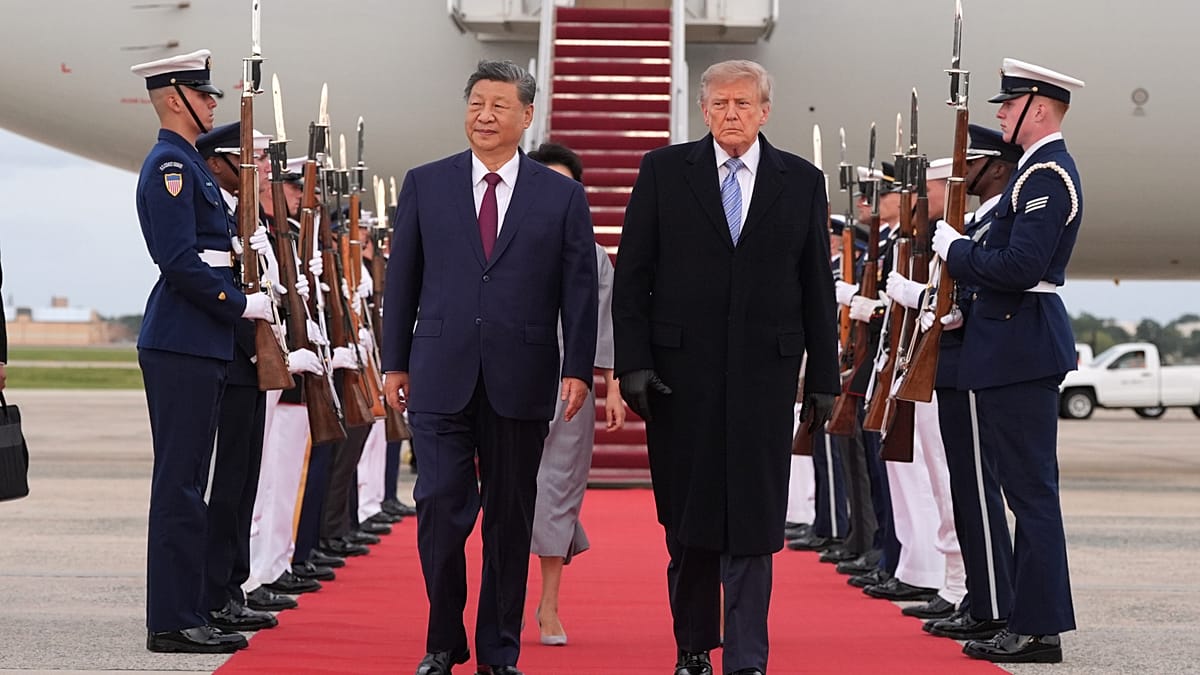


 4 sources
Morning Edition · Thursday, September 24, 2026UpdatedPublished at 7:35 AM EDT · New York
Trump and Xi Open Washington Summit With Tariff Truce Extended Past Its November Expiry
Chinese researchers say the meeting's value lies in a strategic stability framework rather than in new purchase agreements, and hopes for a fresh Boeing order have faded.
Updated at 7:35 AM EDT
Treasury Secretary Scott Bessent confirmed the tariff truce extension is two months, to January 10, resolving the length that was still unspecified this morning.
United States President Donald Trump met Chinese President Xi Jinping on the tarmac at Joint Base Andrews, and the two governments agreed to extend a tariff truce that had been due to expire in November. US Treasury Secretary Scott Bessent said the extension runs two months, to January 10, giving both sides more time to negotiate a broader agreement. The South China Morning Post reported that analysts read the personal welcome as a signal that the state visit began on favourable terms. Chinese state media released comments in which Xi said he looked forward to in-depth exchanges on bilateral relations and the global situation.
Chinese researchers quoted by the South China Morning Post argued that the summit should be judged on practical and cautious consensus under a new strategic stability framework rather than on announced deals. American commentary before the meeting set a similar expectation, with the Atlantic Council anticipating a temporary extension of the truce first agreed in Busan, some Chinese agricultural and energy purchases, and a dialogue on artificial intelligence.
Commercial results are thinner than the staging suggests. The Japan Times reported that Boeing has given up on securing new commitments at the summit and is instead trying to finalise a May agreement for China to buy 200 aircraft. Separately, the White House named nine Latin American countries among 40 flagged for transshipping Chinese goods to avoid United States tariffs, a dispute that continues regardless of what the leaders sign.
Each side had signalled a different preference ahead of the summit. Reporting from Washington indicated Chinese negotiators sought an extension running through the end of Trump's term, while the American side preferred a short renewal that preserves leverage. The two-month extension Bessent announced matches the shorter American preference. Bessent said China is meeting its soybean-purchase commitment but lagging on other agricultural goods and rare earths, and that Beijing needs to deliver more before a larger deal is possible. A truce with an expiry date is a policy instrument, not a settlement, and it keeps a scheduled political event inside the planning horizon of every company with a supply chain crossing the Pacific.
Veracity: Corroborated
88/100- If true, who benefits
Both governments gain a scheduled pause that defers the tariff decision, and importers, retailers and China-exposed manufacturers get a cost forecast that holds through the end of the year, while Beijing gains the optics of a state visit without committing to large purchases.
- The nuance
The article leaves the extension's length open, but Treasury Secretary Scott Bessent said the same day that the truce was extended only two months, to 10 January, which is far shorter than the through-the-term deal Chinese negotiators were reported to want and short enough that the deferral, not the deal, is the substance.
An open-source-intelligence read of how likely this story is true with its real nuance, not a judgment of any outlet. It assesses the claim, weighing independent and adversarial reporting. How we label confidence.
What this means
An extended truce removes a near-term tariff shock from importer cost forecasts and supports companies with China-exposed supply chains, from retailers to industrial manufacturers. It does not remove the underlying dispute. Because the extension carries a fixed end date, firms face the same decision again on a known calendar, which pushes them to keep paying for duplicate sourcing outside China. The transshipment list extends tariff risk to Latin American exporters that were not party to the original quarrel.
Synthesized from: South China Morning Post · South China Morning Post analysis · Euronews · The Japan Times
Townsquare
Start a discussion in Townsquare.
More from this edition
- Treasury Yields Return to 2007 Levels as Traders Price a Fed Hike in October
- Brent Holds Above $100 and European Oil Majors Post Gains of Up to 87 Percent This Year
- Bitcoin Falls Below $84,000 as Rising Yields Drain Liquidity From Digital Assets
- SoftBank Pays Its Highest Dollar Bond Yields to Fund a $10 Billion OpenAI Payment
- Emerging Market Borrowers Keep Selling Foreign-Currency Debt Through the Iran War
- India's National Stock Exchange Lists After a $2.4 Billion Offering That Retail Buyers Barely Covered
- Tokyo Used Apartment Prices Fall for the First Time in More Than Two Years
Comments
1Sep 24, 5:14 AM · edited
Both sides framing success as process rather than deliverables means the summit produces no verifiable outcome to move markets sharply, which is itself useful for positioning around bilateral risk.