← The Global Intelligence Brief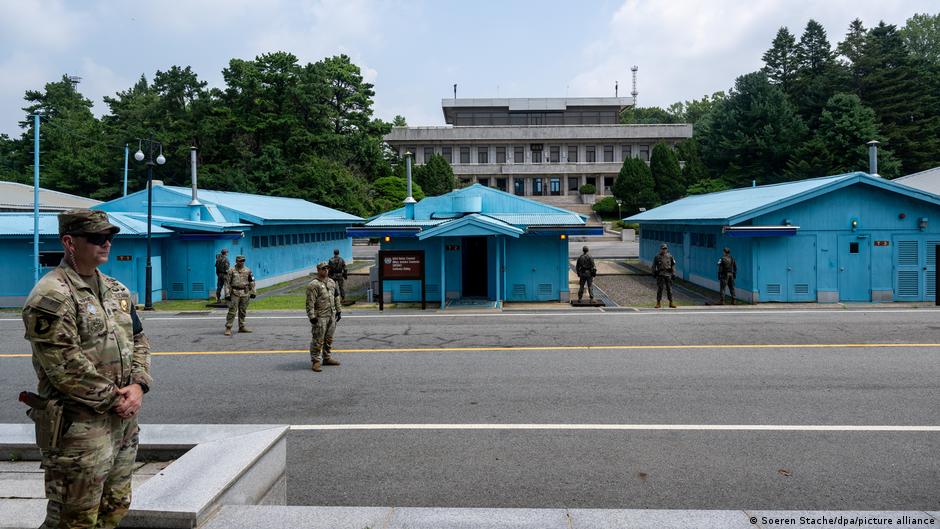


 3 sources
Morning Edition · Wednesday, September 30, 2026UpdatedPublished at 7:37 AM EDT · New York
North Korea Rejects Seoul's Finding on the DMZ Mine Blast and Warns of Immediate Retaliation
Kim Yo Jong called the investigation a self-staged farce after South Korea's military, joined by the multinational United Nations Command, concluded that a North Korean mine caused the September 21 blast and violated the 1953 Armistice Agreement.
Updated at 7:37 AM EDT
The United Nations Command, a multinational body separate from South Korea's own military, conducted a joint investigation and independently confirmed finding an active North Korean mine on the South Korean side of the line, formally ruling the incident an Armistice Agreement violation, and South Korea's Joint Chiefs of Staff have now demanded a North Korean apology.
Kim Yo Jong, the sister of North Korean leader Kim Jong Un and a senior official in her own right, denied that North Korea was responsible for explosions inside the Demilitarized Zone and accused Seoul of fabricating the finding. Deutsche Welle reported her statement accusing the South of a conspiracy after the South Korean military attributed the blast to the North.
The incident occurred on September 21, when two explosions severely injured three South Korean soldiers, one of whom lost a foot. South Korea's Defence Ministry concluded after an investigation that North Korean mines were highly suspected, and that the devices were probably laid during Pyongyang's border fortification work.
That finding has since been corroborated by a body distinct from South Korea's own chain of command. The United Nations Command, which oversees the armistice mechanism and includes personnel from multiple troop-contributing nations, conducted a joint on-site investigation with the South Korean military and reported finding an active North Korean anti-personnel mine on the South Korean side of the Military Demarcation Line. Both the Command and South Korea's Joint Chiefs of Staff declared the placement of the mine a violation of the 1953 Armistice Agreement, and South Korea's military formally demanded an apology from North Korea and called for an immediate halt to the border fortification work it blames for the blast.
Kim's statement, issued under the title about those behind the provocation paying a price for their self-staged farce, compared the case to the wooden-box landmine incident of a decade ago and said the South was cooking up groundless results for political purposes, rejecting the findings of both South Korea's own investigation and the multinational Command. She also set a tripwire: if South Korean troops move beyond warning shots and fire on North Korean soldiers, Kim said, the North will retaliate immediately. Seoul has not said it intends to respond with force, and the two governments now hold incompatible accounts of the same event, though one side's version now carries the additional weight of an international command's independent confirmation.
The fortification work at the centre of the dispute is itself a structural change. Pyongyang has been physically sealing the inter-Korean border, which puts mine-laying crews and South Korean patrols in close proximity along a line where the two governments, and now a third multinational party, disagree over what happened and who is responsible.
Veracity: Corroborated
88/100- If true, who benefits
Seoul gains justification for hardening its posture along the fortification line, and Pyongyang gains a denial that pre-authorises a forceful response to any South Korean fire.
- The nuance
South Korea's finding is a preliminary assessment reached with the United Nations Command that the mines are highly suspected to be North Korean, not a completed forensic attribution, and neither side has published the physical evidence that would settle whether the devices were newly laid, displaced by weather, or legacy ordnance.
An open-source-intelligence read of how likely this story is true with its real nuance, not a judgment of any outlet. It assesses the claim, weighing independent and adversarial reporting. How we label confidence.
What this means
The mechanism is accidental escalation along a border where both militaries operate within metres of each other and attribution is contested after the fact. The exposed parties are South Korean assets, the won, and the semiconductor and shipbuilding supply chains that concentrate output on the peninsula, though markets have historically discounted such incidents quickly. What is already expected is hostile rhetoric from Pyongyang. What is new is a specific North Korean commitment to respond with force to any South Korean fire beyond warning shots, which narrows the space for a local commander's discretion. The precedent is the 2015 landmine incident, when two South Korean soldiers were maimed, both sides exchanged artillery fire and the crisis was defused within weeks through talks that no longer have an institutional equivalent. The likelier outcome over the coming weeks is continued border fortification with further incidents and no negotiated channel to contain them, which keeps a low-grade escalation risk on the peninsula that markets price only after the fact. A South Korean decision to resume military talks or a North Korean pause in border work would reduce it.
Synthesized from: Deutsche Welle · NK News · The Korea Herald
Townsquare
Start a discussion in Townsquare.
More from this edition
- Thirty-Year Treasury Yield Reaches Highest Level Since 2002 as Traders Halve the Odds of an October Fed Hike
- Vanguard Says France Is Degrading Its Credit as Borrowing Costs Climb and Public Workers Strike
- Brent Falls 2.6% to $102.59 as Gulf Exports Recover While the White House Debates a Diesel Export Ban
- US-Led Coalition Formally Ends Its Military Mission in Iraq After Twelve Years
- Trump and AI Company Chiefs Sign a Voluntary Accord to Police Their Own Models
- Bitcoin Slips Back to About $83,600 as the Buyers Behind Its Eight-Month High Retreat
- HSBC Names Its Hong Kong Stablecoin RedCoin for 3.3 Million PayMe Users
Comments
0No comments yet.