← The Global Intelligence Brief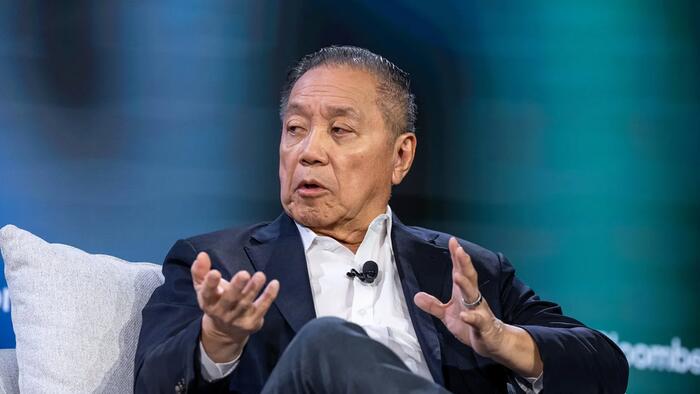


 4 sources
Morning Edition · Tuesday, October 13, 2026Published at 1:12 AM EDT · New York
Chinese memory maker CXMT's chip design advance drives Korea's KOSPI below 6,000 and triggers a trading curb
Samsung Electronics and SK Hynix fell more than 7% after CXMT said it will ship server memory chips built on a denser cell design that the two companies are still developing.
Asian technology shares fell sharply on Tuesday after ChangXin Memory Technologies (CXMT), China's main producer of dynamic random-access memory (DRAM), reported progress on a denser chip design. The Korea Composite Stock Price Index (KOSPI) fell more than 6% and broke below 6,000. The drop activated the exchange's first sell-side curb on program trading since August 19, according to KED Global. Israel's business daily Globes reported that the Korean exchange temporarily halted trading as profit-taking extended across the technology sector, and that Nasdaq futures pointed lower.
Chinese financial media reported that CXMT plans to release DDR5 server memory modules (a standard type of high-speed computer memory) built on a 4F² cell architecture before the end of the year. The design puts more memory cells on the same wafer area and cuts the cost of producing each bit. Samsung Electronics and SK Hynix are still developing a comparable design. Samsung fell about 7.8% in early trade after a 4.39% drop on Monday. SK Hynix fell more than 8%. In Taiwan, memory makers Nanya and Winbond fell more than 7%. In US trading overnight, Micron lost 3.9% and Sandisk 6%.
The concentration of the index explains the size of the move. Samsung and SK Hynix together account for about half of the KOSPI's weight, so any doubt about Korean memory pricing power shifts the entire market. CXMT's claim has not been independently verified, and the company has not disclosed production volumes or yields. The sell-off reflects investor fears about what the new design could do to pricing power. Nothing has shipped yet.
The sell-off also reached a market already uneasy about how the artificial intelligence (AI) buildout is financed. ZeroHedge reported that Hock Tan, the chief executive of Broadcom, said on Monday that heavy investment in AI is being funded by credit extended across the chip supply chain, including credit his own company provides to customers, a dynamic he compared to a casino financing its own gamblers. The outlet said that credit, not just underlying demand, is paying for much of the spending Tan described.
Part of a tracked trend
China Builds a Parallel Technology Stack
United States export controls push China to develop its own chips, computing hardware and artificial-intelligence systems, accelerating a split of global technology into competing spheres that reshapes supply chains and standards.
Veracity: Plausible
68/100- If true, who benefits
If ChangXin Memory Technologies (CXMT) can make the denser 4F² chip design at scale, Chinese server builders and memory buyers get cheaper supply and Beijing gets evidence that export controls have not stopped its chipmakers. Samsung and SK Hynix shareholders lose the pricing power behind their server memory margins.
- The nuance
Reports in Chinese-language media confirm the sell-off, but the design claim comes only from CXMT and includes no figures on yields or volumes. SK Hynix published its own 4F² roadmap in 2025, Samsung reportedly targets 2028, and memory makers said at Computex 2026 that CXMT's current DDR5 modules cost about the same as Korean and US modules.
An open-source-intelligence read of how likely this story is true with its real nuance, not a judgment of any outlet. It assesses the claim, weighing independent and adversarial reporting. How we label confidence.
Synthesized from: Nikkei Asia · Globes (Hebrew) · ZeroHedge · KED Global
Townsquare
Start a discussion in Townsquare.
More from this edition
- IMF warns top economies face their biggest budget deficits since Covid as funding stress reaches US short-term markets
- Riyadh's main airport stays closed as Saudi Arabia vows a "serious" response to Houthi missile strikes
- Brent slips to $105 as Trump's Russian diesel deal offsets Gulf supply fears
- Gold holds near $4,170 and bitcoin rebounds above $83,000 as traders weigh the risk of a December Fed hike
- IMF sets world growth at 3.1% and says a shrinking group of AI-linked economies now carries the expansion
- Trump says Russia and Ukraine agreed to stop striking energy sites, but neither government confirms it and the attacks continue
- French Navy seizes sanctioned Russian-linked tanker 450 miles from Réunion in the Indian Ocean
Comments
1Oct 13, 5:12 AM
The selloff prices a threat to cost per bit, so the falsifiable test is whether CXMT ships 4F² DDR5 server modules in volume by year end rather than only as samples.