← The Global Intelligence Brief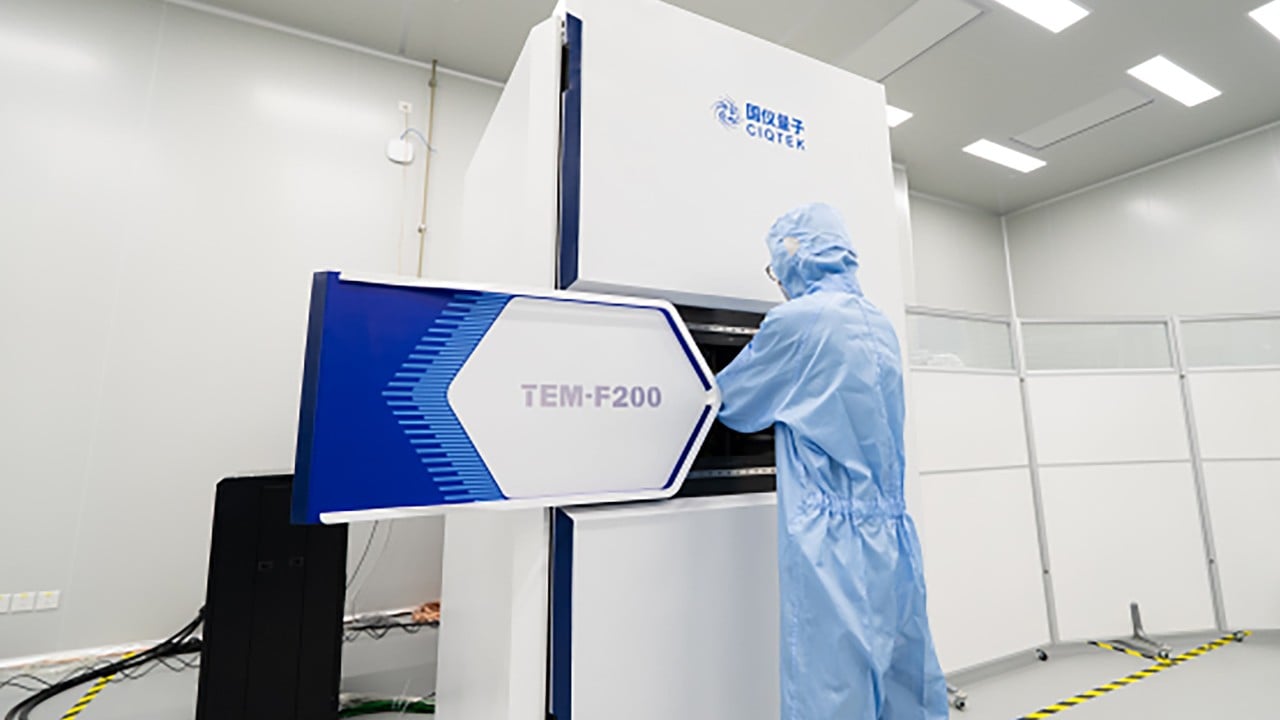


 3 sources
Morning Edition · Tuesday, October 20, 2026Published at 1:08 AM EDT · New York
DeepSeek Helps Design Huawei's Next AI Training Chip as US Homeland Security Orders It Removed From Federal Systems
Hefei-based CIQTEK said it is ready to sell a 0.1-nanometre electron microscope, a market long dominated by American and Japanese suppliers.
Chinese artificial intelligence (AI) developer DeepSeek is no longer only a customer of Huawei. It now helps design Huawei's next chips, ZeroHedge reported. The report drew on accounts that Huawei engineers have worked inside DeepSeek's offices and built the lab's requests into chip-design decisions. In return, Huawei plans to give DeepSeek most of the supply of its Ascend 960DT training chip when it launches next year. In September, DeepSeek turned to Huawei for 160,000 AI chips because Nvidia's chips remain unavailable in China.
On the same day, the US Department of Homeland Security (DHS) ordered DeepSeek removed from federal systems. The department cited "multiple threat vectors," including servers in China, collection of personal data at sign-up and the possible digital fingerprinting of individual users. The order also covers third-party products "developed using DeepSeek implementations," which reaches vendors that built tools on modified or distilled versions of DeepSeek's models.
China's progress extends to scientific instruments. CIQTEK, a manufacturer based in Hefei, is ready to sell a 200-kilovolt transmission electron microscope with information resolution down to 0.1 nanometres, the South China Morning Post reported. US and Japanese firms have long dominated that market. Beijing also controls a critical raw-material stage of the supply chain. After China began requiring export licenses for rare-earth magnets last year, Elon Musk told investors that production of Tesla's Optimus robot had been affected, OilPrice wrote. Each humanoid robot needs up to 4.5 kilograms of those magnets.
The partnership has had problems. Tom's Hardware reported earlier that DeepSeek moved training of one model back to Nvidia hardware after repeated failures on Ascend chips, and kept Huawei silicon for inference.
Part of a tracked trend
China Builds a Parallel Technology Stack
United States export controls push China to develop its own chips, computing hardware and artificial-intelligence systems, accelerating a split of global technology into competing spheres that reshapes supply chains and standards.
Veracity: Corroborated
76/100- If true, who benefits
Huawei and Beijing's chip self-sufficiency program gain from close integration with DeepSeek. US AI developers gain when a low-cost rival is excluded from federal procurement.
- The nuance
The co-design account rests on unnamed sources, relayed by Investing.com and then ZeroHedge, and the coverage reviewed includes no confirmation from either company. The Department of Homeland Security (DHS) directive asserts threats such as user fingerprinting without public technical evidence. DeepSeek's earlier training failures on Ascend chips remain the main evidence against the integration story.
An open-source-intelligence read of how likely this story is true with its real nuance, not a judgment of any outlet. It assesses the claim, weighing independent and adversarial reporting. How we label confidence.
What this means
Both governments are now separating the two technology stacks on purpose. Beijing is pairing its leading model lab with its leading chip designer so that Chinese AI no longer needs Nvidia. Washington is banning Chinese models, including products derived from them, from federal procurement, based on data-security concerns. That supports the desk's view that AI compute is now a tool of state power and that state surveillance concerns now shape purchasing. Several groups are exposed. Nvidia's China revenue, which policy keeps out of the market. US software vendors that quietly built on DeepSeek, which now face audit and removal costs. American and Japanese instrument makers such as Thermo Fisher and JEOL, which face a lower-cost Chinese competitor in their own market. The precedent is Huawei's 2023 Mate 60 phone. It shipped with a domestically made advanced chip four years after US controls began, which showed that sanctions delayed China's progress without halting it. The desk's read is that over the coming months more US state and allied procurement rules will copy the DHS order, while Chinese buyers move to Ascend hardware. Next year's real test is whether the Ascend 960DT ships in volume and trains a frontier-class model. If DeepSeek again moves training back to foreign hardware, Beijing's integration strategy is behind schedule.
Synthesized from: ZeroHedge · South China Morning Post · OilPrice
Townsquare
Start a discussion in Townsquare.
More from this edition
- South Korea's KOSPI Falls About 5% as Credit Investors Pay More for Protection Against AI Debt
- Brent Slips From Five-Month High After Trump Waives Russia Sanctions in Exchange for Diesel
- Houthi Missiles Kill at Least 53 Recruits in Yemen as Egypt Delays a Vote on Defending Saudi Arabia
- Japan Turns to Its Pension Fund and Households to Buy About $120 Billion of New Government Bonds
- Gold Falls Toward $4,140 With the 10-Year Treasury Yield Above 5.1 Percent
- Trump Says He Would Meet Putin and Xi to End the Ukraine War, Possibly Without Zelensky
- France Counts 1,800 Arrests After Cost-of-Living Riots as Fuel-Price Protests Spread Across Italy
Comments
0No comments yet.