← The Global Intelligence Brief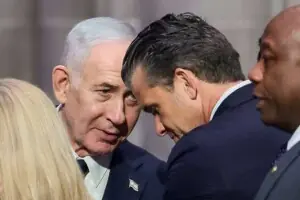


 4 sources
Morning Edition · Wednesday, October 21, 2026Published at 1:06 AM EDT · New York
Brent holds above $110 as Hormuz stays closed and the White House rules out an Iran strike before November 3
The Financial Times reported that Israel planned strikes on Iranian power plants about ten days ago and that President Donald Trump refused, and Defense Secretary Pete Hegseth has now arrived in Israel unannounced to discuss the war.
Brent crude futures rose more than $1 in Asian trading on Wednesday to about $110 a barrel, and West Texas Intermediate (WTI) gained more than $1 to about $99, the Economic Times reported. Market data put Brent at $110.37 after it fell 0.24% to $109.29 on Tuesday.
The physical market, not sentiment, supports the price. Commercial traffic through the Strait of Hormuz remains effectively halted. IMF PortWatch recorded only four vessel transits on October 18, according to a shipping tracker run by United Against Nuclear Iran, an advocacy group that opposes the Iranian government. The tracker says the United States reimposed its maritime blockade of Iranian shipping on July 14 and had redirected 138 commercial vessels by October 17. US-escorted transits averaged about 28 a day over the October 15 to 17 period. Iran's Islamic Revolutionary Guard Corps (IRGC) said tankers using what it called illegal crossing points hit mines south of the strait, Al Arabiya reported. US Central Command (CENTCOM) called the claims false. Both sides have a reason to shape this account: Tehran wants shippers to see the US-escorted route as unsafe, and Washington wants them to see it as working.
Politics adds to the risk premium. Israel planned to strike Iran about a week and a half ago, including power stations and other civilian infrastructure, but Trump refused to act before the US midterm elections, Ynet reported, citing the Financial Times. Ynet quoted the White House: "We will not attack before November 3." On October 13, Axios reported that Trump and Prime Minister Benjamin Netanyahu had discussed a joint operation against Iranian military and nuclear targets, and noted that Israel votes on October 27, a week before the US midterms.
Hegseth arrived in Israel without prior announcement and discussed the Iran war with Netanyahu, a spokesperson for the prime minister confirmed, Dawn reported. The Israeli business daily Globes reported that Hezbollah has raised its alert level in recent days because Israel may escalate. Globes also cited an Iraqi government official who told Al Jazeera that Iraq's prime minister had ordered several border crossings with Iran to close gradually over the coming days. Iraq last closed three crossings in September, after drones launched from its border province of Missan struck a Saudi pipeline, according to Shafaq News.
Part of a tracked trend
Middle East War Premium Returns to Oil
Renewed US-Iran conflict reinstates a geopolitical risk premium in crude that reverses the earlier de-escalation slide, feeding energy-driven inflation and redistributing income toward oil producers each time brinkmanship flares.
Veracity: Plausible
70/100- If true, who benefits
If Washington held Israel back, Trump can campaign on <a href="https://yournews.com/2026/10/08/7220062/trump-rules-out-iran-strikes-before-november-midterms-says-nuclear/">his public October pledge not to strike Iran before November 3</a> while the blockade keeps Iranian barrels off the market, and producers outside the Gulf keep selling crude near $110.
- The nuance
Reports disagree on who held back whom: the New York Times reported that <a href="https://niacouncil.org/the-new-york-times-released-a-report-indicating-that-israel-had-planned-to-stri/">Trump waved off Israeli strike plans</a>, but i24 reported that <a href="https://www.i24news.tv/en/news/israel/artc-report-us-pressed-israel-to-strike-iran-ahead-of-elections">Washington pressed Israel to strike</a>, and the Times of Israel reported that <a href="https://www.timesofisrael.com/trump-says-us-wont-hit-iran-this-month-as-zamir-said-to-warn-strike-could-delay-israels-election/">Israel's army chief, Eyal Zamir, warned a strike could delay Israel's election</a>. Separately, US Central Command (CENTCOM) says that <a href="https://gulfnews.com/world/mena/us-disputes-iran-mine-claim-says-el-gaia-crude-oil-tanker-was-hit-by-iranian-missile-and-drone-instead-1.500674671">an Iranian missile and drone hit the tanker, not a mine</a>, and no independent source has confirmed either version.
An open-source-intelligence read of how likely this story is true with its real nuance, not a judgment of any outlet. It assesses the claim, weighing independent and adversarial reporting. How we label confidence.
Synthesized from: Economic Times · Ynet (Hebrew) · Dawn · Globes (Hebrew)
Townsquare
Start a discussion in Townsquare.
More from this edition
- Gold slips to about $4,113 as Treasury yields above 5% and a likely December Fed hike outweigh the Iran war
- ECB chief economist Philip Lane makes the case in China for euro liquidity lines
- SpaceX posts $4.4 billion profit on AI computing leases as Musk backs a merger with Tesla
- Witkoff flies from Oslo to St Petersburg with proposals from the Oslo talks
- Milei calls Lula a "leftist thief" four days before a Brazilian runoff that polls show within two points
- Turkey's parliament takes up the Mecca defense pact with Saudi Arabia and Pakistan
- France, Italy and Portugal deploy soldiers and police against cost-of-living protests
Comments
1Oct 21, 5:06 AM
Brent's premium of about $11 over WTI indicates the Hormuz shock is priced mainly into seaborne crude, so a reopening should narrow that spread before it lowers WTI much.