← The Global Intelligence Brief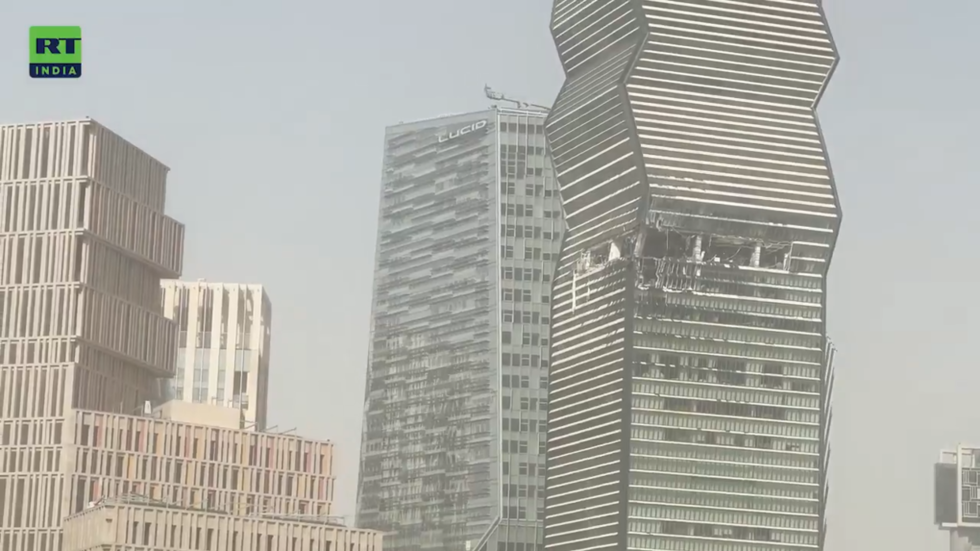


 3 sources
Morning Edition · Monday, November 9, 2026Published at 12:08 AM EST · New York
Houthi missile attack damages Aramco's tower in Riyadh's financial district
Saudi Arabia's Energy Ministry said debris from an intercepted missile caused minor damage and no injuries, while the Houthis claimed six operations against Aramco sites, Riyadh airport and Saudi military positions after Saudi airstrikes near Sanaa.
A Houthi missile and drone attack on Sunday damaged a skyscraper that houses offices of Saudi Aramco, Russian state broadcaster RT reported. The building is in Riyadh's King Abdullah Financial District. Saudi Arabia's Energy Ministry said falling debris from an intercepted missile caused minor damage and that no one was injured or killed.
The visible damage appears larger than the ministry's description. A Reuters witness saw windows blown out across several floors, and video showed damage to the upper floors and part of the façade, Middle East Eye reported.
Houthi military spokesman Yahya Saree said the group carried out six operations against Aramco facilities, Riyadh airport and Saudi military positions on both sides of the border. The Houthis say the attacks will continue as long as Saudi Arabia bombs the parts of Yemen they control and enforces a blockade. The strikes followed Saudi airstrikes near Sanaa that the Houthi-run health ministry said killed at least 33 people. Oil prices fell on Monday regardless, as traders focused on President Trump's remarks about Iran.
Part of a tracked trend
Iran War Spills Across Fronts
The US-Iran conflict keeps drawing in new theaters and third parties, from the Red Sea to the Caspian, so its risk premium spreads to infrastructure and shipping lanes previously thought insulated from the Gulf.
Veracity: Corroborated
83/100- If true, who benefits
The Houthis gain leverage against Riyadh's air campaign and blockade by showing they can reach the financial district, and competing hubs such as Dubai gain if foreign firms reconsider basing regional headquarters in Riyadh.
- The nuance
CNN and Al Jazeera confirm the damage. But the Saudi-led coalition attributed only the ballistic missiles to the Houthis, Saudi authorities have not confirmed Saree's claimed strike on Riyadh airport, and the toll of 33 dead near Sanaa comes from the Houthi-run Health Ministry without independent verification. The reporting does not establish whether Tehran had any role in timing the strikes during its talks with Washington.
An open-source-intelligence read of how likely this story is true with its real nuance, not a judgment of any outlet. It assesses the claim, weighing independent and adversarial reporting. How we label confidence.
What this means
The target matters more than the damage. Riyadh's financial district is the center of Saudi Arabia's effort to attract regional headquarters of foreign companies. Since 2024, firms that want government contracts must base their regional headquarters in the kingdom. A hit there raises insurance and security costs for foreign firms and weakens Riyadh's case against Dubai as a safer regional base. The oil market ignored the attack because it hit offices, not production. The precedent for a production hit is September 2019: the attack on Abqaiq briefly removed about 5.7 million barrels a day, and Brent rose about 15% in one session before falling back within weeks. The likelier outcome is that the Saudi-Houthi exchange continues for weeks without reaching major oil facilities. In that case, the crude risk premium stays low while the cost of doing business in Riyadh rises. The read fails if the Houthis strike Abqaiq, Ras Tanura or Red Sea export terminals. It is also wrong if Riyadh and the Houthis agree to a truce through Omani mediation.
Synthesized from: RT · CNN · Middle East Eye
Townsquare
Start a discussion in Townsquare.
More from this edition
- Nvidia's board investigates whether Jensen Huang was targeted by Chinese intelligence after he admits an affair
- China's producer prices rise 5.7% in October, the fastest pace since June 2022, as consumer inflation slows to 0.7%
- Taiwan and Japan stocks rebound from the midterm sell-off as Trump concedes his Iran war and deportations cost Republicans votes
- Brent falls below $100 after Trump calls new Iran strikes unlikely, while Rubio says Tehran's demands are unrealistic
- Bitcoin swings between about $73,800 and $75,000 as the Nvidia scandal triggers more than $1 billion in crypto liquidations
- China extends its suspension of a 24% tariff on US goods for two months and keeps a 10% levy in place
- G7 ministers meet in Paris as US, Russian and Ukrainian delegations prepare for talks in Abu Dhabi
Comments
0No comments yet.