← The Global Intelligence Brief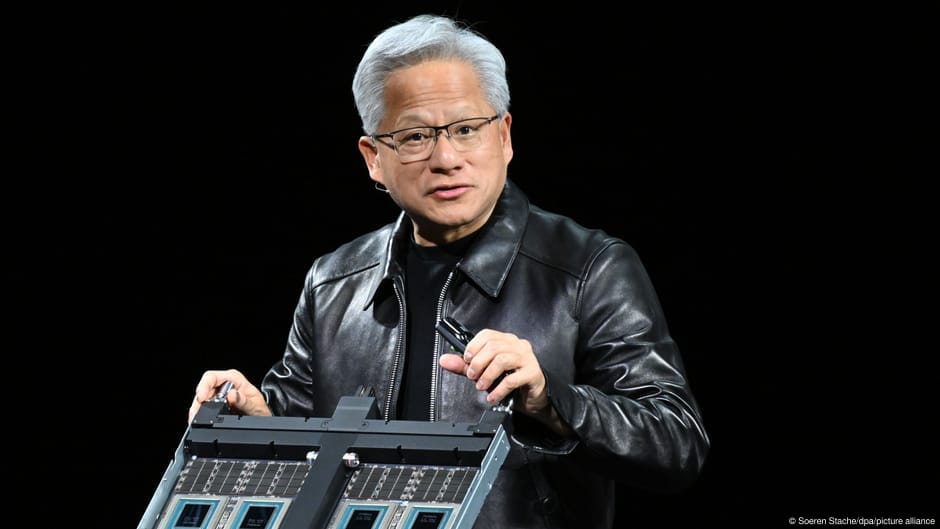


 5 sources
Morning Edition · Tuesday, November 10, 2026Published at 12:10 AM EST · New York
Nvidia Loses About $190 Billion in Value as Shareholders Sue Over Chief Executive's Alleged Ties to a Suspected Chinese Spy
Trump said the Federal Bureau of Investigation is looking into the matter, and a short seller says Megaspeed, the firm linked to the woman involved, is not the only channel giving China access to US chips.
Nvidia shares fell 4.3% on Monday, erasing about $190 billion of the chipmaker's market value, after shareholders filed a class action against the company and its chief executive, Jensen Huang, the Israeli business daily Globes reported in Hebrew. The lawsuit claims that the company and Huang withheld material information from investors about his relationship with Alice Huang, an executive at the intermediary firm Megaspeed whom US authorities reportedly concluded was a Chinese intelligence asset. Globes reported that President Trump confirmed the Federal Bureau of Investigation (FBI) is examining aspects of the case. Trump also said he had asked Huang whether he knew the woman with whom he had an affair was suspected of spying, and that Huang told him he did not.
The suit was filed in federal court in San Jose, California, and covers buyers of Nvidia shares between October 9, 2025, and November 8, 2026, according to Rappler's account of the filing. It accuses Huang and a company spokesman of misleading statements about Nvidia's business relationship with Megaspeed. Deutsche Welle reported that the case adds to scrutiny over whether sensitive information at the company was compromised. Nvidia's board opened its own investigation over the weekend, Folha de S.Paulo reported. None of the allegations have been proven in court.
The export-control question may matter more to investors than the affair itself. The Financial Times reported that Alice Huang pitched AI chip deals to investors, citing access to Nvidia GPUs and a connection to Alibaba. Christian Lamarco, founder of the short seller Culper Research, told MarketWatch that Megaspeed is not the only company helping China obtain restricted chips. Culper profits if Nvidia shares fall, so its claims need independent confirmation.
Part of a tracked trend
Compute Becomes a Controlled Strategic Good
As advanced chips become a source of state power, Washington will keep extending enforcement from countries to intermediaries and individual executives, raising compliance costs and legal risk for every chip vendor that sells into Asia.
Veracity: Corroborated
76/100- If true, who benefits
If this framing holds, short sellers such as Culper Research and plaintiffs' firms profit from the share decline, and US export-control officials gain leverage over Nvidia's Asian resale channels. Beijing gains a case it can present as US harassment of the chip industry ahead of the Trump-Xi talks.
- The nuance
Reuters-sourced reports and Law360 confirm the San Jose suit, the 4.3% decline and Trump's statement that the FBI is "looking into" the matter. The central claim that Alice Huang is a Chinese intelligence asset rests on anonymous US officials cited by The New York Times, the Chinese embassy calls it a smear, and Nvidia describes the meetings as ordinary customer contacts.
An open-source-intelligence read of how likely this story is true with its real nuance, not a judgment of any outlet. It assesses the claim, weighing independent and adversarial reporting. .
Synthesized from: Globes · Financial Times · Deutsche Welle · MarketWatch · Folha de S.Paulo
Townsquare
Start a discussion in Townsquare.
More from this edition
- Brent Falls Below $92 After Trump Says New Iran Strikes Are Unlikely, While Houthis Hit Saudi Pipeline Again
- China's Trade Surplus Tops $1 Trillion by October as Exports Rise 35.2%
- New York Fed Survey Shows the Highest Unemployment Fears Since April 2020 Before Today's Inflation Report
- Trump Names Stephen Miller Chief of Staff as Republican Massie Forces Impeachment Vote on Hegseth
- Russia, Ukraine and the United States Resume Talks in Abu Dhabi With No Ceasefire on the Agenda
- Bitcoin Falls Below $75,000 as Stocks Rally, and Gold Eases to About $4,115 Before US Inflation Data
- Two Tankers of Russian Diesel Turn Away From US Ports Despite Treasury License for Trump's Fuel Deal With Putin
Comments
0No comments yet.