← The Global Intelligence Brief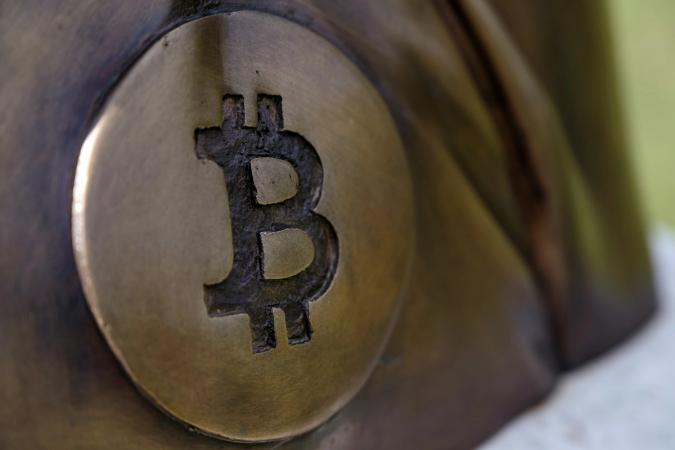


 4 sources
Morning Edition · Saturday, November 14, 2026Published at 12:15 AM EST · New York
Gold drops about 4% for the week and bitcoin breaks below $70,000 as rate-hike bets build
Bitcoin slid to about $67,400 by Saturday, more than $1 billion in leveraged positions were forcibly closed, and a crypto sentiment gauge reached "extreme fear." Gold hit a more-than-one-year low on Thursday.
Gold lost more than 4% this week and traded near $3,899 an ounce on Friday, according to Reuters reporting carried by CNBC. Thursday's slide reached a more-than-one-year low. Reuters called it the worst week since early June, and Investing.com's headline said since March. The two outlets agree on the cause: rising odds of a Federal Reserve increase in December make a metal that pays no interest more costly to hold. BullionVault, a bullion dealer, said gold is in its worst losing run in four decades and that silver is again testing $50 an ounce.
Bitcoin fell further. It dropped below $70,000 on Friday, its lowest level since August 19, down from $81,000 the previous week. It reached about $67,380 on Saturday. Estimates of forced liquidations over 24 hours range from $1.26 billion to more than $1.6 billion, most of it from long positions. Analysts cited hot inflation data, outflows from US spot bitcoin exchange-traded funds (ETFs), and the risk aversion that followed the resignation of Nvidia's chief executive.
The decline coincided with an old holding moving. CoinDesk reported that a wallet from the network's earliest years, which had been served in a $260 billion lawsuit, moved 75 bitcoin it had held since 2011. That transfer was worth roughly $5 million, consistent with a price in the high $60,000s.
Industry voices say they are buying. Joe Carlasare said on Bitcoin Magazine's program that he is a buyer during "extreme fear" and pointed out that bitcoin went from 57,000 to 82,000 in less than 90 days earlier this year. Rahul Pagidipati, chief executive of the Indian exchange ZebPay, told the Economic Times that high-net-worth individuals, family offices and fund houses are asking how to hedge with crypto and hold it. Both have a commercial interest in bitcoin demand, and their views should be weighed with that in mind.
The two assets fell for different reasons. Gold fell on real interest rates. Bitcoin fell alongside the Nasdaq and Nvidia, and with ETF outflows. That fits the pattern of bitcoin trading as a bet on liquidity, not as a monetary hedge.
Part of a tracked trend
Bitcoin Trades as a Risk Asset, Not Digital Gold
At each geopolitical or inflationary stress point, bitcoin keeps trading with liquidity-sensitive risk assets rather than with monetary metals, so the digital-gold framing continues to fail exactly when investors most want it to hold.
What this means
Both assets are exposed to the same policy, but through different channels. Gold depends on real yields and on central-bank and Asian physical buying. Bitcoin depends on leverage, ETF flows and appetite for technology stocks. Rising real yields hurt gold, but a rate shock that weakens the fiscal position can later revive demand for it. That two-step pattern played out in 2022 and 2023, when gold fell during the fastest phase of Fed tightening and recovered before the hikes ended. Bitcoin has no comparable official buyer to support it. The consensus treats the "extreme fear" reading as a contrarian signal, but sentiment gauges do not stop forced selling while ETF holders are still leaving. The likelier outcome over the next several weeks is that gold stabilizes before bitcoin does, because its decline came from rates and not from deleveraging. This depends on the 10-year yield peaking near current levels after the December Fed meeting. The read would be wrong if ETF inflows return strongly to bitcoin while yields are still rising.
What to watch
- Watch daily flows into US spot bitcoin ETFs. A return to inflows would show that institutional demand, not leveraged trading, is setting the price again.
- Watch whether gold holds near its Thursday low as Treasury yields stay above 5%. Holding there would suggest official and Asian physical buyers are absorbing the selling.
- Watch silver near $50 an ounce, which dealers describe as a level where it sold off in 1980 and 2011. A break lower would show industrial and speculative demand weakening together.
Observations to monitor, not financial advice.
Synthesized from: CoinDesk · Bitcoin Magazine · Economic Times · CNBC (Reuters)
Townsquare
Start a discussion in Townsquare.
More from this edition
- US Treasuries post their worst week since April 2025 as hot inflation locks in a December Fed hike
- White House says Trump, Xi and Putin will meet in Shenzhen on nuclear arms and Iran, not Ukraine
- Iran drafts next year's budget on the assumption that oil revenue falls to zero
- Revolutionary Guards say they destroyed a US radar in Bahrain, and US Central Command says it shot down two drones
- Nvidia sounds out Arm's Rene Haas for chief executive as Congress questions chip-export enforcement
- Anthropic's international retail offering leaves out India as the AI company seeks a valuation of up to $1.4 trillion
- China's consultation on banning solar-technology exports closes Sunday as Indian manufacturers turn to Germany
Comments
1Nov 14, 5:15 AM
Bitcoin's drop from $81,000 to about $67,380 is roughly 17%, about four times gold's weekly loss, so the rate repricing hit the leveraged asset far harder.