← The Global Intelligence Brief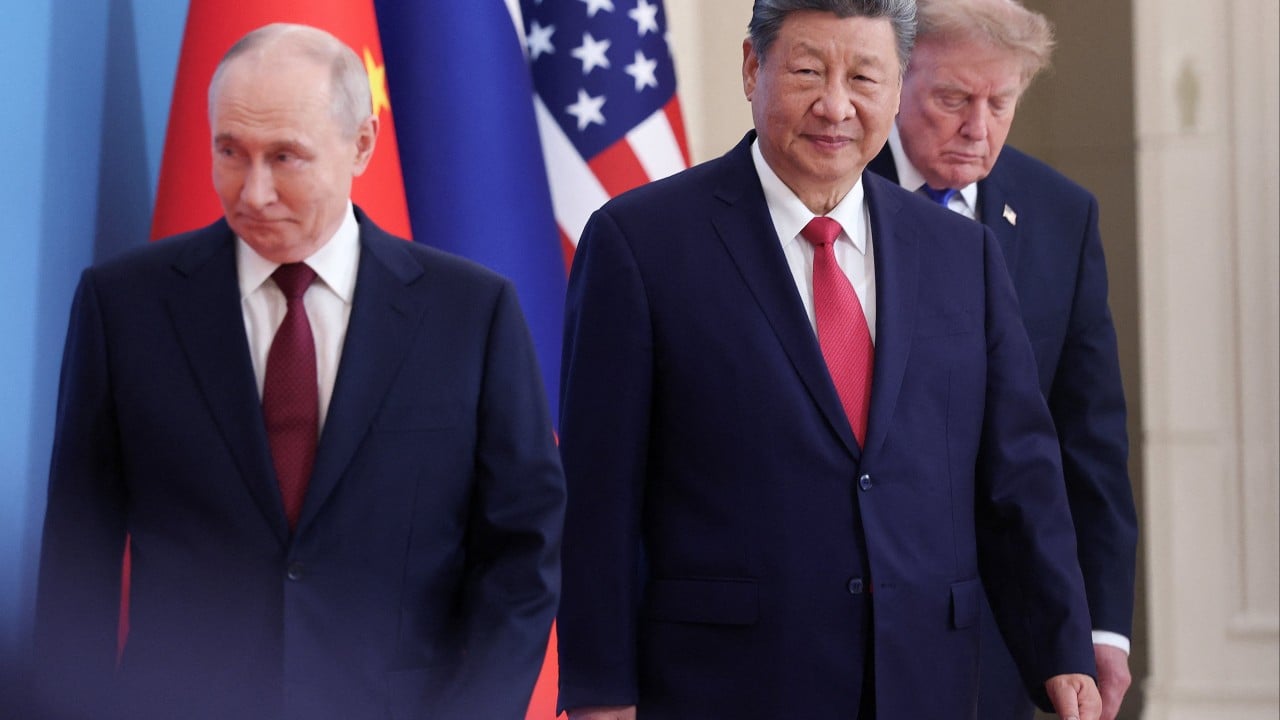
Morning Edition · Saturday, November 21, 2026Published at 12:16 AM EST · New York
Trump, Xi and Putin Issue a Four-Point Shenzhen Declaration That Pledges More Refined Fuel but Says Nothing on Ukraine
The text covers United Nations reform, immunity for state officials and nuclear risk, while a Kremlin aide had said before the meeting that one session would not settle the war.
Xi Jinping, Vladimir Putin and Donald Trump met in Shenzhen on November 19, on the sidelines of the Asia-Pacific Economic Cooperation (APEC) summit. It was the first three-way meeting of the three leaders, and it lasted about 90 minutes. Chinese state media published the result as the "Peace Declaration of the Heads of State of China, Russia and the United States". Chinese-language reports list four points: reform of the United Nations, more production and supply of refined petroleum products, respect for the immunity of state officials, and dialogue on nuclear risk and non-proliferation, on the principle that a nuclear war cannot be won and must never be fought.
The text is short, and its omissions matter as much as its contents. Al Jazeera and the Council on Foreign Relations both note that it says nothing about the war in Ukraine or the US war with Iran. Chinese reports say the leaders discussed Ukraine, the Middle East and the Korean Peninsula. Before the meeting, Yuri Ushakov, a foreign-policy aide to Putin, said one meeting would not resolve the Ukraine conflict.
Each capital presented the result to suit its own aims. A Xinhua commentary described the meeting as a "peace summit" that showed the "shared responsibilities of major countries," a framing that places Beijing at the center of great-power management. Russia's TASS quoted Jeffrey Sachs, the US economist, as saying the meeting makes a Ukraine settlement "far more feasible." By quoting a US voice, TASS supports Moscow's preference for a deal negotiated among the three powers. Hong Kong's commerce secretary said he was "cautiously optimistic" about the economic signal.
Kyiv rejected the tone. After Trump called Putin his friend, Ukrainian President Volodymyr Zelensky said Putin is "an enemy and a murderer" to Ukrainians.
Two clauses have practical weight. The fuel pledge commits the world's largest consumer, the largest producer of crude and a major exporter of crude and products to support supply of refined fuels such as diesel and jet fuel. The immunity clause supports the position that sitting officials cannot be prosecuted by international courts. That position protects Putin, who faces an International Criminal Court warrant, and it reduces the practical reach of courts that none of the three powers accepts. Europe was not party to the text and has no clause in it.
Townsquare
Start a discussion in Townsquare.
More from this edition
- S&P 500 and Dow Enter a Correction as Fed Hike Bets and the Nvidia Crisis Drive a 3.7% Friday Sell-Off
- Two Russian Kh-101 Missiles and a Drone Fall in Eastern Poland as Tusk Calls It an "Intentional Provocation"
- Bitcoin Falls Below $57,000 for the First Time in Two Years as Gold Drops to a 14-Month Low
- Nvidia Shares Fall 14% on Report of an SEC Accounting Probe as Trump Urges the Board to Reinstate Jensen Huang
- Saudi-Led Coalition Intercepts Three Houthi Missiles Aimed at Riyadh as the Houthis Threaten Saudi Ports and Power Plants
- Brent Posts a Third Weekly Loss Near $92 as Hormuz Flows Recover and Surplus Forecasts Mount
- Argentina's Country-Risk Spread Tops 1,000 Points as Investors Question How Milei Will Pay 2027 Debt
Comments
0No comments yet.