← The Global Intelligence Brief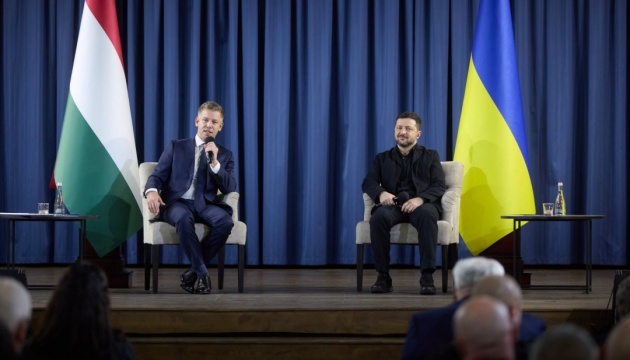
Morning Edition · Wednesday, November 25, 2026Published at 12:06 AM EST · New York
Hungary's Magyar meets Zelensky in Zakarpattia and signs energy and rail deals but rules out quick EU entry for Ukraine
Magyar said Hungary will provide humanitarian aid but no weapons or weapons transit, and opposed tying Ukraine's funding to joint borrowing through the EU budget.
Ukrainian President Volodymyr Zelensky and Hungarian Prime Minister Péter Magyar met representatives of the Hungarian community in Ukraine's Zakarpattia region, Ukrinform reported. Zelensky described the talks in Berehove, a town with a Hungarian majority, as a friendly conversation about energy, railways, agricultural trade and European Union (EU) membership, Daily News Hungary reported. The two governments agreed on natural gas and diesel supplies, border crossings and direct train services.
Magyar's positions on the main questions stayed firm. He told Zelensky that EU membership must be based on merit and that there would be no accelerated process, GSM Global News reported. He cited Hungary's own 13-year accession and Serbia's long negotiations, and he said minority rights must be resolved before Hungary supports opening the relevant negotiating chapter. He said Hungary would keep providing humanitarian aid but would not supply weapons or allow them to cross its territory. He also opposed linking aid for Ukraine to the EU budget in a way that obliges member states to take part in common borrowing. Zelensky said he told Magyar that EU membership is an irreversible path for Ukraine.
The meeting shows a change in Budapest's method more than in its policy. Magyar's predecessor, Viktor Orbán, used open confrontation with Kyiv. Magyar is negotiating practical trade, energy and transport deals while keeping limits on weapons and shared debt. Daily News Hungary reported that Hungary withdrew its last objections the previous week to opening new chapters in Ukraine's accession talks. Magyar's statements in Berehove make clear that further progress depends on minority-rights concessions.
The funding question extends beyond Hungary. EU leaders are debating a smaller common budget, and a proposal from European Council President António Costa foresees another round of large cuts, Euronews reported. A tighter budget, combined with a member state that refuses joint borrowing for Ukraine, limits how much Europe can pay for Kyiv's defense and reconstruction. Washington and Moscow, meanwhile, are determining the timing of any settlement.
Part of a tracked trend
Great Powers Negotiate Ukraine Over Europe's Head
Townsquare
Start a discussion in Townsquare.
More from this edition
- Asian chip stocks fall sharply as doubts over AI spending and bets on a Fed rate increase hit Seoul, Taipei and Tokyo
- Gold falls about 2% as traders price a near-certain December rate increase by the Federal Reserve
- Iran says mines struck tankers near Hormuz as Brent crude swings around $91
- Tehran rejects US plan to widen its blockade as Israeli officials debate another strike on Iran
- Washington prepares new tariffs on India and 15 other economies after trade investigations
- Ukrainian drones hit Samara refineries as Kyiv's attacks on Russian assets reach Libya
- Trump says he would pardon Nvidia's Huang as a US jury convicts Huawei of trade-secret theft
Comments
0No comments yet.