← The Global Intelligence Brief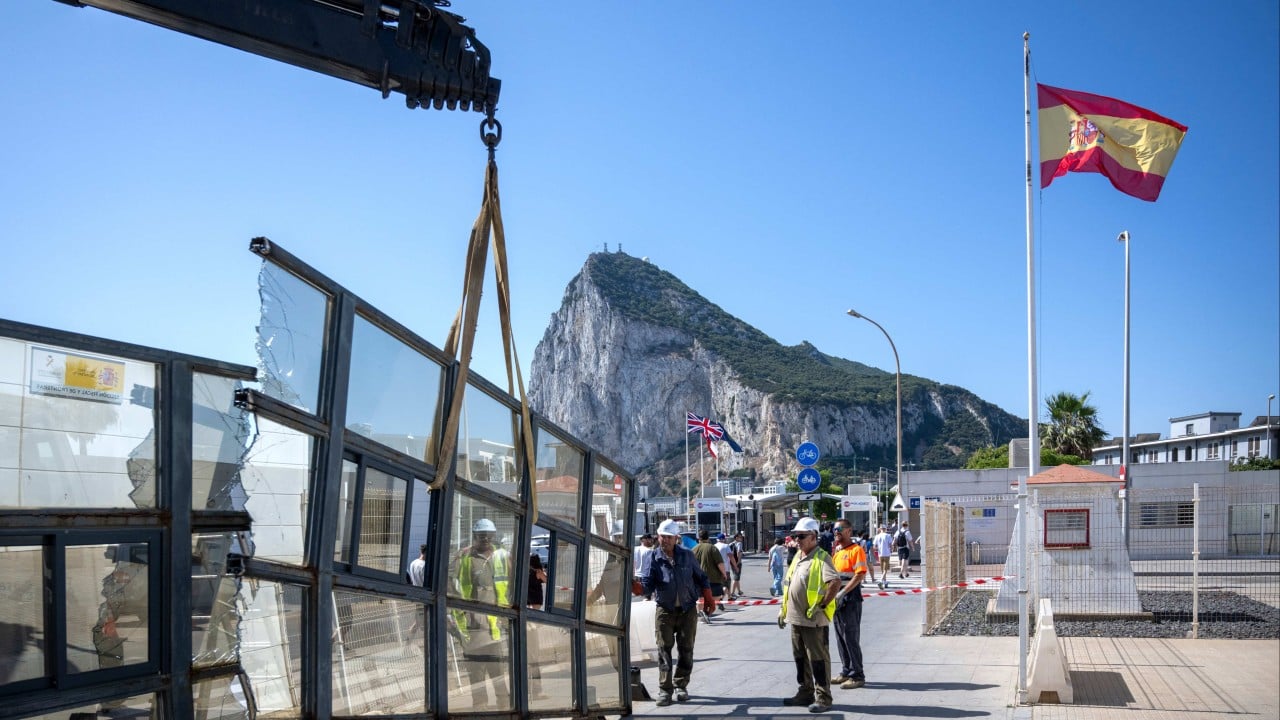

 2 sources
Morning Edition · Wednesday, July 15, 2026Published at 1:13 AM EDT · New York
Spain and Gibraltar Remove Border Checks Under New UK-EU Treaty
Fences came down and people and vehicles crossed freely for the first time, resolving one of the last unsettled questions of Britain's departure from the European Union.
Border checks between Spain and Gibraltar, the small British territory at the southern tip of the Iberian Peninsula whose sovereignty Madrid has long contested, ended this week under a new United Kingdom-European Union treaty. People and vehicles crossed from Spain without inspection for the first time, and the old chain-link fence between the two sides was taken down.
The arrangement resolves one of the last open questions from Britain's 2020 exit from the European Union. Roughly 15,000 workers cross the frontier daily, and the checks that followed Brexit had caused long delays and recurring friction between London and Madrid. Under the treaty, Gibraltar effectively joins the passport-free travel zone that covers most of continental Europe, with controls handled jointly rather than at the fence line.
Both governments described the deal as pragmatic rather than a concession on the underlying sovereignty dispute, which remains unresolved. Spain continues to claim the territory, ceded to Britain in 1713, while Gibraltar's residents have repeatedly voted to remain British. What changed is the practical experience of the border, not its legal status.
What this means
The deal removes a persistent source of friction in UK-EU relations and restores predictable movement for the thousands of workers and the cross-border commerce that depend on the frontier, benefiting the local economy on both sides. More broadly, it signals that London and Brussels are willing to negotiate practical fixes to the frictions caused by Brexit without reopening the political question, a template that could apply to other unresolved areas of the relationship.
What to watch
- Whether the joint control arrangement functions smoothly in practice, because friction or disputes over enforcement would reignite tension between London and Madrid.
- Whether the pragmatic model is extended to other UK-EU disputes such as trade in goods or services, which would mark a broader easing of tensions.
Observations to monitor, not financial advice.
Synthesized from: South China Morning Post · Deutsche Welle
Townsquare
Start a discussion in Townsquare.
More from this edition
- Oil Jumps Above 85 Dollars as US Reimposes Iran Blockade and Tehran Strikes Gulf States
- China Grows 4.3 Percent in Second Quarter, Weakest Pace Since Late 2022
- Gold Holds Near 4,000 Dollars and Silver Jumps as War and Fiat Doubts Drive Hard-Money Demand
- United States to Withdraw All Troops From Iraq by September 30
- Chinese Memory Maker CXMT Prices Record 8.5 Billion Dollar Shanghai Chip Listing
- China's Critical-Minerals Controls Distort Markets and Fuel Resource Nationalism
- Russia Strikes Ukrainian Black Sea Ports Handling Military Supplies
- Ukraine to Buy Chinese Drone Components With European Union Funds
Comments
0No comments yet.