← The Global Intelligence Brief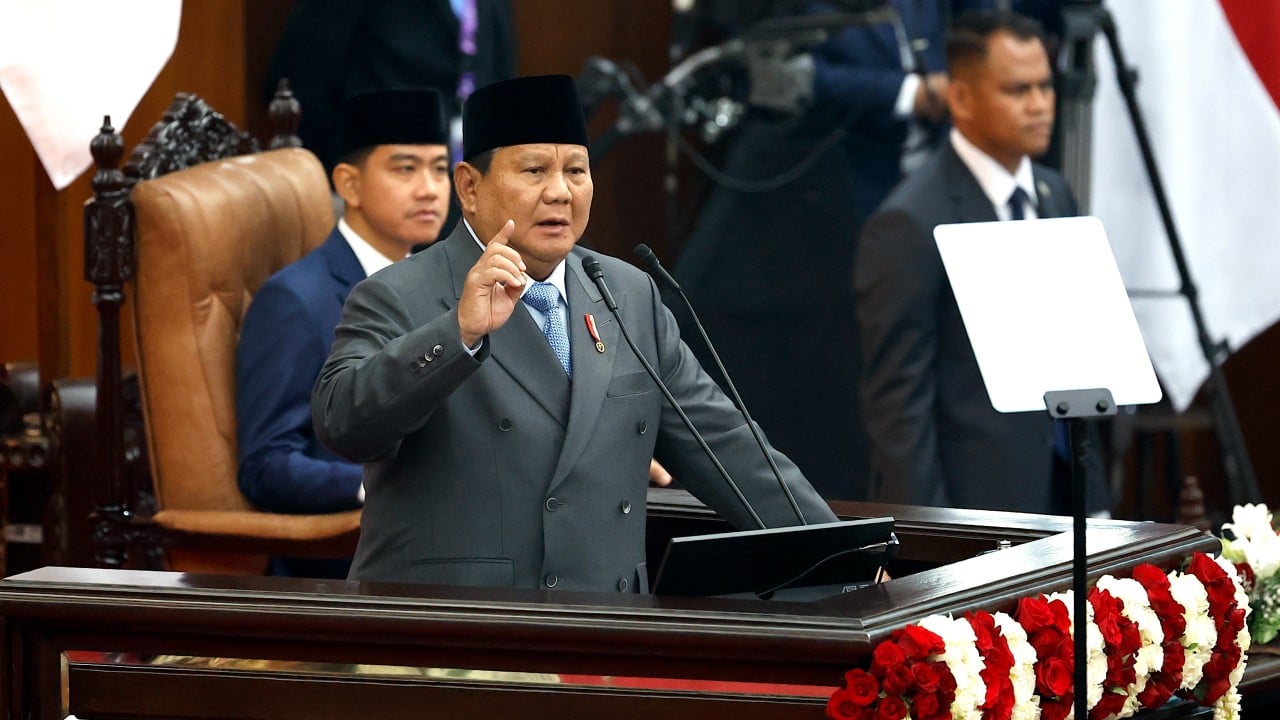

 3 sources
Morning Edition · Friday, August 14, 2026Published at 1:20 AM EDT · New York
Prabowo claims self-sufficiency in eight food commodities as his approval ratings fall
The Indonesian president told the annual parliamentary session his government had enacted 121 policies in 21 months and saved $6.2 billion through audit recommendations.
President Prabowo Subianto told Indonesia's annual parliamentary session on Friday that the country has achieved self-sufficiency in eight food commodities and that its food supply is secure, the state news agency Antara reported. He also said the Supreme Audit Agency had identified savings of 112 trillion rupiah, about $6.2 billion, through its recommendations, Antara reported separately, and that his administration had enacted 121 policies in its first 21 months.
The South China Morning Post placed the speech in a different context, reporting that Prabowo defended his record at a time of falling approval ratings and that the claim of secure supply came even as the country faces the risk of extreme weather this year. The two accounts describe the same speech and differ in what they treat as the main point, which is worth noting rather than resolving.
Food self-sufficiency has been the organising goal of Prabowo's economic programme, pursued through expanded rice acreage, a free school meals scheme and state procurement. It is expensive. Import substitution in agriculture means growing crops domestically that could be bought more cheaply abroad, financed from the budget, and the resulting production is exposed to a single weather season rather than to a diversified set of suppliers.
Indonesia is the fourth most populous country in the world and a significant importer of wheat and, in most years, rice. What its government does with that demand affects prices well beyond its own borders.
Veracity: Plausible
61/100- If true, who benefits
The self-sufficiency claim shores up a president whose approval is falling and justifies continued budget transfers to state procurement, rice acreage expansion and the free school meals programme, while regional exporters in Thailand and Vietnam and American agricultural suppliers stand to lose the demand it promises to remove.
- The nuance
Prabowo did make the statement, and it is narrower than it sounds, covering rice, feed corn, consumer sugar, chillies, shallots, chicken and eggs while excluding wheat, soybeans and beef, and Indonesia separately committed under its February 2026 trade agreement with Washington to import American rice, soybeans, wheat, corn and beef, a commitment that sits directly against the sovereignty framing and appears in neither the state agency account nor the article.
An open-source-intelligence read of how likely this story is true with its real nuance, not a judgment of any outlet. It assesses the claim, weighing independent and adversarial reporting. How we label confidence.
What this means
Synthesized from: South China Morning Post · Antara · Antara
Townsquare
Start a discussion in Townsquare.
More from this edition
- Washington makes cheaper fuel its stated top aim in the Iran war as Treasury threatens total economic isolation
- White House says tariff evasion costs it up to $26 billion a year as Brazil opens a retaliation process
- AI capital spending moves into foreign bond markets as model prices collapse
- Carry traders rebuild yen short positions weeks after the coordinated intervention
- Hong Kong will list the first Shanghai free-trade zone bond as China builds financial channels outside the dollar
- Trump imposes tariffs of up to 100% on imported drones and their components
- Tata Motors profit falls 80% as Gulf shipping disruption reaches Indian corporate earnings
Comments
0No comments yet.