← The Global Intelligence Brief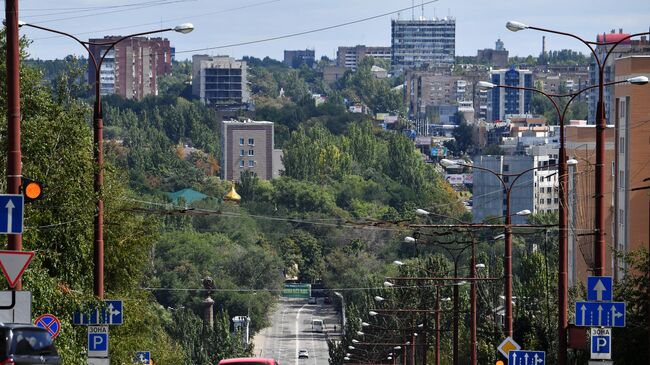

 3 sources
Morning Edition · Friday, August 14, 2026Published at 1:20 AM EDT · New York
Russian state media report damage to power and industrial infrastructure on both sides of the front
TASS said an installation and an enterprise were hit in Ukraine's Zhytomyr region, while nearly 30,000 customers in Donetsk lost electricity in what local officials called an emergency shutdown.
TASS reported that critical infrastructure was damaged in northern Ukraine overnight, naming an installation and an industrial enterprise in the Zhytomyr region. The agency did not specify the extent of the damage, and Ukrainian officials were not quoted in the report.
Across the front line, TASS and RIA Novosti reported that more than 29,000 customers in Donetsk lost electricity. The city's head, Alexei Kulemzin, described the loss as an emergency shutdown. Neither agency attributed the outage to a strike, and independent verification of either account was not available at the time of publication.
The pattern these reports describe has defined this phase of the war. Both sides are directing long-range strikes at electricity generation, transmission, rail and warehousing rather than at front-line positions, because damage to those systems compounds. When a substation fails, it also disables the industry, water pumping and heating that depend on it, and repair crews working under the threat of renewed attack move more slowly with each cycle.
The economic cost accumulates away from the battlefield. Insurers price war risk into freight moving anywhere near either country. Industrial users on both sides hold larger inventories and buy backup generation, capital that produces nothing. Neither government publishes a complete account of the damage, so the visible record is a running series of local reports of the kind published on Friday.
Part of a tracked trend
Strikes Move to Each Other's Home Fronts
Both Russia and Ukraine keep shifting long-range strikes toward transport, warehousing and civilian-adjacent targets far from the front, so aviation, logistics and insurance costs deep inside both economies keep rising and each mass-casualty incident pushes a negotiated pause further away.
Veracity: Plausible
70/100- If true, who benefits
Reporting infrastructure damage on both sides at once lets Moscow present the war as symmetrical suffering rather than as a campaign it is conducting, and it supports the case each government makes to its own population for continued spending on air defence and grid repair.
- The nuance
The Zhytomyr strikes are corroborated by Ukrainian sources that attribute them to Russian forces, an attribution TASS omits, while the Donetsk figure is single-sourced to Russian agencies and Ukrainian reporting describes far larger outages in the occupied city traced to transformer shutdowns rather than to a strike, so the two events are not the mirror pair the pairing implies.
An open-source-intelligence read of how likely this story is true with its real nuance, not a judgment of any outlet. It assesses the claim, weighing independent and adversarial reporting. How we label confidence.
What this means
Sustained damage to electricity systems raises the cost of every industrial process in the affected regions and makes reconstruction financing a permanent budget item for Kyiv and a permanent security cost for Moscow. European insurers and reinsurers carry part of the exposure through war-risk cover on cargo and aviation, and each new attack on grid infrastructure makes a negotiated pause harder to arrange, because power supply becomes a bargaining asset neither side will concede first.
Synthesized from: TASS · TASS · RIA Novosti
Townsquare
Start a discussion in Townsquare.
More from this edition
- Washington makes cheaper fuel its stated top aim in the Iran war as Treasury threatens total economic isolation
- White House says tariff evasion costs it up to $26 billion a year as Brazil opens a retaliation process
- AI capital spending moves into foreign bond markets as model prices collapse
- Carry traders rebuild yen short positions weeks after the coordinated intervention
- Hong Kong will list the first Shanghai free-trade zone bond as China builds financial channels outside the dollar
- Trump imposes tariffs of up to 100% on imported drones and their components
- Tata Motors profit falls 80% as Gulf shipping disruption reaches Indian corporate earnings
Comments
0No comments yet.