← The Global Intelligence Brief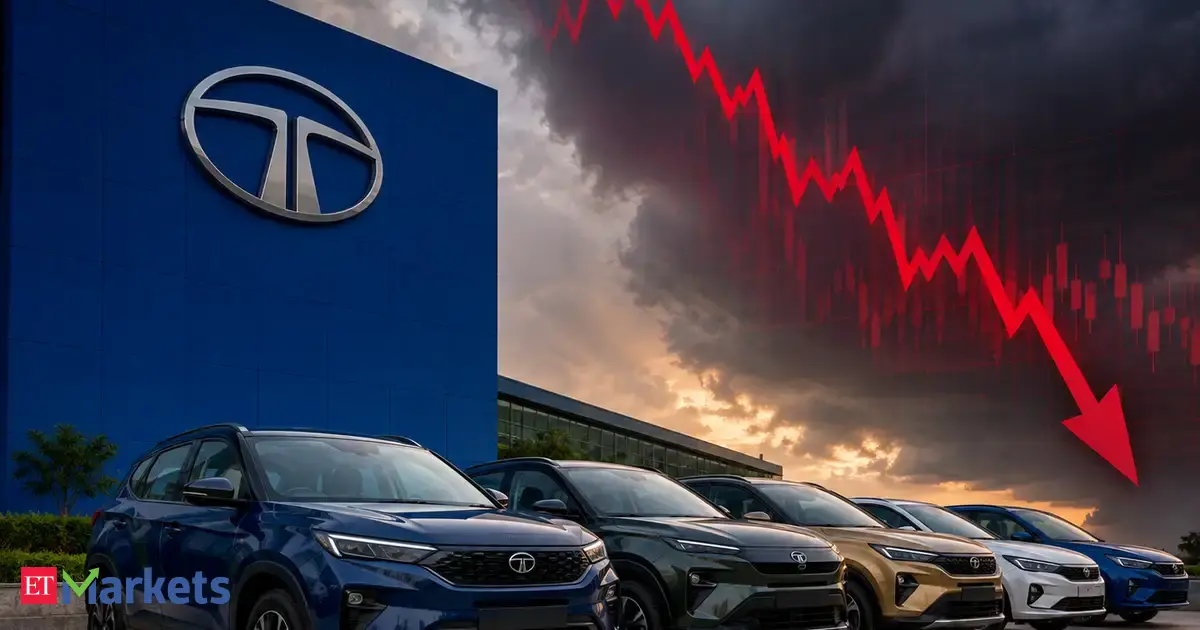
 3 sources
Morning Edition · Friday, August 14, 2026Published at 1:20 AM EDT · New York
Tata Motors profit falls 80% as Gulf shipping disruption reaches Indian corporate earnings
Jaguar Land Rover volumes fell 9.2% on supply constraints that the company attributes partly to the Middle East conflict, while Indian benchmarks opened lower with crude near $87.
Tata Motors Passenger Vehicles reported consolidated net profit of 775 crore rupees for the June quarter, down about 80% from a year earlier, while revenue rose 9% to 95,799 crore rupees and the margin on earnings before interest, tax, depreciation and amortisation narrowed to 7.4%. The shares fell 5%, the Economic Times reported.
The company attributed the decline to three separate supply problems. Jaguar Land Rover wholesale volumes fell 9.2%, hit by a fire at a component supplier, by shipping disruption linked to the Middle East conflict, and by the planned wind-down of the Jaguar brand, according to Business Standard. Domestic passenger vehicle revenue grew strongly over the same period, which shows that the profit decline stems from exports and logistics rather than from weak demand in India.
The wider market showed the same split. The Sensex opened more than 300 points lower and the Nifty slipped below 24,350, with metal and auto stocks leading the decline and crude near $87 a barrel, the Economic Times reported. Companies exposed to domestic consumption fared better. LG Electronics India rose 5% after quarterly profit growth driven by demand for premium appliances.
This shows how a war fought thousands of kilometres away shows up in a company's financial results. No Indian factory was attacked and no Indian port closed. Instead, longer voyages, higher freight and insurance rates, and delayed component deliveries reduced profit margins, and that margin decline is what investors are now pricing into the stock.
What this means
Gulf shipping disruption is now visible as a specific line in the accounts of manufacturers thousands of kilometres from the conflict, which means the war premium is no longer confined to energy prices. Exporters with long, sea-dependent supply chains carry the cost through inventory and freight, while firms selling into local demand keep their margins, and that divergence is what is separating winners from losers in Indian equities right now.
What to watch
- Whether Jaguar Land Rover volumes recover in the September quarter as management expects, which would confirm the disruption is temporary rather than structural.
- Container and tanker freight rates on Asia to Europe routes, the transmission channel that turns a Gulf conflict into a manufacturing cost.
- Whether other Asian exporters cite Middle East shipping in their quarterly results, which would show the effect is industry-wide rather than company-specific.
Observations to monitor, not financial advice.
Synthesized from: Economic Times · Economic Times · Economic Times
Townsquare
Start a discussion in Townsquare.
More from this edition
- Washington makes cheaper fuel its stated top aim in the Iran war as Treasury threatens total economic isolation
- White House says tariff evasion costs it up to $26 billion a year as Brazil opens a retaliation process
- AI capital spending moves into foreign bond markets as model prices collapse
- Carry traders rebuild yen short positions weeks after the coordinated intervention
- Hong Kong will list the first Shanghai free-trade zone bond as China builds financial channels outside the dollar
- Trump imposes tariffs of up to 100% on imported drones and their components
- Russian state media report damage to power and industrial infrastructure on both sides of the front
Comments
0No comments yet.