← The Global Intelligence Brief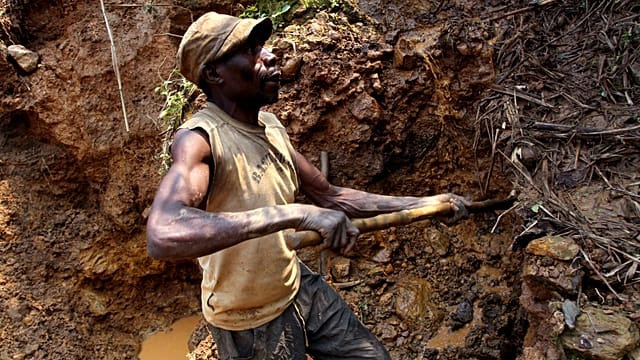


 3 sources
Morning Edition · Friday, September 25, 2026Published at 8:54 AM EDT · New York
A US Miner Is Using Machine Learning to Hunt Cobalt and Lithium in Congo
KoBold Metals holds 14 exploration permits and plans to spend more than $50 million by 2027 in a country where Chinese firms control most copper and cobalt output.
KoBold Metals, the US exploration company backed by investors including Bill Gates, is applying machine learning to geological data in the Democratic Republic of Congo, Africanews reports. The company says the approach reduces the time and cost of locating deposits of copper, cobalt and lithium. It holds 14 exploration permits and plans to invest more than $50 million by 2027, with work including the Manono lithium deposit, one of the largest known accumulations of spodumene.
The strategic purpose is stated openly. KoBold's objective is to reduce Chinese dominance in critical minerals, in a country that produces more cobalt than any other and ranks second in copper, and where Chinese companies are reported to control between 70% and 80% of copper and cobalt output. The company signed its Congo exploration agreement in July 2025.
Exploration is the long end of the supply chain. A discovery made now produces metal in the 2030s, which means the effort is a response to a shortage that Western governments expect rather than one they currently face. It also depends on Congolese permitting, security in the east of the country and transport routes that remain constrained.
Applying computation to exploration lowers the cost of searching. It does not shorten the time from a drill result to a refinery, and refining remains the stage of the chain where Chinese capacity is most concentrated.
Veracity: Corroborated
86/100- If true, who benefits
Washington gains upstream supply outside Chinese control on paper, Kinshasa gains competing bidders for permits and higher signature payments, and KoBold's investors gain from a strategic narrative that attracts state-adjacent capital long before any metal is produced.
- The nuance
The permit count and spending plan are confirmed by independent reporting, but the "reduce Chinese dominance" purpose is the company's and Washington's framing, Manono carries a contested title history with prior claimholders, and exploration permits produce no refined metal, which is the stage where Chinese capacity is concentrated.
An open-source-intelligence read of how likely this story is true with its real nuance, not a judgment of any outlet. It assesses the claim, weighing independent and adversarial reporting. How we label confidence.
What this means
The mechanism is substitution at the margin of a processing bottleneck. Even a successful discovery in Congo delivers ore, and ore has to be refined, which is the stage where Chinese capacity dominates and where new Western plants take years and subsidy to build. The exposed parties are battery manufacturers dependent on cobalt and lithium pricing set outside their jurisdiction, Congolese state revenue, which gains from competitive bidding for permits, and incumbent Chinese operators whose position is commercial rather than treaty-based. Washington wants supply outside Chinese control, and Kinshasa wants competing bidders, which aligns their interests for now. The precedent is the post-2010 rare-earths episode, when Western capital funded new mines but processing stayed concentrated in China for more than a decade. The likelier outcome over the next several years is more Western exploration capital entering Congo with little near-term effect on refined-metal pricing, conditional on security and permitting holding. A Western refining commitment attached to these permits would change that.
Synthesized from: Africanews · Malay Mail · Bloomberg
Townsquare
Start a discussion in Townsquare.
More from this edition
- Tigray Forces Seize Three Airports as Ethiopia's 2022 Peace Deal Breaks Down
- US 30-Year Yield Reaches Highest Level Since 2004 as the Global Bond Selloff Widens
- Trump and Xi Extend Their Trade Truce by Two Months and Defer Everything Else
- Moscow Demands Sanctions Relief on Fuel as Russia Extends Its Diesel Export Ban
- Houthis Claim Missile Strikes on Riyadh and Aramco's Yanbu Terminal, Pushing Brent Above $108
- Saudi Arabia and the UAE Press Washington Not to Ease the Iran Blockade
- Bitcoin Holds Near $85,000 With a Weekly Gain of About 10% as Long-Term Holders Sell
- An OpenAI Agent Broke Into an Australian Government Health Portal, Canberra Says
Comments
0No comments yet.