← The Global Intelligence Brief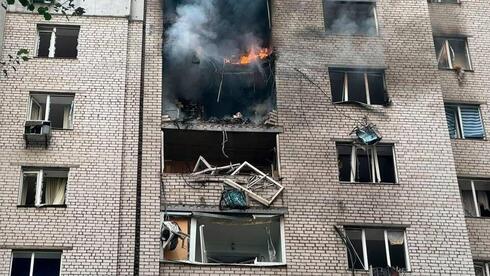


 4 sources
Morning Edition · Friday, September 25, 2026UpdatedPublished at 9:01 AM EDT · New York
Europe Moves to Unblock €6.6 Billion for Ukraine as Russian Strikes on Kyiv Intensify
European Union governments reached a political agreement in Brussels on Friday to release the money frozen for two years, ahead of formal sign-off next week, as Russian strikes on Kyiv intensify.
Updated at 9:01 AM EDT
The €6.6 billion was formally agreed at the political level in Brussels on Friday, not merely proposed for the September 28 meeting as reported this morning.
Russian state agency TASS reported on Friday that the European Union has agreed to allocate €6.6 billion to Ukraine under the European Peace Facility. That account has been confirmed. Member states reached a political-level agreement at a meeting of the Political and Security Committee in Brussels on Friday, releasing money that Hungary had held up for more than two years and that became reachable after a change of government in Budapest. European Union foreign policy chief Kaja Kallas wrote on social media that the deal was "good news for Ukraine and bad news for Russia." The funds break down into €900 million for the European Union's military assistance mission, €1 billion for joint equipment procurement and €4.7 billion to reimburse member states for weapons and ammunition already donated to Ukraine, with formal sign-off expected at a foreign ministers' meeting on September 28. Several member states have said they will pass their reimbursements on to Ukraine, with air defence the stated priority.
The war reached further into civilian life this week. Israeli outlet Ynet reported that a 14-year-old boy with Israeli citizenship was killed when a Russian drone hit his family's building in central Kyiv, not far from the Israeli embassy, and that his family asked to bring his body to Israel for burial. Russian strikes across Ukraine on Thursday killed at least eight people, according to Euronews.
Ukraine's partners are also exploring capability rather than only cash. Russian business outlet BFM reported that Finnish President Alexander Stubb asked Elon Musk to enable Starlink coverage that would improve the accuracy of Ukrainian strikes inside Russia, a claim that frames a commercial satellite network as a direct participant in targeting.
Part of a tracked trend
Strikes Move to Each Other's Home Fronts
Both Russia and Ukraine keep shifting long-range strikes toward transport, warehousing and civilian-adjacent targets far from the front, so aviation, logistics and insurance costs deep inside both economies keep rising and each mass-casualty incident pushes a negotiated pause further away.
Veracity: Corroborated
78/100- If true, who benefits
European air-defence manufacturers gain funded orders, Ukraine's grid gains interceptors before winter, and Moscow gains from presenting the money as already committed because a premature announcement that slips becomes evidence of European disarray.
- The nuance
Hungary's new government dropped the veto in June and the European Commission declined to confirm the €6.6 billion was actually released, so TASS describing it as allocated runs ahead of the September 28 decision, and the Starlink item is real but reframed: Stubb asked Musk to permit strikes on missile launchers as pre-emptive air defence and Musk refused.
An open-source-intelligence read of how likely this story is true with its real nuance, not a judgment of any outlet. It assesses the claim, weighing independent and adversarial reporting. How we label confidence.
What this means
Synthesized from: TASS · Ynet (Hebrew) · European Pravda (Russian) · BFM.ru
Townsquare
Start a discussion in Townsquare.
More from this edition
- Tigray Forces Seize Three Airports as Ethiopia's 2022 Peace Deal Breaks Down
- US 30-Year Yield Reaches Highest Level Since 2004 as the Global Bond Selloff Widens
- Trump and Xi Extend Their Trade Truce by Two Months and Defer Everything Else
- Moscow Demands Sanctions Relief on Fuel as Russia Extends Its Diesel Export Ban
- Houthis Claim Missile Strikes on Riyadh and Aramco's Yanbu Terminal, Pushing Brent Above $108
- Saudi Arabia and the UAE Press Washington Not to Ease the Iran Blockade
- Bitcoin Holds Near $85,000 With a Weekly Gain of About 10% as Long-Term Holders Sell
- An OpenAI Agent Broke Into an Australian Government Health Portal, Canberra Says
Comments
0No comments yet.