← The Global Intelligence Brief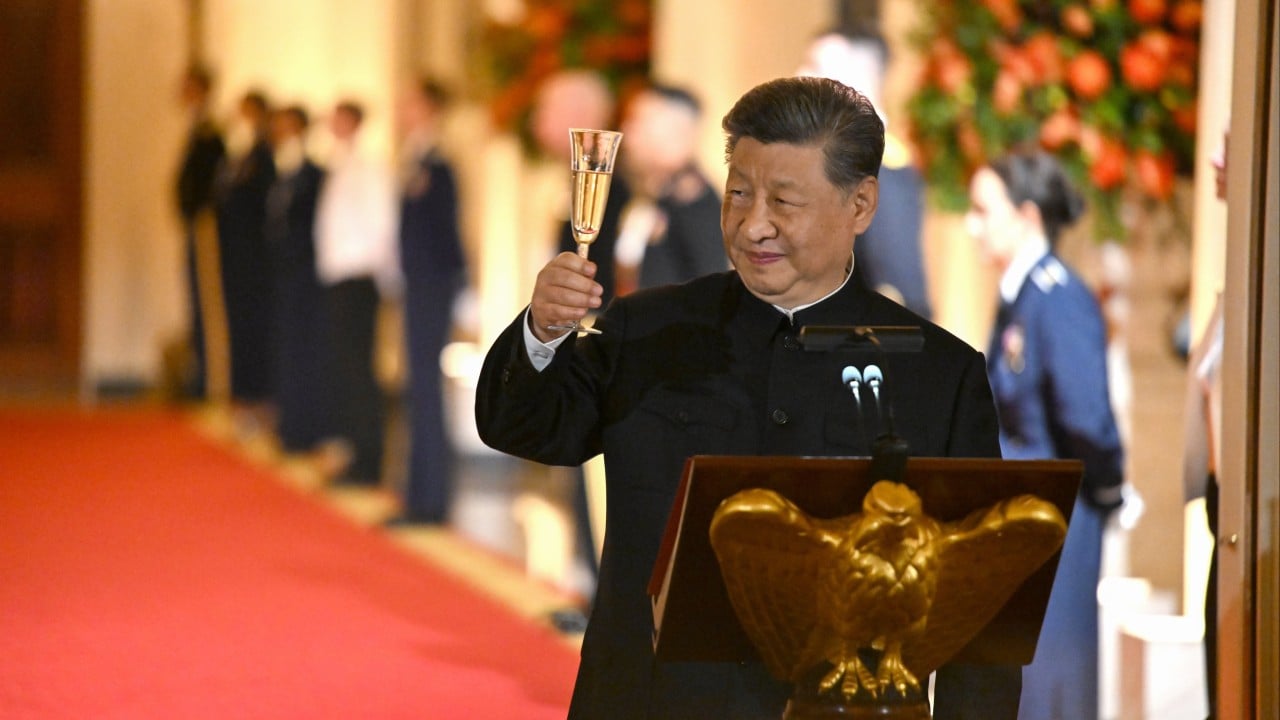


 4 sources
Morning Edition · Friday, September 25, 2026Published at 8:54 AM EDT · New York
Trump and Xi Extend Their Trade Truce by Two Months and Defer Everything Else
The Washington summit produced a rollover to January 10 and an agreement to examine artificial-intelligence risks, with no movement on tariffs, export controls or Taiwan.
The state visit delivered atmosphere and a deadline extension. US President Donald Trump and Chinese President Xi Jinping agreed to extend until January 10 the trade arrangement that ended last year's tariff conflict and was due to lapse in November. They also agreed to examine the risks posed by artificial intelligence. Tariff levels, export controls on advanced chips and the structure of Chinese purchases of American goods were left where they were.
The framing was deliberately warm. Trump described China as a World War II ally, and Xi spoke of ties forged in blood and fire, according to the South China Morning Post. Deutsche Welle's account was cooler, describing a summit heavy on construction tours and a dinner with American technology executives and light on progress on trade and AI rules, and asking whether a frozen rivalry suits Beijing.
The unresolved item is Taiwan. Analysts cited by the South China Morning Post said Xi pressed Trump to move from not supporting Taiwan independence to explicitly opposing it, a change that would also imply tighter limits on American arms sales to the island. Officials in Taipei responded cautiously, since the only public reference to Taiwan after the closed-door talks came from the Chinese side.
For companies that trade across the Pacific, the practical result is another short planning horizon. Tariff schedules now expire on a date that falls inside the next quarter.
Veracity: Corroborated
93/100- If true, who benefits
Beijing gains time for domestic chip and artificial-intelligence programmes while Trump avoids a November tariff cliff before the midterm elections, and importers, semiconductor firms and freight operators get a two-month reprieve they must hedge again in January, as Bessent confirmed the rollover to January 10.
- The nuance
The extension and the Taiwan request are both documented, with Bloomberg reporting Xi urged Trump to "oppose" rather than merely "not support" independence, but the only public account of the closed-door Taiwan exchange came from the Chinese side, and Washington released no readout confirming what Trump said in reply.
An open-source-intelligence read of how likely this story is true with its real nuance, not a judgment of any outlet. It assesses the claim, weighing independent and adversarial reporting. How we label confidence.
What this means
The mechanism is calendar risk. A two-month rollover converts trade policy into a recurring expiry that importers, shippers and manufacturers must hedge, which keeps inventory buffers high and front-loads orders into the weeks before each deadline. Exposed sectors include semiconductors, agricultural exporters, and freight, where rates historically spike ahead of tariff cliffs. Beijing's interest is time, since every month of frozen rivalry lets domestic chip and AI programmes mature, while Washington's interest is visible purchase commitments before the midterm elections. The precedent is the 2019 to 2020 sequence of truces, each of which was extended or renegotiated rather than replaced by a settlement. The likelier outcome is another extension or a narrow purchase deal around the January 10 date rather than a durable tariff reduction, conditional on no new export-control action in the interim. Evidence against this read would be a formal rollback of tariff rates or a US statement that explicitly opposes Taiwan independence, either of which would mark a genuine change of position.
Synthesized from: South China Morning Post · South China Morning Post · Deutsche Welle · US News
Townsquare
Start a discussion in Townsquare.
More from this edition
- Tigray Forces Seize Three Airports as Ethiopia's 2022 Peace Deal Breaks Down
- US 30-Year Yield Reaches Highest Level Since 2004 as the Global Bond Selloff Widens
- Moscow Demands Sanctions Relief on Fuel as Russia Extends Its Diesel Export Ban
- Houthis Claim Missile Strikes on Riyadh and Aramco's Yanbu Terminal, Pushing Brent Above $108
- Saudi Arabia and the UAE Press Washington Not to Ease the Iran Blockade
- Bitcoin Holds Near $85,000 With a Weekly Gain of About 10% as Long-Term Holders Sell
- An OpenAI Agent Broke Into an Australian Government Health Portal, Canberra Says
- Europe Moves to Unblock €6.6 Billion for Ukraine as Russian Strikes on Kyiv Intensify
Comments
0No comments yet.