← The Global Intelligence Brief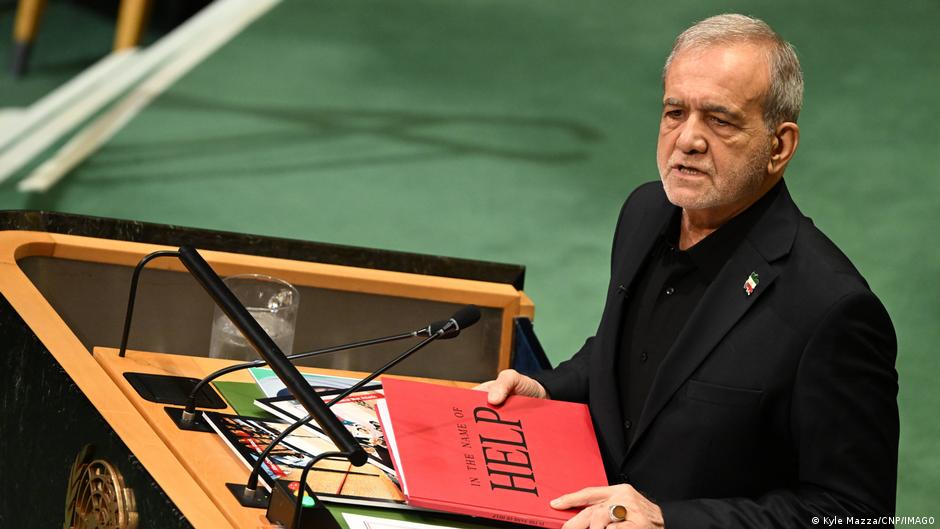


 4 sources
Morning Edition · Friday, September 25, 2026UpdatedPublished at 9:01 AM EDT · New York
Saudi Arabia and the UAE Press Washington Not to Ease the Iran Blockade
Iran's foreign minister put forward a specific seven-day plan in New York to reopen the Strait of Hormuz, tying it to a regional truce, $12 billion in unfrozen assets and an end to the US naval blockade.
Updated at 9:01 AM EDT
Iran moved from a vague ceasefire proposal to a detailed seven-day plan, submitted formally in New York and awaiting a US response.
The decision by the United States to resume talks with Iran on the margins of the United Nations General Assembly has met resistance from inside the Gulf. Kommersant reported that Saudi Arabia and the United Arab Emirates oppose concessions to Tehran, and that Saudi Crown Prince Mohammed bin Salman told American officials the naval blockade should stay in place until Iran signs a new agreement.
Iran has since put a concrete number on the table. Iranian Foreign Minister Abbas Araghchi told reporters in New York, including the New York Times and the Guardian, that Tehran has submitted a formal proposal for a seven-day halt to hostilities across the region, including in Lebanon, the release of at least $12 billion in frozen Iranian assets, the lifting of sanctions on Iranian oil, and an end to the US naval blockade. Under the plan, Iran would reopen the Strait of Hormuz on the seventh day of the truce and begin broader talks with Washington. Araghchi said the seven-day clock would start only after Washington formally approves the terms, and that Tehran is still awaiting a US response, while claiming China supports the proposal. A White House official told CNN the two sides are having "positive and constructive discussions through intermediaries."
Iranian President Masoud Pezeshkian used his New York appearances to signal openness to talks, though Deutsche Welle judged the chance of a breakthrough on the war to be low. Israeli business daily Globes reported that Pezeshkian told NBC that Iran wants an agreement with Washington to end the war before the American midterm elections in November.
Domestic messaging inside Iran remains firm. Iranian state news agency IRNA quoted the Friday prayer leader of Kish as saying that the Islamic Republic seeks an honourable peace but has no fear of war, a formulation aimed at a domestic audience as negotiators talk.
Part of a tracked trend
Fragile US-Iran Detente
The US-Iran settlement is a managed, reversible arrangement rather than a durable peace, so repeated rounds of brinkmanship and renegotiation will keep regional risk live and intermittently price back into energy markets.
Veracity: Corroborated
84/100- If true, who benefits
Saudi Arabia and the United Arab Emirates keep Iranian barrels constrained and their own market share intact, Asian importers and tanker charterers gain most from any reopening, and Washington weighs pre-election fuel prices against the objections of the partners hosting its forces.
- The nuance
The Gulf objection traces to Wall Street Journal reporting relayed by Kommersant and others and rests on unnamed officials, and Iran's public terms have moved in the opposite direction from the phased exchange described, with Tehran now reported to demand the full $24 billion in frozen assets up front.
An open-source-intelligence read of how likely this story is true with its real nuance, not a judgment of any outlet. It assesses the claim, weighing independent and adversarial reporting. How we label confidence.
What this means
The mechanism runs through tanker insurance and freight rates rather than through barrels alone. A phased Hormuz reopening would lower the risk premium embedded in crude and in Gulf shipping, which is worth more to Asian importers than to producers, while Saudi Arabia and the UAE prefer Iranian barrels to stay constrained because that keeps their own market share and pricing power intact. Washington is balancing pre-election fuel prices against the objections of the security partners who host its forces. The precedent is the 2015 nuclear agreement, after which Iranian exports recovered faster than most forecasts and Gulf producers absorbed the volume. The likelier outcome in the coming weeks is a narrow, reversible arrangement covering shipping and a limited sanctions carve-out, conditional on Houthi attacks on Saudi territory not escalating further. A collapse of the mediated channel, or an Iranian decision to link Hormuz to the Yemen front, would push crude back toward its September highs.
Synthesized from: Kommersant · Deutsche Welle · Al Jazeera · IRNA (Farsi)
Townsquare
Start a discussion in Townsquare.
More from this edition
- Tigray Forces Seize Three Airports as Ethiopia's 2022 Peace Deal Breaks Down
- US 30-Year Yield Reaches Highest Level Since 2004 as the Global Bond Selloff Widens
- Trump and Xi Extend Their Trade Truce by Two Months and Defer Everything Else
- Moscow Demands Sanctions Relief on Fuel as Russia Extends Its Diesel Export Ban
- Houthis Claim Missile Strikes on Riyadh and Aramco's Yanbu Terminal, Pushing Brent Above $108
- Bitcoin Holds Near $85,000 With a Weekly Gain of About 10% as Long-Term Holders Sell
- An OpenAI Agent Broke Into an Australian Government Health Portal, Canberra Says
- Europe Moves to Unblock €6.6 Billion for Ukraine as Russian Strikes on Kyiv Intensify
Comments
0No comments yet.