← The Global Intelligence Brief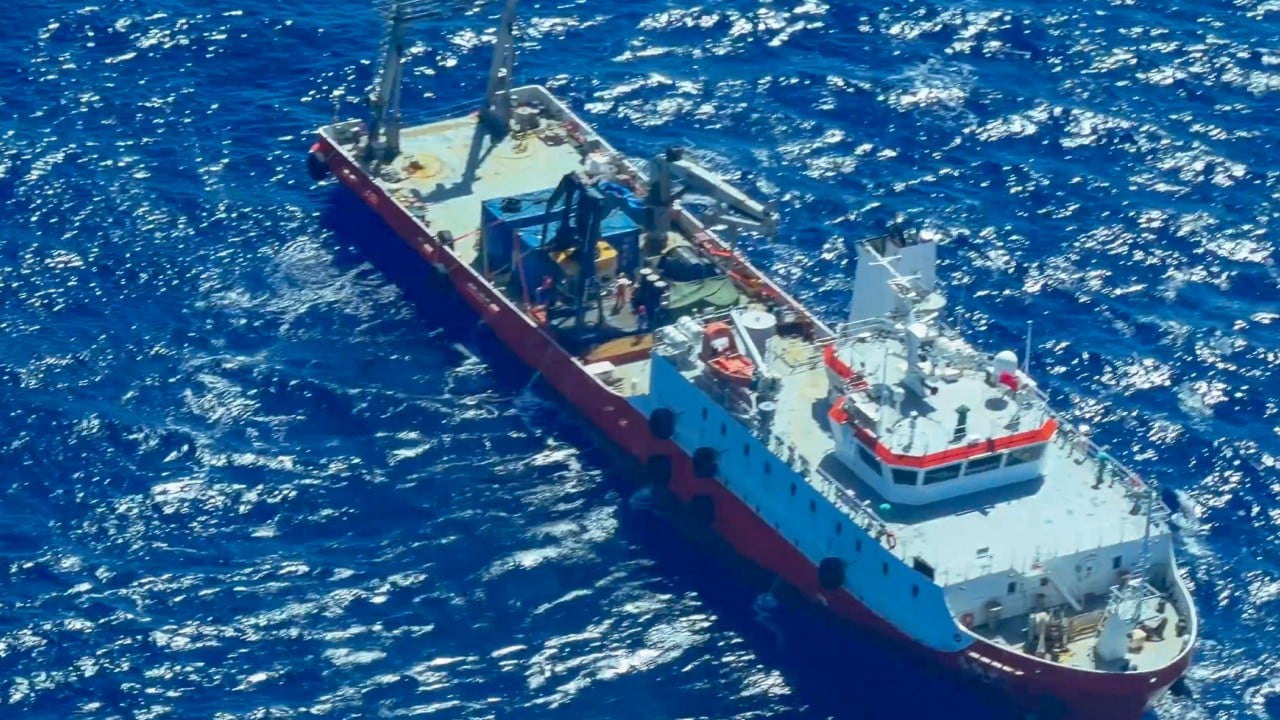


 3 sources
Morning Edition · Thursday, October 1, 2026Published at 1:16 AM EDT · New York
Manila Says a Chinese Survey Ship Falsified Its Position Near Undersea Cables
The Philippine Coast Guard tracked the vessel inside the country's exclusive economic zone off Batanes while its transponder reported a location more than 2,000 nautical miles away.
A Chinese civilian research vessel has spent more than a week operating in waters off the Philippines' Batanes Islands, the South China Morning Post reported, in an area that has become contested as Beijing presses against maritime boundary work between Manila and Tokyo. The Philippine Coast Guard located the ship, the Jia Hai Ke 7, about 37.8 nautical miles northwest of Itbayat, inside the Philippine exclusive economic zone.
The coast guard also said the vessel misreported its position. Its automatic identification system showed it leaving Xiamen after midnight on 21 September and then placed it off Papua New Guinea, more than 2,000 nautical miles away, by that evening, a trail Philippine officials called physically impossible. The coast guard said the ship held position over waters crossed by submarine cables in a pattern consistent with an unauthorised seabed survey. Beijing has previously described such vessels as conducting normal scientific research and has rejected Philippine characterisations of its activity in these waters.
The Luzon Strait carries the submarine cables that connect the Philippines to Northeast Asia and onward across the Pacific. Cable corridors are the physical layer of financial settlement, cloud services and data traffic, and they are protected by almost nothing other than their obscurity and the cost of finding them.
Part of a tracked trend
Indo-Pacific Arms Race Accelerates
Over the next 3-6 months a sharpening regional arms race drives Japan and its neighbors to expand militaries and export weapons—Tokyo moving to sell missiles—as maritime confrontations with China multiply and Asian rearmament gathers pace.
Veracity: Plausible
66/100- If true, who benefits
Manila gains documentary support for its maritime boundary work with Tokyo and for deeper foreign security cooperation, Japanese and Philippine cable-monitoring and defence budgets gain a justification, and Beijing retains a deniable mapping capability it has not had to use.
- The nuance
The vessel's presence inside the Philippine exclusive economic zone and the implausible position data are reported consistently across Philippine and international outlets, but every detail originates with the Philippine Coast Guard, Beijing has not responded to this specific case, and the central inference, that the loitering amounts to an unauthorised seabed survey of cable corridors, is deduced from movement patterns rather than from any recovered survey data, while automatic identification system anomalies can also arise from equipment faults or relayed signals.
An open-source-intelligence read of how likely this story is true with its real nuance, not a judgment of any outlet. It assesses the claim, weighing independent and adversarial reporting. How we label confidence.
Synthesized from: South China Morning Post · The Philippine Star · Manila Bulletin
Townsquare
Start a discussion in Townsquare.
More from this edition
- Long Bonds Keep Falling Even After United States Inflation Cools
- Bitcoin Loses Its Move Above $85,000 as Yields Refuse to Fall
- South Korea's September Exports Reach $120.9 Billion as Chip Sales Triple
- United States Completes Iraq Withdrawal as Tehran Receives Washington's Reply
- Pakistan Strikes Two Sites in Afghanistan, Kabul Says Nine Civilians Killed
- Japan Tightens Residency Rules on the Day Takaichi Promises a Growth Plan
- Cockpit Attack on Dubai-Tel Aviv Flight Prompts Saudi Arrest and Competing Accounts
- Huawei Puts Self-Designed Kirin Chips Across the Mate 90 Line
Comments
0No comments yet.