← The Global Intelligence Brief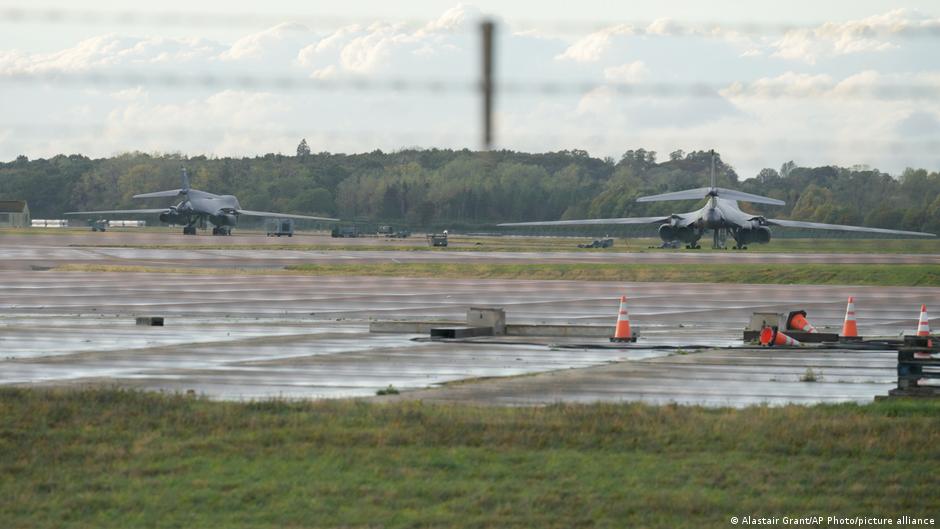


 3 sources
Morning Edition · Monday, October 5, 2026UpdatedPublished at 7:31 AM EDT · New York
United States Withdraws All 12 B-1 Bombers From Britain's RAF Fairford After a Suspected Plot
Washington gave no public reason. The withdrawal followed the arrest and release without charge of five men suspected of planning to plant explosives near the base, which has been used for strikes on Iran.
Updated at 7:31 AM EDT
Since this morning, the body now reports that the UK government said Iran played a part in the plot and that Tehran denied it. Both reports date to September 30 and October 1, so the morning copy missed them. It also reports a US official's confirmation that the bombers returned to their home stations, and a sixth arrest in London.
The US Air Force has withdrawn all its B-1 bombers from Royal Air Force (RAF) Fairford in western England. The withdrawal came a week after an incident near the base that British counter-terrorism police are investigating, according to Deutsche Welle. MercoPress reported that Washington gave no reason for the decision. A US official said all U.S. bombers deployed to Fairford had returned to their home stations in the United States. The Financial Times led its Monday briefing with the withdrawal.
Al Jazeera reported that all 12 aircraft left quickly after new warnings of a suspected Iran-backed plot. British police arrested five men on September 27 on suspicion of planning to plant explosives near the base. The men were released the next day without charge, and police said they were released on bail pending the investigation. Officials evacuated dozens of homes and intercepted three suspicious vehicles near the installation. A man who holds British and Iranian citizenship was later arrested on suspicion of terrorism offenses. No one has been charged.
The British government has linked the plot to Iran. Prime Minister Andy Burnham said there were "strong indications" that Iran had a role. Iran has denied any involvement.
Fairford has been a staging point for US bombers since the war with Iran began on February 28. In March, Al Jazeera reported that bunker-busting bombs were being loaded onto US aircraft at the base. Moving the bombers removes a highly visible US strike asset from Britain. The move means either the threat assessment or the security arrangements at the base have changed.
Part of a tracked trend
Iran War Spills Across Fronts
The US-Iran conflict keeps drawing in new theaters and third parties, from the Red Sea to the Caspian, so its risk premium spreads to infrastructure and shipping lanes previously thought insulated from the Gulf.
Veracity: Plausible
72/100- If true, who benefits
If an Iran-backed plot drove the move, Washington gains a public case that Tehran threatens allied soil, and advocates of higher British security spending gain. Tehran gains if the episode shows it can push US strike assets out of Europe without acting.
- The nuance
The story says the five suspects were released without charge, but counter-terrorism police released them on police bail and said they remain under investigation. A Pentagon spokesperson confirmed the bombers returned to US home stations, and investigators were still examining whether Iran or an Islamist group was behind the plot, so the Iran attribution remains unproven.
An open-source-intelligence read of how likely this story is true with its real nuance, not a judgment of any outlet. It assesses the claim, weighing independent and adversarial reporting. How we label confidence.
What this means
The withdrawal shows that the Iran war now reaches the home territory of US allies, where host governments must protect assets they do not control. Britain's security services and its political relationship with Washington are both exposed. If the United States decided British protection was insufficient, that is a judgment about allied capacity. If the United States acted on its own intelligence without explaining it publicly, that is a judgment about allied trust. A precedent exists. After the 1996 Khobar Towers bombing, the United States moved its aircraft to remote Prince Sultan Air Base and later reduced its Saudi presence, a basing change that lasted years. The likelier outcome over the coming months is that US long-range bomber operations shift to US-controlled locations such as Diego Garcia and the continental United States, with European bases used for shorter, less publicized rotations. A return of the bombers to Fairford after British charges or an announced security upgrade would prove this wrong. Defense and security spending in Britain rises in either case.
Synthesized from: Deutsche Welle · MercoPress · Financial Times World
Townsquare
Start a discussion in Townsquare.
More from this edition
- Flávio Bolsonaro Leads Lula Into Brazil's Runoff, and Brazilian Assets Jump Overnight
- Treasury Yields Hold Near 24-Year Highs After Weak Jobs Data, While the Nikkei Climbs Back Above 70,000
- Brent Falls to About $101.60 as Group of Seven Reserve Releases and Recovering Gulf Exports Outweigh Houthi Claims Against Aramco
- Iran's Security Chief Admits the Economy Is in Its Hardest Period as the Blockade Cuts Oil Revenue
- Saudi Arabia, Pakistan and Turkey Convene Their Makkah Defence Pact as Yemen's Government Opens an Offensive Against the Houthis
- Reserve Bank of India Expected to Raise Rates for the First Time Since 2023 as Inflation Stays Above Target
- OKX and Intercontinental Exchange Seek SEC Approval to Trade Tokenized Shares of 63 NYSE Companies Around the Clock
Comments
0No comments yet.