← The Global Intelligence Brief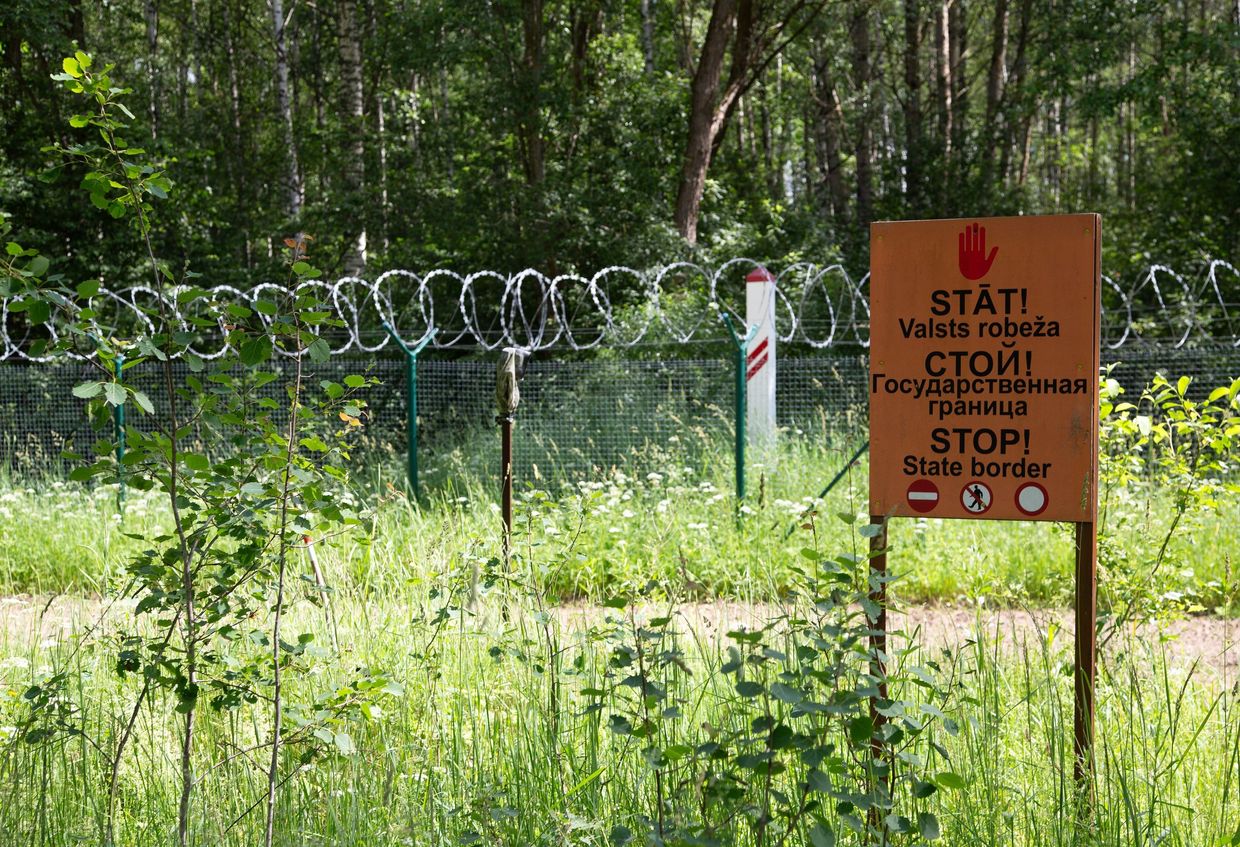


 3 sources
Morning Edition · Wednesday, October 7, 2026Published at 1:05 AM EDT · New York
Latvia says armed escorts on the Belarusian side threatened its soldiers before a second border breach
On the same day, Belarusian President Alexander Lukashenko praised his alliance with Moscow in a birthday message to Russian President Vladimir Putin, and Russian state media published commentary on threats to attack Kaliningrad.
Latvian Interior Minister Janis Dombrava said armed people on the Belarusian side of the border threatened Latvian soldiers and pushed a group of migrants toward Latvia, the Kyiv Independent reported. "The escorts of the illegal migrants, who were located on the Belarusian side, were armed, issued threats to (Latvian) soldiers, and also actively urged and drove the migrant group toward Latvia," Dombrava said. A second breach followed.
The incident continues a pattern that has developed all year. Latvia had recorded about 8,000 illegal crossing attempts by mid-July, according to Poland's Centre for Eastern Studies. In July soldiers used tear gas and fired a warning shot after migrants threw logs at them. Latvia has extended its reinforced border operation, called "Vilkatis," through October. In earlier episodes, Belarus denied directing the flows and blamed Western policy in the Middle East for the migration.
Belarus's political alignment with Russia was stated openly the same day. In a birthday message to Putin carried by TASS, Lukashenko praised the Russian leader's "selfless service to the Fatherland" and his commitment to "fraternal ties" between the two countries. RIA Novosti published a piece under the headline "In the US, they explained what lies behind the threats to attack Kaliningrad." Kaliningrad is the Russian exclave between Lithuania and Poland. Russian officials have repeatedly said that North Atlantic Treaty Organization (NATO) planners intend to target it.
Part of a tracked trend
Hybrid Pressure on NATO's Eastern Edge
Russia and Belarus will keep applying low-cost, deniable pressure on the Baltic states and Poland, through migrant flows, armed border incidents and rhetoric about Kaliningrad, so frontline members keep raising defence and border spending and the region carries a persistent risk premium.
Veracity: Plausible
70/100- If true, who benefits
If Latvia's account is accepted, Riga and the other frontline NATO states gain support for more border spending and a tougher allied line toward Minsk, while Belarus gains cheap pressure that it can deny.
- The nuance
Every detail comes from Latvian officials, including the masked men who later crossed, damaged a power panel and stole cameras, and no reporting yet shows whether the armed escorts were Belarusian state personnel or smugglers, or gives any response from Minsk to this incident, although Belarus has denied directing earlier migrant flows.
An open-source-intelligence read of how likely this story is true with its real nuance, not a judgment of any outlet. It assesses the claim, weighing independent and adversarial reporting. How we label confidence.
What this means
Pressure through migrant flows costs Minsk little and costs Latvia a great deal. It ties down soldiers and border budgets, and it tests how NATO's eastern members respond to armed provocation that stays below the level of an attack. Exposure falls on the Baltic states' public finances, on investors pricing Baltic real estate and sovereign debt, and on the credibility of collective defence at the margin. Belarus's leverage comes from its alliance with Moscow. Its main incentive to stop is sanctions relief, which Washington offered in 2025 when it eased penalties on the Belarusian state airline Belavia after prisoner releases. The precedent is the 2021 border crisis with Poland and Lithuania. Flows fell only after the European Union (EU) pressured airlines and transit countries, and the affected states built permanent fences. The desk's read: incidents of this kind are likelier to increase through the winter, and Latvia is likely to extend Operation Vilkatis past October and spend more on border defence within months. A new US-Belarus deal on sanctions in exchange for concessions would prove that read wrong, because Belarus would then have a reason to reduce the pressure.
Synthesized from: Kyiv Independent · TASS · RIA Novosti
Townsquare
Start a discussion in Townsquare.
More from this edition
- Reserve Bank of India raises its repo rate to 5.50%, its first increase since February 2023
- Tanker attack off Oman injures 11 Indian sailors as Hormuz strikes rise and Brent holds near $100
- US-Iran talks stall as Trump keeps the Hormuz blockade in place and Tehran refuses to give up enrichment
- Gold steadies near $4,160 after the 30-year Treasury yield touches 5.7%, its highest level since 2002
- S&P 500 sets another record as the Magnificent Seven recover, while Goldman Sachs warns of froth
- Cardano gives token issuers power to freeze and seize assets as a second Ethereum layer-2 network shuts within a week
- Russia strikes Kyiv with missiles and drones on Putin's 74th birthday, killing at least two people
Comments
0No comments yet.