← The Global Intelligence Brief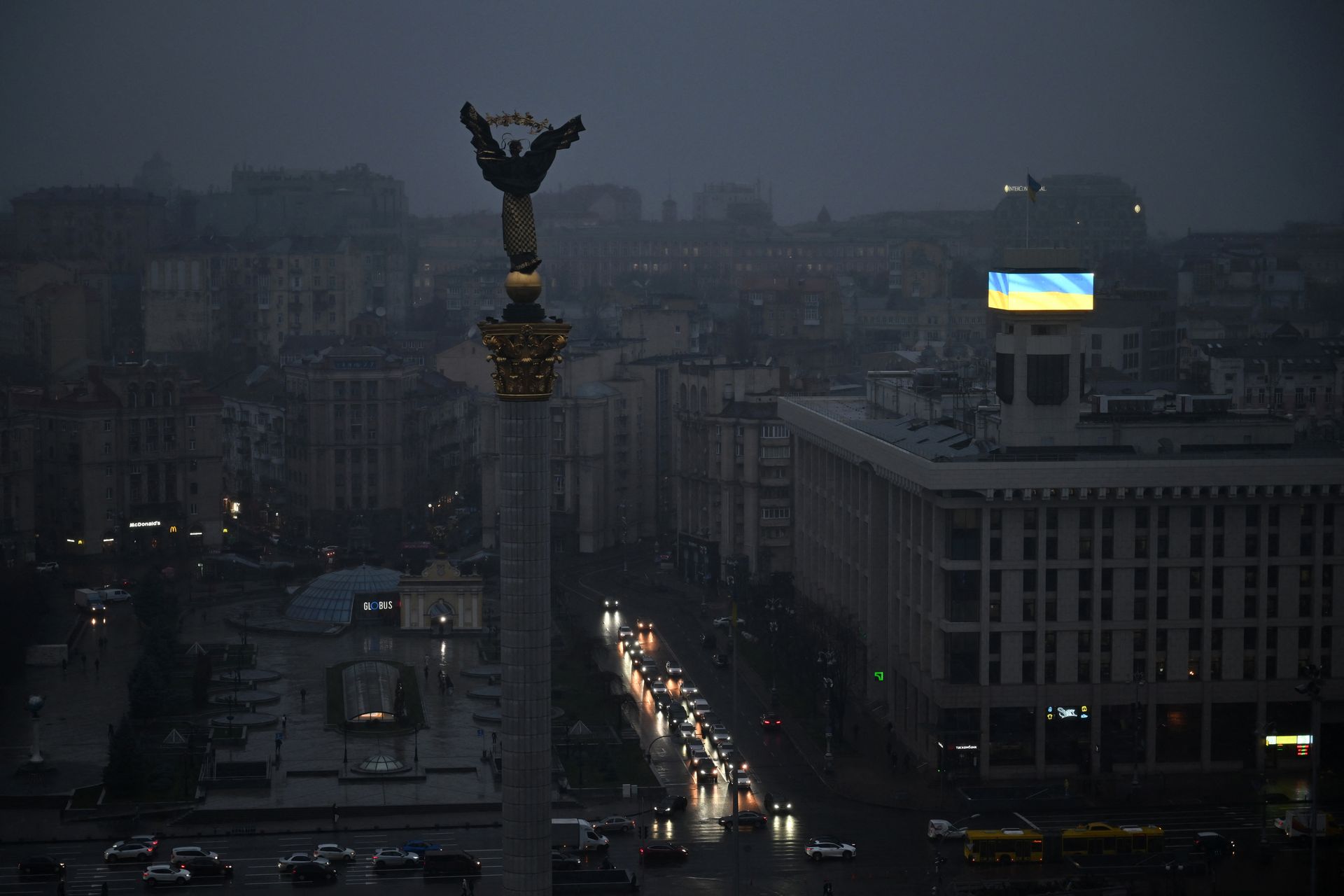


 4 sources
Morning Edition · Wednesday, October 7, 2026UpdatedPublished at 7:37 AM EDT · New York
Russia strikes Kyiv with missiles and drones on Putin's 74th birthday, killing at least two people
Russia fired about 70 missiles and Shahed drones at Kyiv and a dozen other regions, killing at least 11 people, with the deadliest strike destroying an apartment building in Pryluky. Russia's state news agency TASS reported that four drones were shot down over Russia's Kaluga region overnight. US Secretary of State Marco Rubio said Ukraine's membership of the North Atlantic Treaty Organization (NATO) is not under consideration.
Updated at 7:37 AM EDT
Death toll and scope revised sharply upward: the attack hit Kyiv and 12 other regions with about 70 missiles, killing at least 11 people nationwide (not "at least two" in one Kyiv district), with the deadliest strike destroying an apartment building in Pryluky.
Russia launched one of its largest missile and drone attacks of the war in the early hours of Wednesday, striking Kyiv and 12 other regions on President Vladimir Putin's 74th birthday. Ukrainian President Volodymyr Zelensky said Russian forces fired about 70 missiles, including ballistic missiles, along with Shahed drones. The attack killed at least 11 people nationwide, according to Euromaidan Press, which reported five dead in Pryluky and two each in Kyiv, Kremenchuk and Oleksandriia. Kyiv Post put the toll at 11 as well, and reported that the strike on Pryluky collapsed an apartment building. Some outlets reported the Pryluky death toll climbing as high as 13, including four children, as rescue crews worked through the rubble.
In Kyiv itself, the Kyiv Independent reported that two people died in the Darnytskyi district. The first explosions came at about 3:15 a.m. local time, and a second wave followed around 5:15 a.m. after Ukraine's air force warned that Tu-95 strategic bombers were approaching. Strikes hit a non-residential area in Obolon and warehouse facilities, and missile debris burned in the Shevchenkivskyi district. Zelensky had warned on Tuesday night that Russia was preparing a large-scale strike, calling it one of the most severe of the war.
Ukrinform, the Ukrainian state news agency, reported damage in several districts of Kyiv. Separately, it said Russian forces hit a transport infrastructure facility in Zaporizhzhia. The Russian Defense Ministry had not described the targets of this attack in the reports available. After earlier strikes on Kyiv, it said it had hit military-industrial enterprises and logistics centres.
Strikes also reached Russian territory overnight. TASS, Russia's state news agency, reported that four drones were destroyed over Kaluga region, southwest of Moscow.
On the diplomatic side, RT reported that Rubio said Ukraine's membership of NATO is not under consideration. Moscow has long named that as a condition of any settlement. Kyiv has treated membership as its long-term security guarantee.
Part of a tracked trend
Strikes Move to Each Other's Home Fronts
Both Russia and Ukraine keep shifting long-range strikes toward transport, warehousing and civilian-adjacent targets far from the front, so aviation, logistics and insurance costs deep inside both economies keep rising and each mass-casualty incident pushes a negotiated pause further away.
Veracity: Corroborated
84/100- If true, who benefits
Moscow benefits if Washington's position on Ukraine's membership of the North Atlantic Treaty Organization (NATO) is read as a concession made in advance, and Kyiv benefits from presenting strikes timed to Putin's birthday as evidence that Russia does not want a settlement.
- The nuance
The strike and the two deaths are confirmed, with rescuers finding two bodies in a burning garage cooperative in Darnytskyi district, but the birthday timing is the reporters' framing rather than proof of motive, and Russian and Ukrainian outlets quote Rubio as saying membership is not on the agenda "for now" while the US concentrates on ending the war, which is a qualified deferral rather than a permanent exclusion.
An open-source-intelligence read of how likely this story is true with its real nuance, not a judgment of any outlet. It assesses the claim, weighing independent and adversarial reporting. How we label confidence.
What this means
Both sides are directing long-range strikes at logistics, warehousing and transport far from the front. That raises insurance, storage and transport costs inside both economies, and neither government needs ground gains at the front to impose them. Ukrainian logistics firms, Russian regional infrastructure and European insurers with exposure to the region carry the cost. Rubio's statement removes one item from the negotiating agenda in a direction Moscow wants. That matters more than any message implied by the birthday timing, because it narrows what Kyiv can expect from Washington without giving Ukraine anything in return. The precedent is the March 2025 US-brokered pause on strikes against energy infrastructure. Both sides accused the other of breaking it, and it did not lead to a wider ceasefire. The desk's read: as the heating season starts in the coming weeks, strikes are likelier to increase than to pause, with Russia concentrating on Ukrainian energy and logistics and Ukraine on Russian regional targets. A jointly announced moratorium on energy and logistics strikes, backed by Washington, would prove that read wrong.
Synthesized from: Kyiv Independent · Ukrinform · TASS (Russian) · RT
Townsquare
Start a discussion in Townsquare.
More from this edition
- Reserve Bank of India raises its repo rate to 5.50%, its first increase since February 2023
- Tanker attack off Oman injures 11 Indian sailors as Hormuz strikes rise and Brent holds near $100
- US-Iran talks stall as Trump keeps the Hormuz blockade in place and Tehran refuses to give up enrichment
- Gold steadies near $4,160 after the 30-year Treasury yield touches 5.7%, its highest level since 2002
- S&P 500 sets another record as the Magnificent Seven recover, while Goldman Sachs warns of froth
- Cardano gives token issuers power to freeze and seize assets as a second Ethereum layer-2 network shuts within a week
- Latvia says armed escorts on the Belarusian side threatened its soldiers before a second border breach
Comments
0No comments yet.