← The Global Intelligence Brief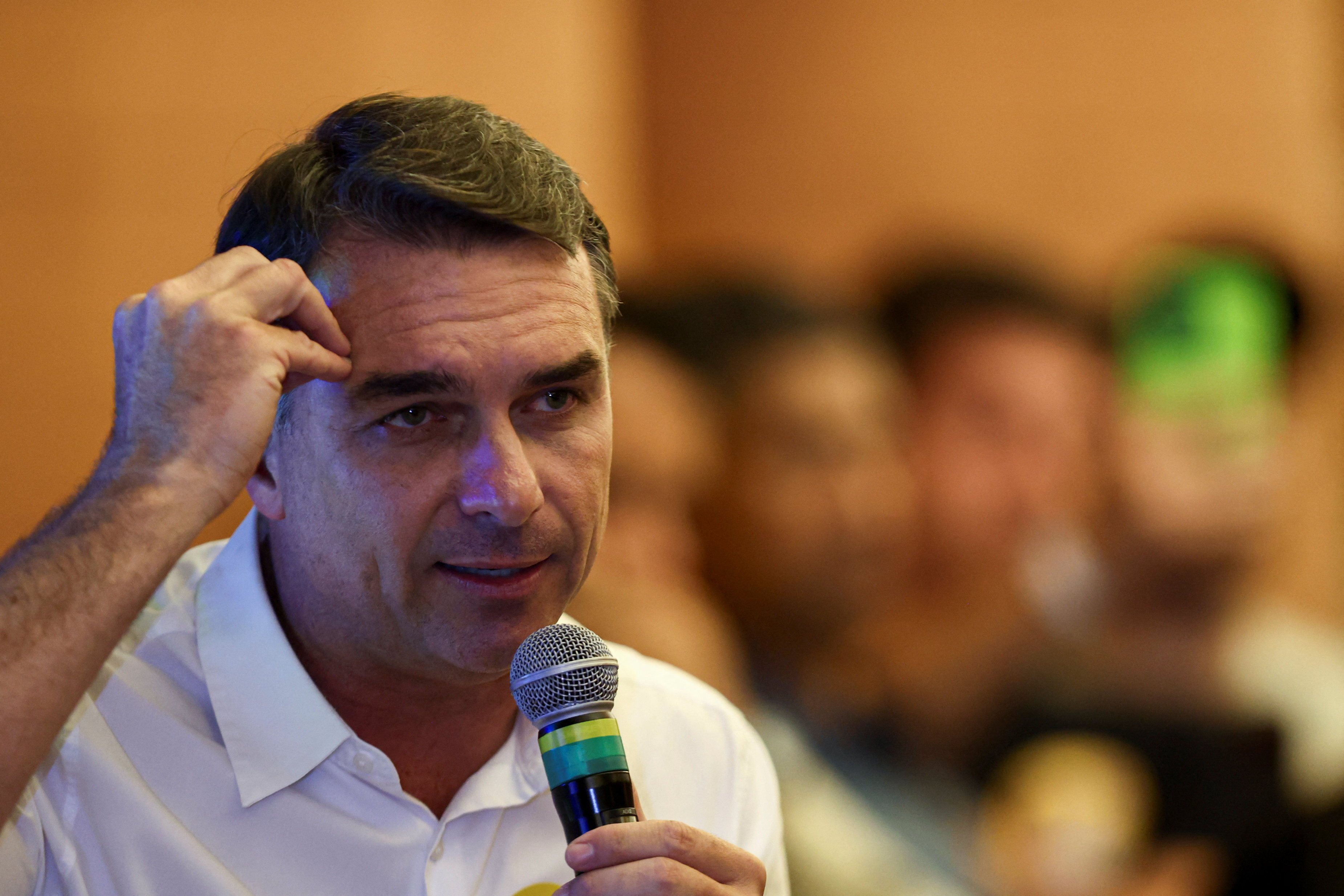


 4 sources
Morning Edition · Saturday, October 17, 2026Published at 1:06 AM EDT · New York
Flávio Bolsonaro promises a fiscal adjustment but will not touch minimum-wage indexation or health spending floors before Brazil's runoff
The challenger leads President Lula in recent polls, and on the same day the Senate promulgated an end to the six-day work week, adding a labor-cost change to a race decided largely on fiscal credibility.
Senator Flávio Bolsonaro, the Liberal Party (PL) candidate in Brazil's presidential runoff, pledged a fiscal adjustment while rejecting cuts to social spending in a televised interview on TV Globo on Friday night. Asked directly by interviewer Renata Lo Prete, he said he would not end the link between minimum-wage increases and benefit adjustments, and would not change the constitutional floors for health spending. Economists consider those two rules the main drivers of Brazil's mandatory spending growth. He also told InfoMoney that he would not support changing the rule that bars relatives from succeeding him.
Agência Brasil, the state news agency under President Luiz Inácio Lula da Silva's government, reported that Bolsonaro did not explain his proposals and made accusations without evidence. According to the agency, he denied that the January 8, 2023 riot was a coup attempt and said he would not seek a second term. Lula spent the day campaigning in Minas Gerais after the Senate promulgated the end of the "6x1" schedule (six working days for one day off). He also gained from new data showing Amazon deforestation down 42% from a year earlier.
Investors have taken sides. A Datafolha poll showed Bolsonaro at 49% to Lula's 45%, a statistical tie. An Atlas/Bloomberg survey gave him 51.1% to 45.7%, and the Ibovespa closed at 209,067 on those polls. Folha reports that agribusiness groups are already competing for the Environment and Mines and Energy ministries in a possible Bolsonaro government.
Part of a tracked trend
Emerging-Market Elections Turn on Fiscal Credibility
In large emerging markets, polarised elections keep making fiscal rules and congressional arithmetic, rather than the identity of the winner, the main determinant of currency and local-rate pricing.
Veracity: Corroborated
87/100- If true, who benefits
Bolsonaro gains by neutralizing the Lula campaign's advertisements that said he would cut the minimum wage and health spending, while holders of long-dated Brazilian bonds carry the risk if his fiscal promise lacks a source of savings.
- The nuance
Several outlets, including Jornal de Brasília, confirm the October 16 pledges. In an August Jornal Nacional interview, however, he promised a "tesouraço" (a sweeping spending cut), and the claim that he "did not explain his proposals" comes from Agência Brasil, an agency run by the government he is challenging.
An open-source-intelligence read of how likely this story is true with its real nuance, not a judgment of any outlet. It assesses the claim, weighing independent and adversarial reporting. How we label confidence.
What this means
Brazilian assets have been rising on the expectation that a Bolsonaro government would restrain spending. Friday's interview weakens that case, because the candidate ruled out changes to the two largest structural spending rules. Any adjustment would then have to come from discretionary cuts and tax changes, which Brazil has rarely sustained. Holders of long-dated Brazilian government bonds and the real face the most risk if markets conclude that the fiscal promise is mostly rhetoric. The new 6x1 rule raises labor costs for employers whoever wins. Markets have priced a Bolsonaro victory as good for the fiscal outlook. The less-priced risk is a Bolsonaro victory without a credible fiscal plan. Argentina in 2015-2017 is the precedent: Mauricio Macri's market-friendly win brought a rally, gradualist fiscal policy followed, and the peso crisis arrived in 2018. If Bolsonaro wins on October 25, expect an initial rally followed by a repricing of long rates within months unless his team names a finance minister and spending targets that address mandatory outlays. A Lula win would reprice the real lower at once.
Synthesized from: Investing.com Economy · InfoMoney · Agência Brasil · Agência Brasil
Townsquare
Start a discussion in Townsquare.
More from this edition
- Trump waives Russia sanctions law's secondary tariffs two days before they take effect, sparing India and China
- Brent touches $110 for the first time since May after attacks on at least nine ships near the Strait of Hormuz
- Warsh offers no rate guidance in Bangkok as US inflation reaches 3.7% and the 10-year Treasury yield stays near 5.1%
- Nasdaq falls 2.1% as fears over AI debt and interest rates hit chipmakers and software stocks together
- Gold and bitcoin both trade below year-ago prices as Google quantum advance raises the risk to early bitcoin wallets
- Ukrainian drone barrage shuts all four Moscow airports and restricts flights across 22 Russian airports
- Missiles strike Aden airport again as the Houthis widen attacks on Saudi Arabia and the Bab el-Mandeb shipping route
Comments
0No comments yet.