← The Global Intelligence Brief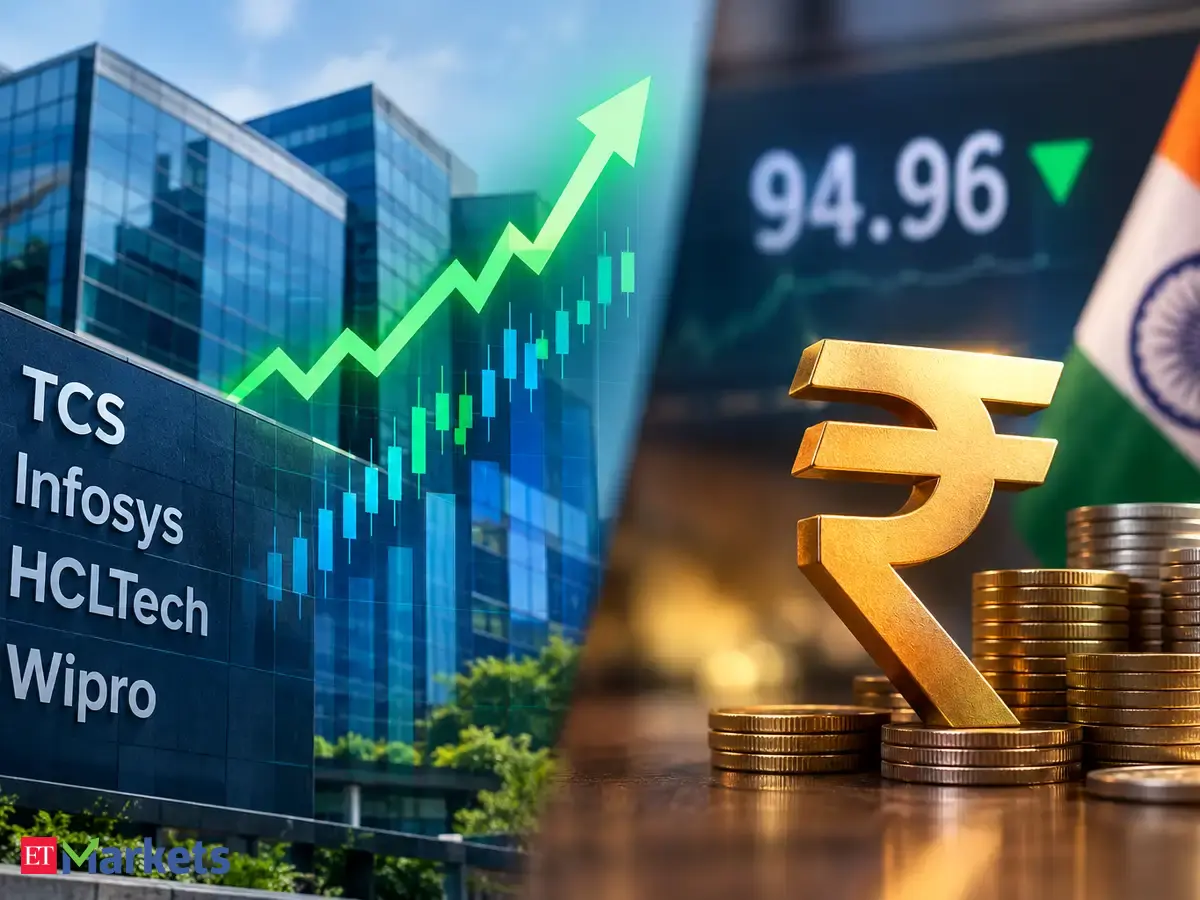


 3 sources
Morning Edition · Saturday, October 17, 2026Published at 1:06 AM EDT · New York
India's IT index posts its biggest weekly gain since 2008 as a weak rupee and AI revenue lift HCLTech and its peers
The Nifty IT index rose 11.7% for the week while Asian chip stocks fell, with the rupee near 95 to the dollar and the Reserve Bank of India setting up dollar arrangements for state oil companies.
India's Nifty IT index rose 11.7% this week, after stronger-than-expected quarterly results from HCLTech and its peers. The rally came as semiconductor shares fell across Asia, and Indian software exporters moved in the opposite direction to the chipmakers.
HCLTech reported a 21.2% rise in quarterly net profit to ₹5,132 crore. Its advanced AI revenue reached an annualized $219 million, up from $171 million in the previous quarter. On the day of the results, the Sensex gained 1,109 points and the Nifty 50 closed back above 22,700. Investors read the figures as evidence that Indian service firms can earn money from AI adoption instead of losing work to it.
The currency explains part of the move. Mint reports that the Reserve Bank of India (RBI) introduced measures to ease pressure on the rupee, including arrangements that let public-sector oil marketing companies buy dollars outside the spot market. The rupee strengthened to about 95.27 per dollar afterward. A rupee at that level raises the local-currency value of every dollar of export revenue. The same week brought Jio Platforms' large market debut, a deferral of charges on the Unified Payments Interface (UPI) and progress on the sale of the government's IDBI Bank stake to Fairfax, according to Mint.
India also gained from Friday's US waiver of the Graham Act tariffs, which removed the threat of 100% duties on Indian exports for buying Russian oil.
Part of a tracked trend
India's Services Exports as an Oil-Shock Hedge
While high oil prices pressure the rupee, India's dollar-earning technology exporters will keep attracting capital as a currency-hedged way into AI demand, widening the gap between export winners and import-dependent sectors.
What this means
India faces two opposing pressures from the same oil-price shock. Its oil import bill rises with Brent near $110 and puts pressure on the rupee, while its dollar-earning service exporters gain from the same weak currency. The RBI's oil-company dollar arrangement takes the largest importers' demand out of the spot market, a method India used in 2013 during a currency crisis. That episode stabilized the rupee within weeks without sharp interest rate increases. Exporters gain and fuel retailers and importers of capital goods lose. With US technology stocks falling on AI debt fears, Indian IT is acting as a lower-valuation, cash-generating way into AI demand. The likelier path over the coming months is continued foreign rotation into Indian IT and away from oil-sensitive sectors, provided Brent stays high and the RBI keeps the rupee from falling in disorder. A sharp drop in US enterprise technology budgets in the next earnings season would undercut the read, because Indian IT revenue depends on those budgets.
What to watch
- Guidance from Infosys and TCS on deal wins tied to AI work. Confirmation would show the HCLTech result reflects the sector and is not specific to one company.
- The rupee's level after the RBI arrangement. A renewed slide would show that the oil bill is overwhelming the central bank's tools.
- Foreign portfolio flows into Indian equities after the Graham Act waiver removed the tariff threat.
Observations to monitor, not financial advice.
Synthesized from: Economic Times · Mint (Economy) · DSIJ
Townsquare
Start a discussion in Townsquare.
More from this edition
- Trump waives Russia sanctions law's secondary tariffs two days before they take effect, sparing India and China
- Brent touches $110 for the first time since May after attacks on at least nine ships near the Strait of Hormuz
- Warsh offers no rate guidance in Bangkok as US inflation reaches 3.7% and the 10-year Treasury yield stays near 5.1%
- Nasdaq falls 2.1% as fears over AI debt and interest rates hit chipmakers and software stocks together
- Gold and bitcoin both trade below year-ago prices as Google quantum advance raises the risk to early bitcoin wallets
- Flávio Bolsonaro promises a fiscal adjustment but will not touch minimum-wage indexation or health spending floors before Brazil's runoff
- Ukrainian drone barrage shuts all four Moscow airports and restricts flights across 22 Russian airports
Comments
0No comments yet.