← The Global Intelligence Brief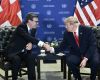


 3 sources
Morning Edition · Saturday, October 24, 2026Published at 1:16 AM EDT · New York
Burnham Presses Trump Over Argentina's Measures Against the Falklands Sea Lion Oil Project
The call came a day after a senior US diplomat said in Buenos Aires that Washington is watching a bill that would sanction the suppliers and financiers of companies working in the islands.
British Prime Minister Andy Burnham told US President Donald Trump on Friday about "the economic consequences that Argentina's coercive measures have for the United Kingdom and the United States," MercoPress reported. The call focused on the Sea Lion oil field north of the Falkland Islands, which Argentina claims as the Malvinas. Britain's Rockhopper Exploration and Israel's Navitas Petroleum plan to begin production within two years. Downing Street published its own readout of the call.
The day before, US Deputy Secretary of State Christopher Landau said in Buenos Aires that Washington is closely watching how Argentina's National Sovereignty Defense bill could affect US companies. The bill, now stalled in the Chamber of Deputies, would extend sanctions to the affiliates, shareholders, financiers and suppliers of companies operating in the islands. Trump has said in recent weeks that US neutrality on sovereignty over the islands is under review, according to MercoPress. Argentine outlet Infobae reported that Burnham defended oil production in the islands and questioned Argentina's sanctions.
Argentina's energy team has just lost its senior official. Daniel González, Economy Minister Luis Caputo's deputy for energy and mining, has resigned. Clarín listed the issues he left open: utility regulation, the large-investment incentive regime known as the RIGI, privatizations and the Malvinas file.
Argentina's dollar inflows are also weaker. Ámbito reported that wheat prices fell about 18% in a month, corn nearly 14% and soybeans more than 5%, and that private debt placements have slowed. The central bank still bought $733 million in October and holds reserves above $50 billion, according to the same report.
Part of a tracked trend
Washington's Transactional Alliances
Washington increasingly treats long-standing positions toward allies as bargaining chips, so assets in disputed or allied jurisdictions carry rising policy risk that depends on bilateral deals rather than on settled commitments.
Veracity: Plausible
74/100- If true, who benefits
Rockhopper and Navitas gain if Washington backs Sea Lion, the Milei government gains if US neutrality shifts toward Argentina, and Trump keeps leverage over both governments at little cost.
- The nuance
Argentine outlets report that Washington asked Buenos Aires to freeze the sovereignty bill or exempt US companies, so US pressure currently runs against Argentina's bill. A leaked Pentagon email in April first linked a review of the Falklands position to punishing allies that declined to join the Iran war, which suggests the review concerns Washington's dispute with its allies more than the islands.
An open-source-intelligence read of how likely this story is true with its real nuance, not a judgment of any outlet. It assesses the claim, weighing independent and adversarial reporting. How we label confidence.
What this means
Argentina is using sanctions that reach beyond its borders to raise the cost of capital and services for Sea Lion. A similar 2011 law already barred companies working in Falklands hydrocarbons from operating in Argentina, and its main effect was that companies with Argentine business stayed away from the islands. The new bill would extend that reach to financiers and suppliers. Washington decides which side gains. London wants US support for the project, and President Javier Milei's government wants US goodwill and dollars at a time when export prices and debt inflows are weakening. Trump's review of US neutrality gives him leverage over both allies at little cost to himself. The likelier outcome is that the bill stays stalled in the Chamber of Deputies while Washington holds its neutrality review open as a bargaining chip with London and Buenos Aires. Passage of the bill by the Deputies, or a formal change in the US position, would prove this read wrong.
Synthesized from: MercoPress · Clarín (Economía) · Ámbito (Economía)
Townsquare
Start a discussion in Townsquare.
More from this edition
- Brent Nears $117 as Washington Lends Crude From a Strategic Reserve at Its Lowest Level Since 1982
- Washington Reduces Staff at Gulf Embassies as Trump Threatens "Another Little Epic Fury" Against Iran
- Dow Falls 653 Points as Doubts About Artificial-Intelligence Spending Spread Beyond Tech Stocks
- Japan's Core Inflation Rises to 2.1%, Above the Bank of Japan's Target for the First Time in Nine Months
- Brazil Votes Sunday With Lula and Flávio Bolsonaro Tied at 50% in the Final Datafolha Poll
- France Deploys 70,000 Police for Saturday Protests as Its 10-Year Borrowing Cost Reaches 5%
- US Waiver Lets Russian Diesel Back Onto World Markets as Former Executives Say Novatek Secretly Ran an Alaska Gas Project
Comments
0No comments yet.