← The Global Intelligence Brief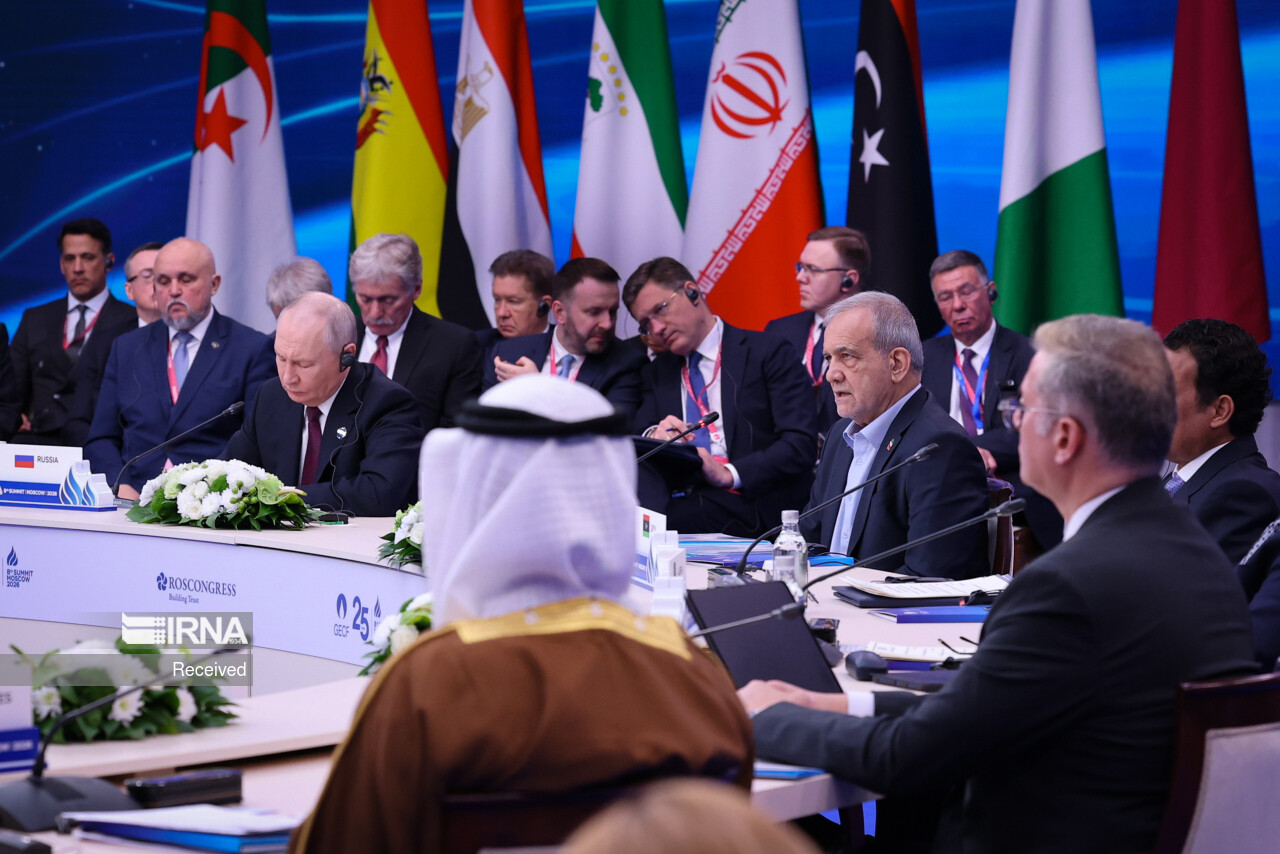


 4 sources
Morning Edition · Wednesday, October 28, 2026Published at 1:14 AM EDT · New York
Gas Exporters Led by Russia, Iran and Qatar Adopt a Moscow Declaration Rejecting Unilateral Sanctions
The Gas Exporting Countries Forum (GECF) pledged to build crisis-response mechanisms and opposed the extraterritorial reach of national laws, on the same day Trump suggested that Venezuela, a forum member, become the 51st US state.
Leaders of the GECF adopted the Moscow Declaration at the close of the forum's eighth summit on Tuesday, chaired by Russian President Vladimir Putin, BFM.ru reported. Iranian President Masoud Pezeshkian, Qatar's Emir Sheikh Tamim bin Hamad Al Thani, Mozambique's President Daniel Chapo, Equatorial Guinea's President Teodoro Obiang Nguema Mbasogo and Libya's Presidential Council chairman Mohamed al-Menfi attended in person, Egypt Daily News reported. Venezuela's acting president, Delcy Rodríguez, spoke by video.
Iran's state news agency presented the summit as a political alignment. IRNA's Persian-language report ran under a headline that translates as "Iran's energy diplomacy at the Moscow station: a common voice against sanctions, tariffs and discrimination." The agency said the summit statement showed agreement against sanctions, tariff wars and discrimination in access to technology.
According to Russian coverage of the text by Ura.news, members agreed to create mechanisms to respond to gas-market crises and to expand consultations on reliable supply. They expressed concern about events in the Middle East. They also rejected the extraterritorial application of national laws and unilateral coercive measures not authorized by the United Nations, language that covers US secondary sanctions. The text also calls for diversified trade routes, a "fair" gas price and less price volatility. Reports reviewed by this desk did not mention any commitment to settle gas trade in currencies other than the dollar.
US policy toward one member moved in the opposite direction on the same day. At a rally in Corpus Christi, Texas, President Donald Trump suggested that Venezuela become the 51st US state and elect a governor instead of a president. He also announced the arrival of the first shipment of one million barrels of Venezuelan oil, MercoPress reported.
Part of a tracked trend
Commodity Producers Organize Against Sanctions
Energy and commodity exporters keep building joint political positions and practical workarounds against unilateral Western sanctions, slowly narrowing the share of global trade that US financial penalties can reach.
Veracity: Corroborated
80/100- If true, who benefits
Russia and Iran gain public support from Qatar and other producers for their opposition to US secondary sanctions, while the Gas Exporting Countries Forum (GECF) commits to no change in output or pricing that would move gas supply.
- The nuance
BFM.ru and Ura.news confirm that the declaration rejects extraterritorial sanctions not authorized by the United Nations, but forum ministers adopted similar language at earlier meetings. This desk found Trump's 51st-state remark at Corpus Christi only in MercoPress's account, although he made a similar suggestion in May.
An open-source-intelligence read of how likely this story is true with its real nuance, not a judgment of any outlet. It assesses the claim, weighing independent and adversarial reporting. How we label confidence.
Synthesized from: IRNA (Farsi) · MercoPress · BFM.ru · Egypt Daily News
Townsquare
Start a discussion in Townsquare.
More from this edition
- Houthis Say They Hit Saudi Arabia's Largest Refinery as Washington Tells Gulf Allies to Prepare for an Iran Campaign After the Midterms
- Federal Reserve Expected to Hold at 3.75% to 4% Today as New Zealand's Central Bank Skips a Hike Markets Had Priced In
- Brazilian Markets Fall Sharply After Lula's Re-election as Defeated Rival Flávio Bolsonaro Defies a Court Order and Flies to the US
- Netanyahu's Likud Leads Israel's Count but Neither Bloc Nears the 61 Seats Needed to Govern
- Anthropic's Listing Plan Lifts Asian Tech Stocks While China's State Funds Buy Shares to Halt a 20% Slide
- Washington Offers Russia Postwar Oil Deals for US Majors to Bring Putin Into Ukraine Talks
- Bitcoin Trades Near $81,000 and Gold Holds Above $4,000 as Investors Wait for the Fed
Comments
0No comments yet.