← The Global Intelligence Brief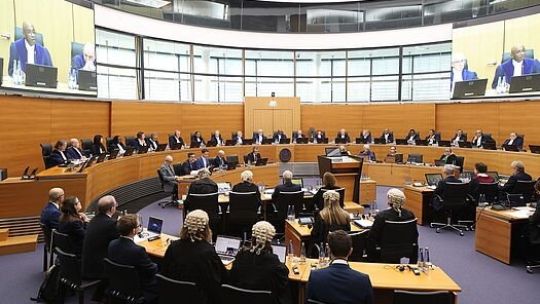
Morning Edition · Sunday, November 29, 2026Published at 12:16 AM EST · New York
Argentina Asks China to Activate $5 Billion of Its Currency Swap as January Debt Payments Approach
Beijing is reported to be unhappy with Economy Minister Luis Caputo's public announcement, and a maritime tribunal on Saturday rejected Argentina's bid to halt the Sea Lion oil project near the Falkland Islands.
Luis Caputo, Argentina's economy minister, said the government has asked China to activate $5 billion of the two central banks' currency swap line. Ámbito reported that Beijing was displeased by the unilateral announcement. It also reported that Chinese officials expect a gesture from President Javier Milei when he and Xi Jinping both attend the Group of 20 (G20) summit in Miami on December 14 and 15. Former central bank officials told Argentine media that activation is not automatic and requires steps by the People's Bank of China.
The funds are meant to help cover Argentina's 2027 obligations. Caputo set out a plan to pay about $4.4 billion due in January using money from the International Monetary Fund and regional lenders, the sale of the water utility AySA and central bank reserves, Rosario3 reported. Under the plan, the Treasury will buy $1.8 billion from the central bank with pesos from its primary surplus. That moves dollars from one state balance sheet to another and adds no new dollars. Gross reserves closed Friday at $49.36 billion, and the central bank's dollar purchases fell to zero, Forbes Argentina reported. The JP Morgan country-risk spread dropped 107 points on Friday to below 1,000, Infobae reported, after rising above 1,100 earlier in the month.
Economist Ricardo Arriazu told Clarín that the government had reversed a mistake that was holding back the economy, but added: "Even so, the probability of a run is high." The yuan line also matters for the dollar's role. A government that aligns closely with Washington still relies on Chinese currency to support its dollar payments. Argentina accounts for about 90% of activated swap tranches worldwide, according to Letra P.
On Saturday, the International Tribunal for the Law of the Sea ruled 18 to 3 that it lacked prima facie jurisdiction (jurisdiction based on an initial review) over Argentina's request to suspend the Sea Lion project north of the Falkland Islands, which Argentina calls the Malvinas and claims. MercoPress reported that the tribunal found the claims would require it to rule on sovereignty. The Buenos Aires Times called the ruling a setback for Milei's government. The islands' Legislative Assembly called it "a good day for the Falkland Islands."
Townsquare
Start a discussion in Townsquare.
More from this edition
- European Central Bank and Federal Reserve Officials Stay on Course for December Rate Hikes as Fuel Prices Fall
- S&P 500 Gains 5.6% in Holiday Week but Remains on Track for Its Worst November Since 2008
- Houthis Claim Strikes on Riyadh Airport and Saudi Energy Sites as Iran Reports a Tanker Fire Near Hormuz
- Zelensky Rejects a US-Mediated Settlement He Says Would Make Ukraine Pay for Russia's War
- Moscow's Mayor Says 542 Ukrainian Drones Flew Toward the Capital Region Overnight
- Beijing Says Taiwan's Local Election Results Will Not Change Its Course After the Kuomintang Holds Taipei
- Libya's Eastern Government Takes Ukraine's Benghazi Port Strike to the UN as Meloni Confronts Zelensky
Comments
0No comments yet.