← The Global Intelligence Brief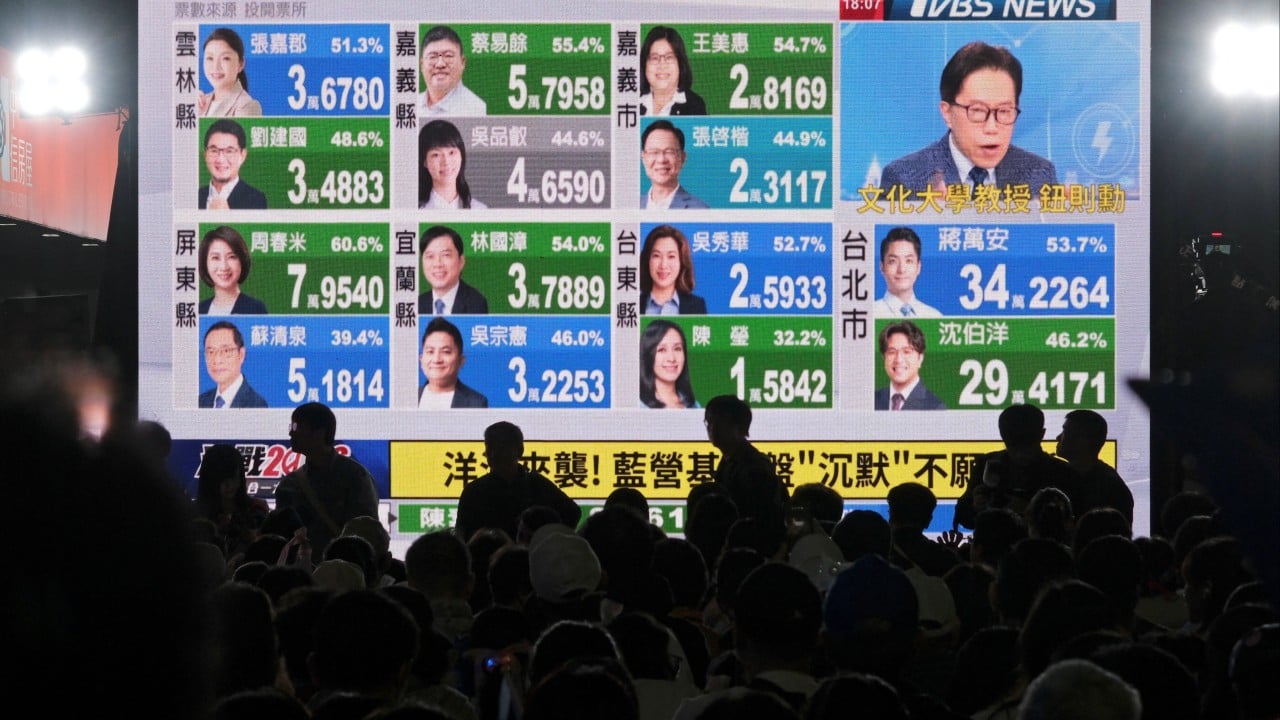
Morning Edition · Sunday, November 29, 2026Published at 12:16 AM EST · New York
Beijing Says Taiwan's Local Election Results Will Not Change Its Course After the Kuomintang Holds Taipei
Taiwanese voters also approved a referendum to bring back nuclear power, reversing the island's nuclear-free energy policy as its chip industry's electricity demand grows.
Beijing said shifts in Taiwan's politics will not alter the course of cross-strait relations or stop the trend toward "reunification," the South China Morning Post reported after Saturday's local elections. The Hindu noted that China claims Taiwan as its territory and has never ruled out force, and that Taipei's government rejects the claim. Taipei urged Beijing to take a pragmatic view of the results and to engage in dialogue, Al Jazeera reported.
Outlets disagree on what the vote meant. The Financial Times called the governing Democratic Progressive Party's (DPP) failure to oust Taipei's mayor a setback for President Lai Ching-te's re-election bid. Al Jazeera's headline described "poll gains" for the governing party, and the SCMP reported that the Beijing-friendly Kuomintang (KMT) lost four city and county seats. The official count cited by Focus Taiwan gave KMT incumbent Chiang Wan-an 53.76% in Taipei against 45.65% for DPP legislator Puma Shen, who conceded. The DPP's Ho Hsin-chun won Taichung, the only change of party among the six largest cities. Both framings are partly correct. The opposition kept the capital, and the governing party gained ground elsewhere.
The result with the most direct economic weight was the referendum. Voters approved bringing back nuclear power and ending the long-standing "nuclear-free homeland" policy, according to Focus Taiwan. The island's semiconductor plants depend on a stable power supply, so a path back to nuclear generation reduces one constraint on the compute supply chain that Washington and Beijing both treat as strategic.
Part of a tracked trend
Taiwan Risk Is Set in Beijing and Washington
Beijing treats Taiwan's electoral swings as irrelevant to its unification goal, so cross-strait risk and the premium on Taiwanese chip supply keep being set by US-China bargaining rather than by votes on the island.
Townsquare
Start a discussion in Townsquare.
More from this edition
- European Central Bank and Federal Reserve Officials Stay on Course for December Rate Hikes as Fuel Prices Fall
- S&P 500 Gains 5.6% in Holiday Week but Remains on Track for Its Worst November Since 2008
- Houthis Claim Strikes on Riyadh Airport and Saudi Energy Sites as Iran Reports a Tanker Fire Near Hormuz
- Zelensky Rejects a US-Mediated Settlement He Says Would Make Ukraine Pay for Russia's War
- Moscow's Mayor Says 542 Ukrainian Drones Flew Toward the Capital Region Overnight
- Libya's Eastern Government Takes Ukraine's Benghazi Port Strike to the UN as Meloni Confronts Zelensky
- Argentina Asks China to Activate $5 Billion of Its Currency Swap as January Debt Payments Approach
Comments
0No comments yet.