← The Global Intelligence Brief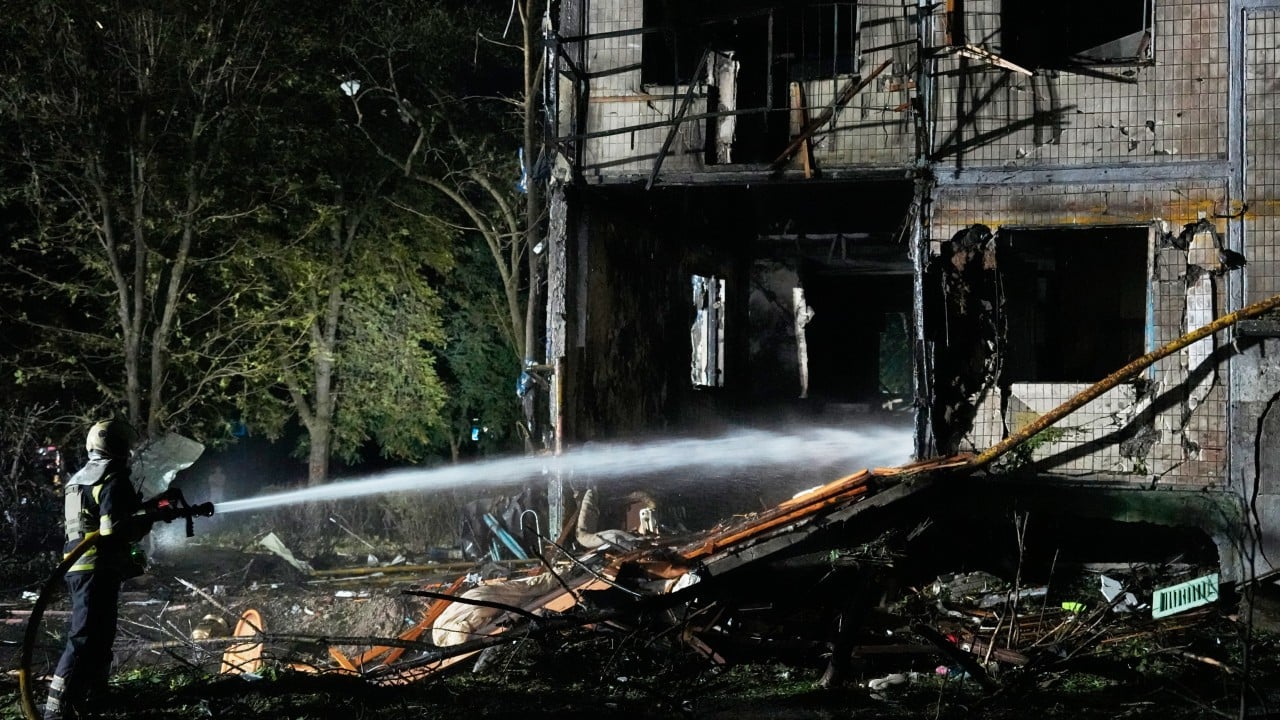


 3 sources
Morning Edition · Saturday, August 1, 2026UpdatedPublished at 7:02 AM EDT · New York
Russian Strikes on Kyiv Kill at Least Nine as Moscow Says It Hit Ukraine's Military Industry
Ukraine's capital counted nine dead and more than two dozen wounded, while Russia's defense ministry reported downing 274 drones over 17 regions overnight.
Updated at 7:02 AM EDT
The casualty count the morning story flagged as still being updated resolved: wounded rose from about 15 to more than two dozen (roughly 28, including four children), and Zelensky said Ukrainian air defenses intercepted only one of about 30 ballistic missiles fired.
Russian strikes on Kyiv killed at least nine people and wounded more than two dozen overnight, according to local officials cited by the South China Morning Post, after the city's mayor warned of a ballistic missile attack. The Russian independent outlet Ostorozhno Novosti had reported an early toll of three dead and 15 wounded from Kyiv Mayor Vitali Klitschko, but Ukrainian authorities later put the number of wounded at about 28, including four children, with fires and damage recorded across five districts. President Volodymyr Zelensky said Ukrainian air defenses intercepted only one of the roughly 30 ballistic missiles Russia fired, which he attributed to a shortage of interceptors. The strikes came after the United Nations found June to be the deadliest month for Ukrainian civilians in three years.
Moscow described the operation in different terms. Russian state agency RIA Novosti, citing the defense ministry, said Russian forces carried out massed strikes on military-industrial enterprises and logistics centers used by Ukraine's armed forces in and around Kyiv, framing the targets as military rather than civilian.
Ukraine's own campaign continued at the same time. Russia's defense ministry said air defenses destroyed 274 drones overnight across 17 Russian regions and the Azov and Black seas, the type of long-range strike Kyiv has used to pressure Russian energy and logistics. President Volodymyr Zelensky has pressed the United States for additional Patriot air-defense missiles to reduce the attacks on Ukrainian cities.
Part of a tracked trend
Ukraine's Deep Strikes on Russian Energy and Logistics
Ukraine sustains a campaign against Russian refineries and supply lines over the next 3-6 months, pressuring Moscow's oil revenue while Russia retaliates against Ukraine's grid.
Veracity: Corroborated
82/100- If true, who benefits
Defense manufacturers and liquefied-natural-gas exporters, while Moscow's "military-industrial targets" framing serves its case that the strikes were lawful.
- The nuance
Casualty counts were still being updated and differ across sources (three to nine dead), and whether the sites hit were civilian or military-industrial is the disputed core, not the fact of the strike.
An open-source-intelligence read of how likely this story is true with its real nuance, not a judgment of any outlet. It assesses the claim, weighing independent and adversarial reporting. How we label confidence.
What this means
The exposure is European energy and defense supply, along with the credibility of any settlement. The exchange of long-range strikes keeps both countries' energy and industrial infrastructure at risk, which sustains upward pressure on European gas and refined-product markets and on air-defense purchases. Defense manufacturers and liquefied-natural-gas exporters gain, Russian oil revenue and Ukrainian civilian infrastructure lose, and the continued violence weakens claims that a durable ceasefire is near.
What to watch
Synthesized from: South China Morning Post · Polylog editors · RIA Novosti
Townsquare
Start a discussion in Townsquare.
More from this edition
- Bond Market Doubts Warsh's Inflation Resolve as 30-Year Treasury Yield Reaches 5.21 Percent
- Apple Loses Close to 500 Billion Dollars as Memory Shortage Splits the Big Technology Trade
- United States Bombs Iran's Ports, Bridges and Power Grid for a Ninth Night as Iran Strikes Five Gulf States and Declares Hormuz Closed
- Oil Heads for a Monthly Gain Above 20 Percent as War Risk Rebuilds a Premium in Energy and Metals
- South Korea's Won Gains Nearly 8 Percent Against the Dollar Despite a Technology Selloff
- India and China Reopen a Himalayan Trading Pass Closed for Six Years
- China Stages South China Sea Drills After Disputing a Philippine Seabed Claim
Comments
0No comments yet.