← The Global Intelligence Brief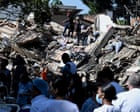

 2 sources
Morning Edition · Tuesday, August 11, 2026Published at 1:17 AM EDT · New York
Colombia's Magnitude 7.4 Earthquake Kills at Least 132 People and Damages More Than 1,500 Buildings
Cali's mayor says 188 people are missing, and rescue teams are still working through collapsed structures in Pereira, Quibdó and Manizales.
The death toll from Monday's magnitude 7.4 earthquake in western and central Colombia has reached at least 132, with 570 injured, according to the tally the Colombian Association of Capital Cities submitted at 7:00 p.m. local time. Authorities have said the figure is provisional. Newly inaugurated President Abelardo De La Espriella earlier put the toll at 111 and said more than 1,600 buildings were damaged.
Rescue teams and civilians are still pulling people from rubble in Cali, where the mayor said 188 people are unaccounted for. The quake struck cities across the west of the country, including Pereira, Quibdó, Cali and Manizales. More than a dozen health centres and a larger number of schools were damaged, which complicates both the medical response and the shelter capacity available to displaced residents.
Colombia is an oil and coal exporter and the world's largest producer of mild arabica coffee, and the affected departments lie close to the coffee-growing region around Risaralda and Caldas. No confirmed damage to export terminals or major producing assets has been reported so far. The economic effect of an event like this usually comes through damage to roads, bridges and electricity rather than damage to the resource itself.
The fiscal timing matters. A disaster of this size affects a government sworn in only recently, and reconstruction spending will compete with an already committed budget. Colombia's sovereign borrowing costs, and how quickly the government turns to emergency financing, will show whether the state absorbs the cost itself or adds it to its debt.
Part of a tracked trend
Disasters as Political and Supply Shocks
Major natural disasters in commodity-producing states translate into political instability and supply disruptions that markets increasingly have to price, recurring as climate and geological shocks hit fragile economies.
What this means
Reconstruction after a quake of this scale is an unbudgeted claim on a state that has just changed leadership, and the money comes from either new borrowing, reallocated spending or multilateral emergency credit. Colombian sovereign bondholders and the peso are the first exposed. The second channel is physical: damaged roads and bridges in the western departments raise the cost of moving coffee, coal and fuel to port, which affects exporters' margins even when the growing and mining assets themselves are intact.
What to watch
- Whether Bogotá announces an emergency decree or draws on multilateral contingency credit lines, which would show the government judges the fiscal hit too large for the existing budget.
- Reports on the condition of the highways linking the coffee-growing departments to the Pacific port of Buenaventura, because transport damage would show up in export volumes well before farm output does.
- Aftershock activity and the pace at which the missing-persons count in Cali is resolved, which will determine whether the final toll is close to current figures or substantially higher.
Observations to monitor, not financial advice.
Synthesized from: MercoPress · The Guardian
Townsquare
Start a discussion in Townsquare.
More from this edition
- Oil's 5% Jump Lifts the Ten-Year Treasury Yield to 4.70% Before Wednesday's US Inflation Report
- Iran Sets Blockade Removal as Its Price for Hormuz, as Iraqi Lawmakers Press for a US Withdrawal
- US Securities Regulator Schedules Vote on First Major Crypto Rulemaking as Bitcoin Slips Below $65,000
- Libya's Largest Working Refinery Hit by a Third Drone Strike in Four Days
- Moscow's Air Defences Shoot Down Seven Drones as Ukraine Extends Strikes Deep Into Russia
- China Loses a Long March 7A and Its Satellite 85 Seconds After Launch as Japan Puts a Navigation Satellite in Orbit
- The Iran War Has Exposed Gaps in US Weapons Stockpiles as Washington Presses Southeast Asia on Deterrence
Comments
0No comments yet.