← The Global Intelligence Brief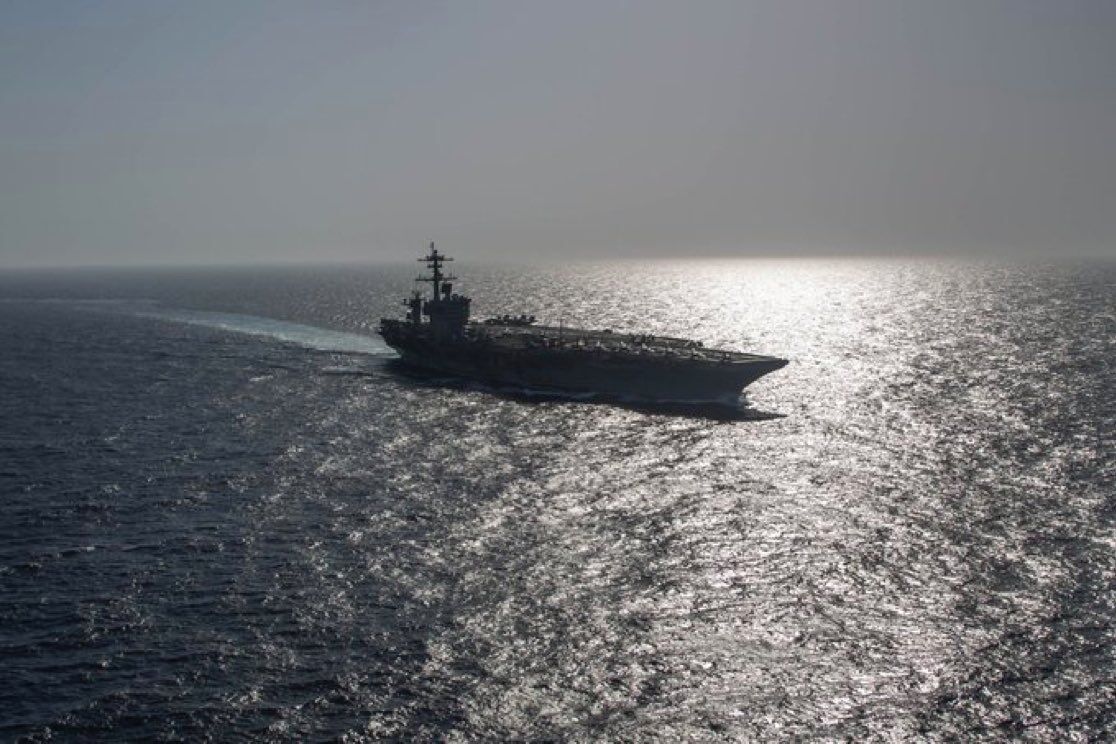

 3 sources
Morning Edition · Tuesday, August 11, 2026UpdatedPublished at 7:44 AM EDT · New York
Iran Sets Blockade Removal as Its Price for Hormuz, as Iraqi Lawmakers Press for a US Withdrawal
Iranian state media describe an American carrier group strained by five months of deployment, while Washington moved President Trump out of Turkey on a decoy aircraft after an assassination threat.
Updated at 7:44 AM EDT
Zolghadr, the official whose demands anchor this story, was removed as Iran's national security chief in a wartime leadership reshuffle ordered by Supreme Leader Mojtaba Khamenei, and Tehran signaled that even a pending Oman deal on the strait would not be enough to reopen it.
The standoff over the Strait of Hormuz has become a dispute over which side must act first. Mohammad Bagher Zolghadr, then Iran's national security chief, set out conditions that include lifting the American naval blockade, withdrawing US forces, a permanent end to the war, compensation for damages and the release of frozen Iranian assets. Those remain Iran's stated terms, but Zolghadr no longer holds the post that made them official policy. Supreme Leader Mojtaba Khamenei on Monday reshuffled Iran's top military and security leadership, naming Mohsen Rezaee, a former commander-in-chief of the Islamic Revolutionary Guard Corps (IRGC), as the new secretary of Iran's Supreme National Security Council (SNSC). Zolghadr moved to a position as political adviser to the supreme leader, a post left vacant after his predecessor was killed in a US-Israeli strike in March. The same order installed Ali Abdollahi as armed forces chief of staff, Ahmad Vahidi as IRGC commander-in-chief and Ali Azmaei as commander of the IRGC Navy. Washington treats its naval presence as the guarantee of access to the strait. Tehran treats that same presence as the obstacle to reopening it. Iranian Foreign Minister Abbas Araghchi has said no direct talks are under way with the United States, and said an emerging agreement with Oman on managing shipping through the strait would not, by itself, be enough to reopen it unless Washington also meets Iran's broader conditions. The reshuffle came the same day President Trump added a demand of his own, that Iran pay compensation for what he called fifty years of damages, a condition that further dimmed prospects for a near-term agreement.
Iranian state media are making a parallel argument about American endurance. The Islamic Republic News Agency (IRNA) published a report describing the aircraft carrier USS Abraham Lincoln, sent to the region as a show of force, as now suffering psychological strain, operational fatigue and protests from crew families. That characterisation comes from Iranian state media and is unverified, but it highlights a real constraint on any blockade: carrier deployments cannot be extended indefinitely.
The pressure is also political and regional. An Iraqi member of parliament, quoted by IRNA, called the withdrawal of foreign forces, and American forces specifically, from Iraq a sovereign and national demand rather than a partisan one. Every basing arrangement that comes into question raises the cost of sustaining the American military position around the Gulf.
The security environment has tightened at the same time. Israeli and Hong Kong outlets, citing reporting by The Washington Post, described how the United States staged a decoy departure of Air Force One from Turkey last month, moving President Trump out through a catering vehicle to a smaller aircraft after intelligence indicated an Iranian threat against his plane. American officials have not publicly disputed the account.
Part of a tracked trend
Hormuz Chokepoint Repricing
Recurring Gulf conflict forces energy exporters and importers to build costly workarounds around the Strait of Hormuz, permanently raising the risk premium embedded in Gulf trade and infrastructure.
Veracity: Corroborated
86/100- If true, who benefits
Tehran gains leverage by making the American naval presence the obstacle to reopening, Washington gains justification for keeping the carrier group in place, and both framings preserve the war premium that benefits oil producers, tanker owners and insurers charging conflict-zone rates.
- The nuance
Iran's six conditions and the decoy-aircraft operation are corroborated well beyond Iranian state media, and the strain aboard the USS Abraham Lincoln is reported by American outlets citing sailors' families rather than only by Tehran, so the disputed part is not whether the fatigue exists but whether it shortens the deployment or merely triggers a routine relief rotation, and the Iraqi withdrawal demand rests on one lawmaker quoted by IRNA while the binding timetable comes from Prime Minister Mohammed Shia al-Sudani's government.
An open-source-intelligence read of how likely this story is true with its real nuance, not a judgment of any outlet. It assesses the claim, weighing independent and adversarial reporting. How we label confidence.
Synthesized from: IRNA (Farsi) · IRNA (Farsi) · Ynet (Hebrew)
Townsquare
Start a discussion in Townsquare.
More from this edition
- Oil's 5% Jump Lifts the Ten-Year Treasury Yield to 4.70% Before Wednesday's US Inflation Report
- US Securities Regulator Schedules Vote on First Major Crypto Rulemaking as Bitcoin Slips Below $65,000
- Libya's Largest Working Refinery Hit by a Third Drone Strike in Four Days
- Colombia's Magnitude 7.4 Earthquake Kills at Least 132 People and Damages More Than 1,500 Buildings
- Moscow's Air Defences Shoot Down Seven Drones as Ukraine Extends Strikes Deep Into Russia
- China Loses a Long March 7A and Its Satellite 85 Seconds After Launch as Japan Puts a Navigation Satellite in Orbit
- The Iran War Has Exposed Gaps in US Weapons Stockpiles as Washington Presses Southeast Asia on Deterrence
Comments
1Aug 12, 2:22 AM · edited
As a former IRGC chief, Rezaee carries more institutional authority over Revolutionary Guards operational compliance than Zolghadr did, which is material because any Hormuz arrangement requires IRGC adherence.