← The Global Intelligence Brief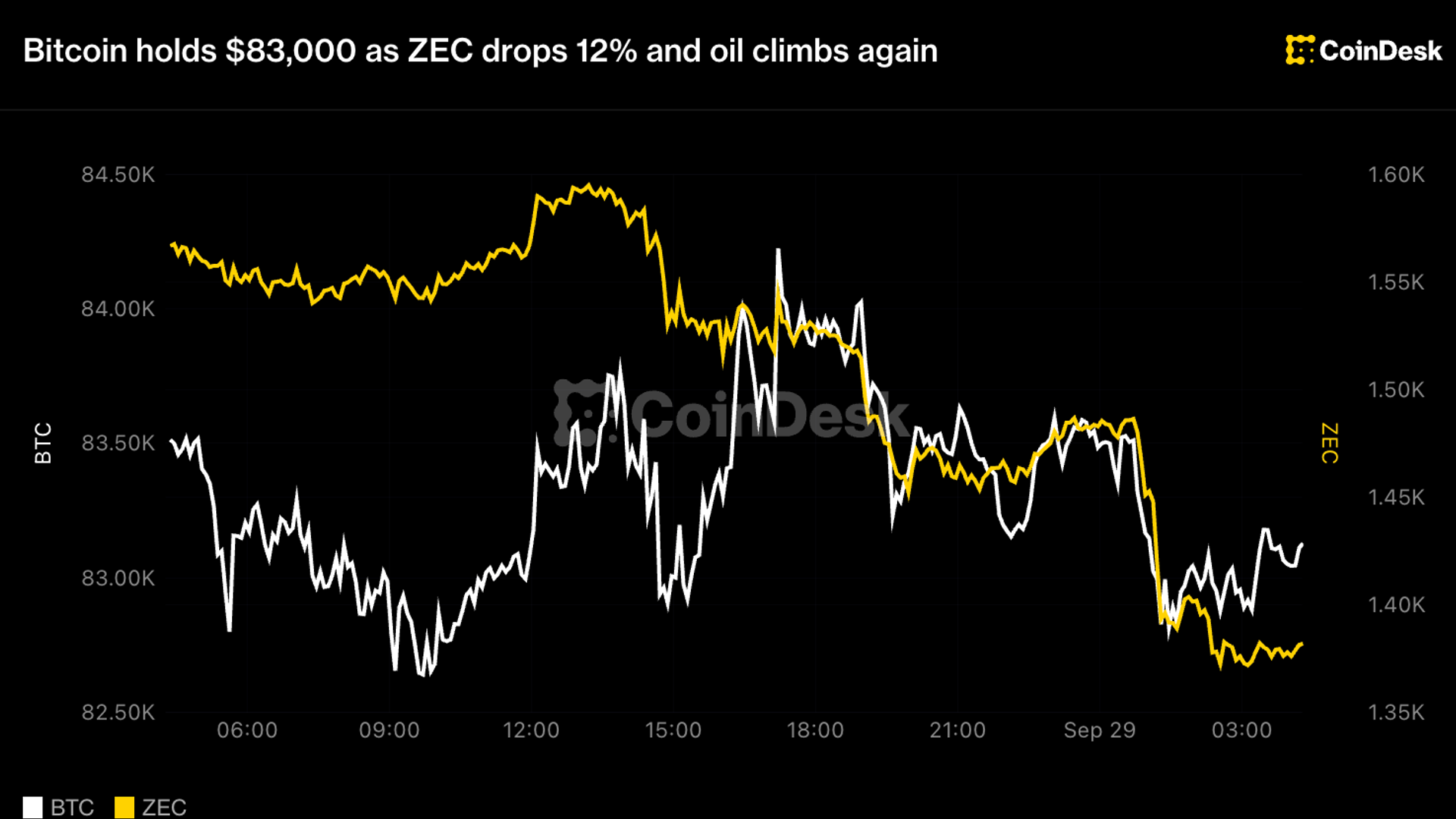

 2 sources
Morning Edition · Tuesday, September 29, 2026Published at 1:07 AM EDT · New York
Gold Falls About 3 Percent and Bitcoin Holds Near $83,000 as Real Yields Climb
Both assets fell this week even as conflict risk in the Gulf remained high, as rising Treasury yields and a stronger dollar outweighed demand for safe havens.
The spot price of gold fell to about $4,148.69 an ounce on Monday, down 3.19 percent for the day. Yahoo Finance attributed the decline to rising oil prices reinforcing expectations that interest rates will stay higher for longer, combined with a strong dollar and Treasury yields near their highest level in 19 years. Globes reported the same set of factors from Tel Aviv, describing US yields at multi-decade highs and a dollar strong enough to push the Israeli shekel to a two-month low.
Bitcoin traded around $83,000 after opening Monday above $84,000 and falling to roughly $82,958 in early US trading, according to Yahoo Finance, which attributed the decline to President Trump's rejection of Iran's seven-day plan for reopening the Strait of Hormuz. CoinDesk reported that Zcash fell 12 percent and that global equities stood at a one-week low.
Gold's decline reflects the rising opportunity cost of holding a non-yielding asset as real interest rates climb, a different dynamic from a weakening in underlying monetary demand for gold. Bitcoin fell for the same reason equities did, trading as a liquidity-sensitive risk asset rather than a hedge against war risk.
Part of a tracked trend
Bitcoin Trades as a Risk Asset, Not Digital Gold
At each geopolitical or inflationary stress point, bitcoin keeps trading with liquidity-sensitive risk assets rather than with monetary metals, so the digital-gold framing continues to fail exactly when investors most want it to hold.
What this means
The mechanism is real interest rates. When nominal yields rise faster than expected inflation, both gold and bitcoin lose value relative to cash, though for different reasons. Gold competes directly with the yield on Treasury bonds, while bitcoin competes with every other asset priced off available market liquidity. The parties most exposed in the short run are holders of leveraged crypto positions and momentum-driven gold trades. The precedent is 2022, when a rapid Federal Reserve tightening cycle produced simultaneous declines in both assets even as inflation stayed high, before gold recovered first once policy rates peaked. The likelier outcome over the next few months is that gold stabilizes before bitcoin does, because gold's buyer base includes central banks that are not sensitive to yield changes, while bitcoin remains tied to dollar liquidity conditions. A sustained decline in the 10-year yield alongside continued disruption in the Gulf would undercut this assessment and let both assets rise together.
What to watch
- Central bank gold purchase data for September, which will show whether official buyers are absorbing the price decline or joining the sell-off.
- Whether bitcoin's daily price moves continue tracking equity indices more closely than gold, the simplest test of the claim that bitcoin functions as digital gold.
- The path of US real interest rates after Wednesday's inflation report, the factor that has driven both assets' moves this week.
Observations to monitor, not financial advice.
Synthesized from: CoinDesk · Globes (Hebrew)
Townsquare
Start a discussion in Townsquare.
More from this edition
- Oil Near $107 Pushes US Yields to a 19-Year High Before Wednesday's Inflation Report
- Trump Says He Is Considering a US Diesel Export Ban as Britain Lobbies for an Exemption
- Washington Floats Sanctions Relief for Iranian Nuclear Concessions as Tehran Denies a UK Airbase Plot
- AMD Buys Fei-Fei Li's World Labs for $8.2 Billion in Stock and Its Shares Fall 4 Percent
- OpenAI Shelves a New Model on Safety Grounds as Pope Leo XIV Rejects Calling AI Risk a Hoax
- Germany and Five Other Capitals Demand Hundreds of Billions in Cuts to the EU Budget
- UAE Confirms Netanyahu's Four-Hour Abu Dhabi Visit as Riyadh Reaches Out Over the Yemen Rift
Comments
0No comments yet.