← The Global Intelligence Brief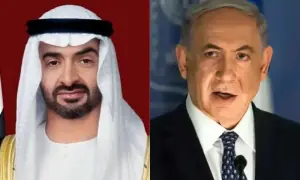

 3 sources
Morning Edition · Tuesday, September 29, 2026Published at 1:07 AM EDT · New York
UAE Confirms Netanyahu's Four-Hour Abu Dhabi Visit as Riyadh Reaches Out Over the Yemen Rift
Two days after the trip, the Emirati state agency acknowledged the meeting, while Saudi Arabia's defence minister invited the UAE vice-president for talks.
The Emirati state news agency WAM confirmed on Monday that President Sheikh Mohamed bin Zayed Al Nahyan received Israeli Prime Minister Benjamin Netanyahu on Sunday and discussed bilateral relations, Dawn reported. BBC Hindi reported that Netanyahu's office said he traveled with his wife, and that Abu Dhabi did not acknowledge the visit until two days after it took place. Israeli accounts put the length of the visit at about four hours. Al Jazeera reported that the trip came as Netanyahu faces domestic pressure ahead of Israel's October Knesset elections.
Separately, Saudi Arabia's defense minister invited Emirati Vice President Mansour bin Zayed to the kingdom, the first public offer of a face-to-face meeting since relations between the two governments deteriorated over Yemen, according to Dawn. Officials and ministers on both sides exchanged public criticism in July.
Both developments come while the Strait of Hormuz remains disrupted and Gulf oil exporters are absorbing the resulting costs. The delay in the Emirati confirmation of the Netanyahu visit, and Saudi Arabia's decision to make its invitation public, both reflect governments managing domestic audiences that do not uniformly support either realignment.
Part of a tracked trend
Middle Powers Build Security Blocs Outside Washington
States that once relied on American guarantees keep forming their own mutual defense arrangements, redirecting arms procurement away from Western suppliers and creating overlapping commitments that make regional crises harder to contain.
Veracity: Corroborated
90/100- If true, who benefits
Netanyahu gains a foreign-policy image weeks before the October Knesset elections, the Emirati leadership gains a channel to Washington and Israel while limiting domestic exposure, and Gulf sovereign funds plus regional logistics and defence contractors gain from quiet security coordination.
- The nuance
The visit and the Saudi invitation are both confirmed by official sources, but the article's claim that Emirati and Saudi officials exchanged public criticism in July inverts the reporting, which describes July social-media messages of unity after an earlier rift, and Sheikh Mansour has already accepted and travelled to the kingdom, while Israeli coverage ties the trip to a disputed claim that Abu Dhabi warned Netanyahu before the October 7, 2023 attack.
An open-source-intelligence read of how likely this story is true with its real nuance, not a judgment of any outlet. It assesses the claim, weighing independent and adversarial reporting. How we label confidence.
What this means
Gulf capitals are hedging against two risks at once: an unresolved confrontation with Iran that threatens their energy export routes, and uncertainty about the durability of American security guarantees. The transmission channel to markets runs through infrastructure and capital flows, since Emirati and Saudi sovereign wealth funds direct where regional investment in energy, logistics and technology lands. What is new is not the Israel-UAE relationship, which dates to the 2020 normalization agreements, but Abu Dhabi's willingness to confirm a leader-level meeting while the Gulf is under active conflict conditions, and Riyadh's simultaneous move to repair its own rift with the UAE. The likelier outcome over the coming months is quiet coordination among Gulf states on air defense and shipping protection, without a formal alliance structure, because public treaty commitments carry domestic political costs that none of these governments wants to bear. An Iranian attack on Gulf infrastructure would force that coordination into the open more quickly.
Synthesized from: Dawn · BBC News Hindi · Dawn
Townsquare
Start a discussion in Townsquare.
More from this edition
- Oil Near $107 Pushes US Yields to a 19-Year High Before Wednesday's Inflation Report
- Trump Says He Is Considering a US Diesel Export Ban as Britain Lobbies for an Exemption
- Gold Falls About 3 Percent and Bitcoin Holds Near $83,000 as Real Yields Climb
- Washington Floats Sanctions Relief for Iranian Nuclear Concessions as Tehran Denies a UK Airbase Plot
- AMD Buys Fei-Fei Li's World Labs for $8.2 Billion in Stock and Its Shares Fall 4 Percent
- OpenAI Shelves a New Model on Safety Grounds as Pope Leo XIV Rejects Calling AI Risk a Hoax
- Germany and Five Other Capitals Demand Hundreds of Billions in Cuts to the EU Budget
Comments
0No comments yet.