← The Global Intelligence Brief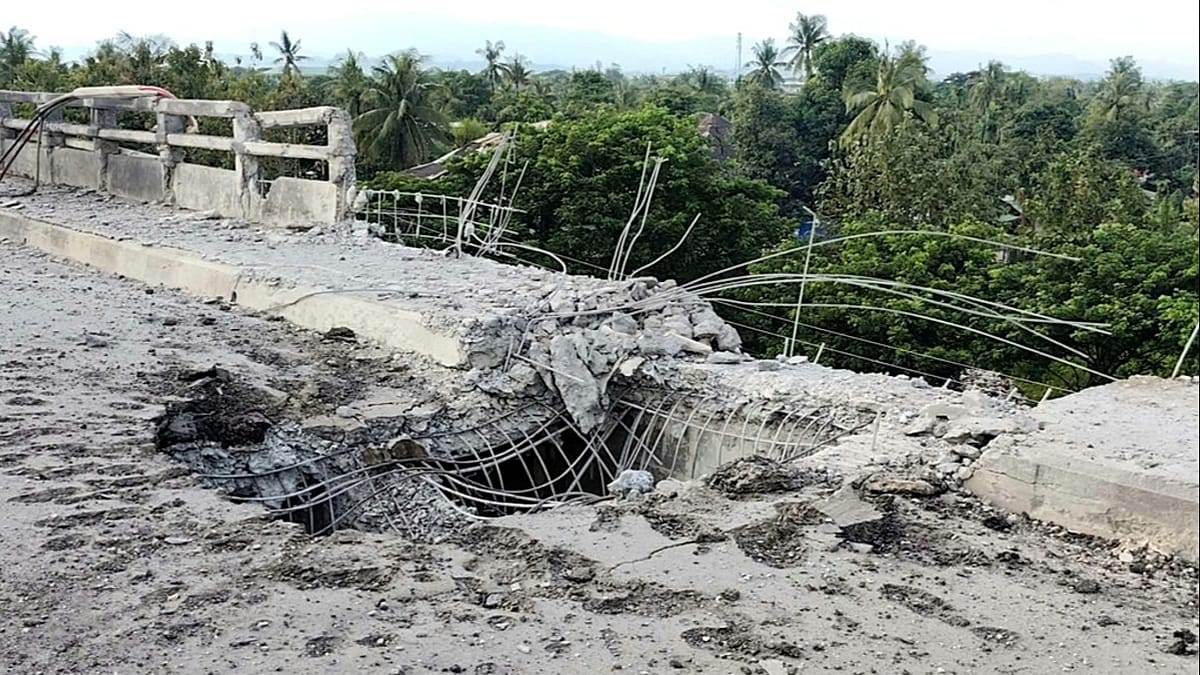

 2 sources
Morning Edition · Tuesday, September 29, 2026UpdatedPublished at 7:43 AM EDT · New York
Myanmar Air Strike on a Rakhine Market Kills Dozens, With Death Tolls Reported Between 33 and 49
Aid workers now put the toll from Monday's strike near a Kyauktaw township market at 50 dead and 58 injured, after early counts ranged from 33 to 49.
Updated at 7:43 AM EDT
Death toll firmed up to 50 confirmed by aid workers on the ground, resolving the 33-to-49 range reported this morning.
A Myanmar military aircraft bombed an area beside a market in Kyauktaw township in Rakhine state around midday on Monday, killing vendors, shoppers and passers-by, according to the Arakan Army, the armed group that controls most of the state. The death toll has since risen to 50, with 58 people injured, according to two local aid workers who spoke to Reuters and were cited by the Malay Mail and US News. One aid worker, Wai Hun Aung, said the final count may climb further because some bodies were lost in fires that followed the bombing. Earlier Monday, Euronews had reported 49 killed and 58 injured, while Al Jazeera had reported at least 33 dead. Independent verification from the area remains unavailable.
Arakan Army spokesperson Khine Thu Kha said the military "deliberately targeted densely populated markets, schools, civilians, and residential buildings" through the airstrike, and the group said it will take retaliatory measures against those responsible. The military government did not immediately respond to requests for comment. It has said previously that it strikes only military targets and has described armed opposition groups as terrorists.
The strike's significance extends beyond the casualty count. Rakhine state hosts the Kyaukphyu port and the oil and gas pipelines that carry energy from the Bay of Bengal across Myanmar to China's Yunnan province, a route Beijing built specifically to reduce its dependence on shipping through the Strait of Malacca. Control of the surrounding territory is contested between the military government and the Arakan Army.
Veracity: Corroborated
85/100- If true, who benefits
The Arakan Army gains international attention and a stronger position in any negotiation over the Kyaukphyu corridor, the military government gains from the absence of verifiable casualty data, and Beijing gains an argument for dealing directly with whoever controls the pipeline route.
- The nuance
The strike itself is corroborated by multiple outlets, but every figure originates with the Arakan Army, local rescue workers and residents in territory closed to independent monitors, the reported death toll ranges from at least 33 to 49, and the military has not commented, so the target it claims to have been striking remains unestablished.
An open-source-intelligence read of how likely this story is true with its real nuance, not a judgment of any outlet. It assesses the claim, weighing independent and adversarial reporting. How we label confidence.
What this means
The primary economic stake belongs to China, not to Myanmar's own domestic markets, because the Kyaukphyu pipelines and port serve as a hedge against disruption to shipping through the Strait of Malacca, and their operation depends on stability in territory the central government no longer controls. Escalating air attacks push the Arakan Army toward a harder negotiating position on the corridor, while giving Beijing an incentive to deal directly with an armed group rather than only with the military government it formally recognizes. The precedent is 2024, when Beijing brokered ceasefires in northern Shan state to protect its own border trade and infrastructure after fighting had interrupted them. The likelier outcome over the coming months is renewed Chinese mediation focused narrowly on protecting the pipeline corridor rather than on ending the broader war, conditional on the fighting moving closer to Kyaukphyu. Sustained air superiority by the military government that pushes the Arakan Army back from the coast would remove that pressure.
Synthesized from: Euronews · Al Jazeera
Townsquare
Start a discussion in Townsquare.
More from this edition
- Oil Near $107 Pushes US Yields to a 19-Year High Before Wednesday's Inflation Report
- Trump Says He Is Considering a US Diesel Export Ban as Britain Lobbies for an Exemption
- Gold Falls About 3 Percent and Bitcoin Holds Near $83,000 as Real Yields Climb
- Washington Floats Sanctions Relief for Iranian Nuclear Concessions as Tehran Denies a UK Airbase Plot
- AMD Buys Fei-Fei Li's World Labs for $8.2 Billion in Stock and Its Shares Fall 4 Percent
- OpenAI Shelves a New Model on Safety Grounds as Pope Leo XIV Rejects Calling AI Risk a Hoax
- Germany and Five Other Capitals Demand Hundreds of Billions in Cuts to the EU Budget
Comments
0No comments yet.