← The Global Intelligence Brief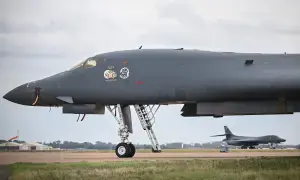

 2 sources
Morning Edition · Tuesday, September 29, 2026UpdatedPublished at 7:43 AM EDT · New York
Washington Floats Sanctions Relief for Iranian Nuclear Concessions as Tehran Denies a UK Airbase Plot
US officials say Trump would release frozen Iranian funds for verified nuclear progress, a claim Trump himself later denied, while Tehran denies a UK airbase plot.
Updated at 7:43 AM EDT
Trump publicly denied the sanctions-relief offer reported by US officials, saying "I offered them NOTHING," directly disputing the premise multiple outlets attributed to his own administration.
Senior American officials said President Donald Trump would agree to release frozen Iranian funds in exchange for substantial progress on Iran's nuclear program, according to the Israeli business daily Globes, which also reported that Secretary of State Marco Rubio said Iran had threatened to strike American assets. Axios and CNN reported the same account, citing US officials who described the offer as contingent on concrete Iranian steps on its nuclear program. Trump then disputed his own administration's account. Responding to the Axios report, he wrote that he "offered them NOTHING," according to Radio Free Europe/Radio Liberty, creating a direct contradiction between the president's public statement and what officials had told reporters on background.
The offer, as described by officials, follows Trump's rejection of Tehran's proposal for a phased reopening of the Strait of Hormuz. Iranian officials say they are waiting for a definitive US answer and will not soften their conditions. Iran's foreign minister said he hoped to receive a final response through Qatari mediators on Tuesday, and a US official described the indirect talks as "positive and constructive," even as Trump's denial complicated the public picture of what Washington has actually offered.
In Britain, Iran denied any connection to a suspected plot targeting a Royal Air Force base, calling the speculation unfounded and malicious, according to the Pakistani newspaper Dawn. Five people arrested under terrorism laws were released on bail while police investigate possible foreign involvement and other motives. Britain's defence minister has publicly warned of an Iranian threat, a characterization Tehran disputes.
Two tracks are moving forward simultaneously, though their coherence is now in question. Washington is offering, or according to Trump not offering, an economic incentive while maintaining a naval blockade of Iranian ports, and Tehran is using control of the waterway as its main point of leverage. Reuters has reported that Iranian officials privately doubt a deal can be reached before the US midterm elections in November.
Part of a tracked trend
Fragile US-Iran Detente
The US-Iran settlement is a managed, reversible arrangement rather than a durable peace, so repeated rounds of brinkmanship and renegotiation will keep regional risk live and intermittently price back into energy markets.
Veracity: Plausible
70/100- If true, who benefits
Washington gains by reframing a naval standoff as a priced sanctions negotiation it controls, Tehran gains from any move that monetizes its frozen reserves, and oil importers plus equity and bond investors gain from any de-escalation that removes part of the Hormuz risk premium.
- The nuance
The sanctions-relief offer rests on unnamed US officials quoted by CNN and Axios, and Trump publicly contradicted it by posting that he offered Iran nothing, an omission that matters, while on the British airbase case police have said the five men arrested near RAF Fairford are British nationals released on bail and investigators are also examining Russian-sabotage and Islamist motives, so no attribution to Iran has been established.
An open-source-intelligence read of how likely this story is true with its real nuance, not a judgment of any outlet. It assesses the claim, weighing independent and adversarial reporting. How we label confidence.
What this means
The two sides are negotiating over a narrow set of terms, and each controls something the other needs: Iran controls transit through the Strait of Hormuz, and Washington controls access to the dollar financial system and Iran's frozen reserves. Energy importers in Asia and Europe bear the cost of the delay through higher freight and insurance costs, while oil producers outside the Gulf collect higher revenue. What is new is the explicit link between money and nuclear verification, which turns a military standoff into a sanctions negotiation with a defined price. The 2015 nuclear agreement showed that phased, reversible relief can be delivered quickly once verification terms are agreed, and also that such relief can later be withdrawn. The likelier outcome over the coming months is another partial, reversible arrangement rather than a full settlement, which would reduce some of the risk premium in crude prices without eliminating it. If the United States instead widens the naval blockade, or Iran moves against shipping in the strait, the risk premium would rebuild within days.
Synthesized from: Globes (Hebrew) · Dawn
Townsquare
Start a discussion in Townsquare.
More from this edition
- Oil Near $107 Pushes US Yields to a 19-Year High Before Wednesday's Inflation Report
- Trump Says He Is Considering a US Diesel Export Ban as Britain Lobbies for an Exemption
- Gold Falls About 3 Percent and Bitcoin Holds Near $83,000 as Real Yields Climb
- AMD Buys Fei-Fei Li's World Labs for $8.2 Billion in Stock and Its Shares Fall 4 Percent
- OpenAI Shelves a New Model on Safety Grounds as Pope Leo XIV Rejects Calling AI Risk a Hoax
- Germany and Five Other Capitals Demand Hundreds of Billions in Cuts to the EU Budget
- UAE Confirms Netanyahu's Four-Hour Abu Dhabi Visit as Riyadh Reaches Out Over the Yemen Rift
Comments
1Sep 29, 5:07 AM · edited
Releasing frozen funds does nothing for tanker insurance capacity or transit through Hormuz, so war risk and freight premiums would stay elevated even if a funds for nuclear deal is announced.