← The Global Intelligence Brief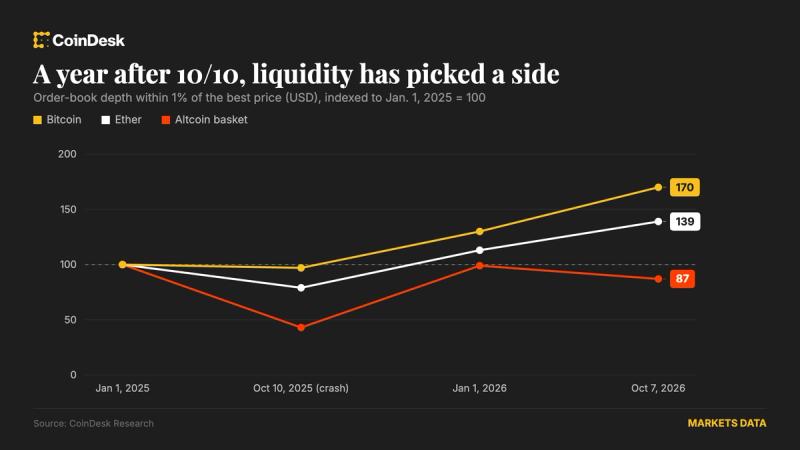

 3 sources
Morning Edition · Sunday, October 11, 2026Published at 1:17 AM EDT · New York
Gold Rises 1.8% to About $4,183 While Bitcoin Slips Toward $82,800
Bitcoin fell to about $80,000 on Thursday as bonds and oil came under pressure, and the US Treasury says it has seized about $1 billion in Iranian crypto.
Spot gold rose about 1.8% on Friday to $4,183.13 an ounce, helped by what officials called "productive discussions" with Iran. CNBC said a softer dollar and easing Treasury yields supported the metal.
Bitcoin moved in the opposite direction. It fell to about $80,000 on Thursday as the bond selloff and the oil rally hit risk assets, and it traded at about $82,837 early Sunday. That is below the nearly $87,000 it reached on Oct. 5.
Market structure has improved since last year's crash. One year after the Oct. 10, 2025 flash crash, CoinDesk reports that bitcoin and ether order books are deeper than before the crash. Liquidity in smaller tokens keeps falling, and spot trading volume remains well below its October 2025 peak.
The Treasury is demonstrating how far its reach extends into crypto. Treasury Secretary Scott Bessent said Washington had seized about $1 billion of Iranian crypto and "just outright grabbed the wallets." Bitcoin Magazine noted that he did not say which asset was involved. Earlier actions included a $344 million freeze of Tether, the dollar-linked stablecoin whose issuer can block addresses.
Wealthy holders are planning for the long term. Meanwhile, a Bermuda-regulated bitcoin life insurer backed by Bain Capital Crypto and Sam Altman raised $37.5 million, bringing its total funding to more than $180 million. It sells policies that let families pass on bitcoin.
Part of a tracked trend
Bitcoin Trades as a Risk Asset, Not Digital Gold
At each geopolitical or inflationary stress point, bitcoin keeps trading with liquidity-sensitive risk assets rather than with monetary metals, so the digital-gold framing continues to fail exactly when investors most want it to hold.
What this means
This week's split is the same pattern seen at earlier points of stress. Gold rose when yields eased and the risk of a sovereign shock rose, while bitcoin fell with equities when bond yields rose and dollar liquidity tightened. From a sound-money view, gold is still the asset reserve managers and savers buy against fiscal and geopolitical risk, and bitcoin is still priced mainly by leveraged speculative flows. The Iran seizures make a further distinction. Assets held as stablecoins or with centralized custodians are dollar claims that Washington can freeze. Bitcoin held in self-custody is harder to seize, but that property has not yet attracted safe-haven buying during this war. The likelier outcome over the coming weeks is that bitcoin keeps moving with the long end of the Treasury market, falling when yields rise, while gold holds its gains as long as oil stays above $100. That read fails if bitcoin rises on a day when yields also rise, which would be the first sign of the hedge behavior its supporters claim for it.
What to watch
- How bitcoin trades on the next day long-term Treasury yields rise sharply. A gain on such a day would break the pattern of trading as a risk asset.
- Whether Tether or other stablecoin issuers announce further freezes linked to Iran. More freezes would confirm that dollar stablecoins carry US sanctions risk for holders anywhere.
- Gold's response to the IMF and World Bank meetings this week. Further gains while officials discuss debt would show that buyers are pricing sovereign credit risk.
Observations to monitor, not financial advice.
Synthesized from: CoinDesk · Bitcoin Magazine (Iran) · Bitcoin Magazine (Meanwhile)
Townsquare
Start a discussion in Townsquare.
More from this edition
- Washington Suspends Russian Diesel Sanctions Until April Under a Trump-Putin Supply Deal
- US Long-Term Yields Stay Near Two-Decade Highs as Pre-Election Spending Adds to Fiscal Worries
- Supertanker Rates Topped $1 Million a Day as the Iran War Lengthened Oil Voyages
- Houthi Strike on Riyadh's Main Airport Kills 12 and Wounds 309
- Indian Economists Expect the Reserve Bank to Raise Rates by Up to a Full Percentage Point as Oil Keeps Inflation Up
- Drone Strikes Shut a Third Yandex Data Center, Disrupting Russian Taxi, Delivery and Cloud Services
- Flávio Bolsonaro Pledges Only Inflation-Linked Minimum Wage Rises Before Brazil's Oct. 25 Runoff
Comments
1Oct 11, 5:17 AM · edited
At these prices one bitcoin buys about 19.8 ounces of gold, and bitcoin sits nearly 5% below its Oct.