← The Global Intelligence Brief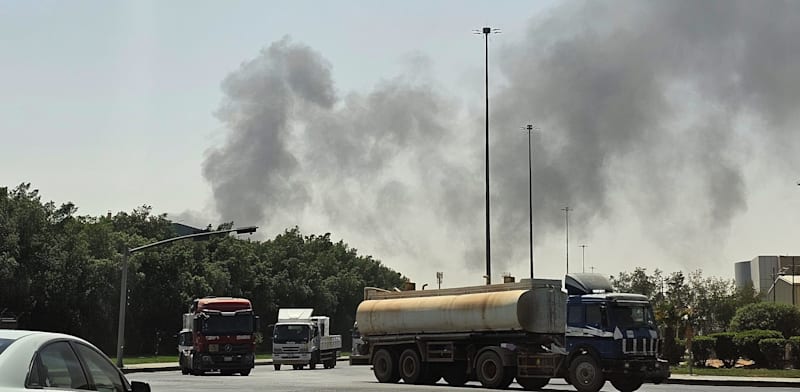


 4 sources
Morning Edition · Sunday, October 11, 2026Published at 1:17 AM EDT · New York
Houthi Strike on Riyadh's Main Airport Kills 12 and Wounds 309
It was the third Houthi attack on King Khalid International Airport in a week, and the Saudi-led coalition has promised a "decisive" response while Pakistan restated its defense commitment to the kingdom.
A Houthi attack on King Khalid International Airport in Riyadh on Saturday killed 12 people and wounded 309, according to Saudi aviation authorities cited by Russia's BFM.ru. A Houthi spokesman said the strike answered Saudi attacks in Yemen, including attacks on civilian infrastructure. Israel's Globes, citing The New York Times, reported that energy facilities were also hit while the Saudi air force kept striking Yemen.
The dead included four Saudis, two Bangladeshis, and one person each from the United States, Jordan, Palestine, Syria, Sudan and Egypt, according to Al Jazeera. Reports said the kingdom's threat-warning system issued no alert, and Al-Monitor called it the deadliest attack in Saudi Arabia in more than a decade. The airport suspended operations and diverted flights. Earlier in the week, attacks on the Riyadh and Abha airports killed three foreign nationals.
Coalition spokesman Major General Turki al-Malki called the strike a "full-fledged war crime" and said the coalition would respond decisively. The Houthis describe the conflict differently. China's Xinhua carried a Houthi statement saying Saudi Arabia had carried out 59 airstrikes in 24 hours and 1,857 strikes and missile attacks since the escalation began. Neither side's figures can be independently verified.
Pakistani Prime Minister Shehbaz Sharif condemned the attack and restated Pakistan's commitment to Saudi security under the Makkah Joint Defence Agreement. BBC News Hindi asked why Saudi Arabia cannot protect its capital despite modern weapons and great wealth. Its answer pointed to cost: cheap drones and missiles force the defender to spend far more on interceptors than the attacker spends on launches.
Part of a tracked trend
Iran War Spills Across Fronts
The US-Iran conflict keeps drawing in new theaters and third parties, from the Red Sea to the Caspian, so its risk premium spreads to infrastructure and shipping lanes previously thought insulated from the Gulf.
Veracity: Corroborated
82/100- If true, who benefits
If the Houthi framing holds (retaliation for Saudi strikes in Yemen), the Houthis gain evidence that low-cost missiles can close the Saudi capital's main airport. The coalition's "war crime" framing gives Riyadh grounds for heavier strikes in Yemen and for calling on Pakistan's defense pledge (Saudi Gazette).
- The nuance
The toll of 12 dead and more than 300 wounded comes from Saudi authorities. NPR and NBC News repeat it, but no independent count exists. Al Jazeera notes that the surge in attacks came in the week after the Saudi-led coalition launched a major offensive against the Houthis. Whether Iranian-supplied missiles were used is a Western and UN attribution that the story does not address.
Synthesized from: BFM.ru · Globes · Dawn · BBC News Hindi
Townsquare
Start a discussion in Townsquare.
More from this edition
- Washington Suspends Russian Diesel Sanctions Until April Under a Trump-Putin Supply Deal
- US Long-Term Yields Stay Near Two-Decade Highs as Pre-Election Spending Adds to Fiscal Worries
- Supertanker Rates Topped $1 Million a Day as the Iran War Lengthened Oil Voyages
- Gold Rises 1.8% to About $4,183 While Bitcoin Slips Toward $82,800
- Indian Economists Expect the Reserve Bank to Raise Rates by Up to a Full Percentage Point as Oil Keeps Inflation Up
- Drone Strikes Shut a Third Yandex Data Center, Disrupting Russian Taxi, Delivery and Cloud Services
- Flávio Bolsonaro Pledges Only Inflation-Linked Minimum Wage Rises Before Brazil's Oct. 25 Runoff
Comments
0No comments yet.