← The Global Intelligence Brief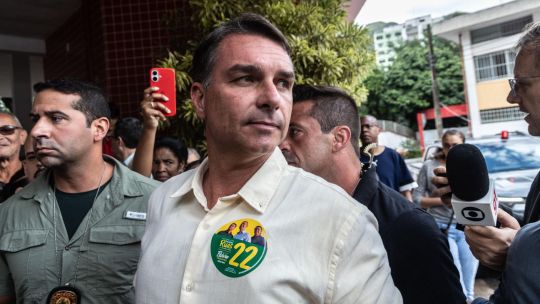


 4 sources
Morning Edition · Sunday, October 18, 2026Published at 1:07 AM EDT · New York
Flávio Bolsonaro leads Lula 51% to 49% in Datafolha poll a week before Brazil's runoff
The October 25 contest is a statistical tie. Meta admitted that "technical failures" hit Lula's campaign, and a university study warned that cuts to social benefits would hurt towns in Brazil's interior.
Senator Flávio Bolsonaro and President Luiz Inácio Lula da Silva enter the last week before the October 25 runoff in a statistical tie. A Datafolha survey released Thursday gave Bolsonaro 51% of valid votes. In Datafolha's first runoff poll on October 8, he led 52% to 48%, so the race has tightened slightly.
Each side is using a different measure of its chances. The Buenos Aires Times reported that Bolsonaro's allies cite Polymarket prediction odds as a truer reading of voter intent than the polls. On the left, Erika Hilton, a federal deputy, is seeking a congressional inquiry (a CPI, Brazil's parliamentary commission of investigation) into the role of large technology companies in the election. She acted after Meta admitted on Friday that "technical failures" had affected Lula's campaign. The right-leaning Partido Novo has filed a complaint with the electoral court against pro-democracy concerts planned for Sunday.
Fiscal policy is the main question for markets. A study by the Center for Research in Macroeconomics of Inequalities (Made) at the University of São Paulo, published by the state news agency Agência Brasil, warned that freezing or cutting social and pension benefits could cause a severe contraction in towns in Brazil's interior that depend on those transfers. The finding supports the government's case against spending restraint, and it also shows how hard any winner will find it to cut spending.
Part of a tracked trend
Emerging-Market Elections Turn on Fiscal Credibility
In large emerging markets, polarised elections keep making fiscal rules and congressional arithmetic, rather than the identity of the winner, the main determinant of currency and local-rate pricing.
Veracity: Corroborated
82/100- If true, who benefits
A tied race lets each camp prepare to dispute the result in advance (Bolsonaro's allies through prediction-market odds, Lula's allies through the inquiry into Meta), and holders of Brazilian real and local-rate positions face a binary bet on fiscal policy.
- The nuance
Datafolha's 51-49 split counts valid votes only, with 47% to 45% overall and a two-point margin of error, and Meta admitted technical failures but denied political interference and said Flávio Bolsonaro's campaign also reported failures.
An open-source-intelligence read of how likely this story is true with its real nuance, not a judgment of any outlet. It assesses the claim, weighing independent and adversarial reporting. How we label confidence.
What this means
Brazil's currency and local interest rates will react less to the winner's name than to the fiscal rules and the finance team that follow. Markets have partly priced a Bolsonaro victory as a turn toward spending discipline. The Made study shows why that may be wrong. Benefit transfers support demand across much of the interior, so any winner faces strong political resistance to cuts, and Congress has to approve them. The precedent is 2002. The real fell sharply before Lula's first victory, then recovered once his "Letter to the Brazilian People" and primary surplus targets showed he would keep fiscal discipline. The desk's read is that within weeks of the result, pricing of the real and local rates will turn on the first named finance minister and any statement on the spending framework. The read would be wrong if the winner names a team quickly but Congress rejects its first fiscal measure. Then the post-election rally, or sell-off, would reverse.
Synthesized from: MercoPress · Buenos Aires Times · InfoMoney · Agência Brasil
Townsquare
Start a discussion in Townsquare.
More from this edition
- Trump suspends Russia oil tariffs for 60 days as Brent crude nears $110
- Tankers hit near Hormuz as Trump rejects Iran's terms for reopening the strait
- US interest bill tops $1 trillion as hotter inflation revives Federal Reserve hike bets
- Credit markets turn against AI builders as CoreWeave bond yields approach 15%
- Ukrainian drones set fire to a St. Petersburg oil terminal as Russian strikes halt a car-parts plant in Lutsk
- France arrests 1,200 as cost-of-living protests turn to looting and arson
- Circle defends its USDC revenue split as Coinbase backs a rival that pays partners more
Comments
0No comments yet.