← The Global Intelligence Brief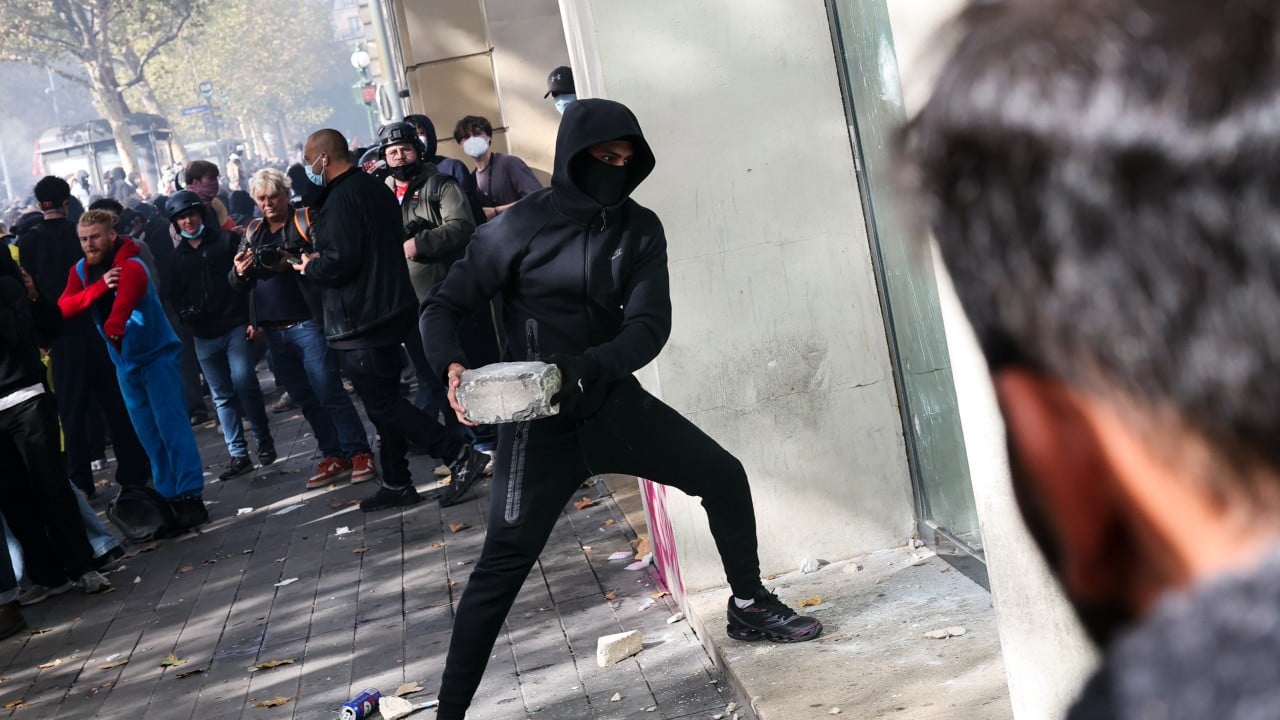


 4 sources
Morning Edition · Sunday, October 18, 2026Published at 1:07 AM EDT · New York
France arrests 1,200 as cost-of-living protests turn to looting and arson
About 550,000 people marched against rising prices and poor school conditions, and rioters burned Limoges' 143-year-old town hall, while Paris pushes a 2027 budget meant to cut the deficit to 5% of output.
French police arrested at least 1,200 people on Saturday, according to BBC News Hindi. About 550,000 people joined protests across the country against poor school conditions and rising prices. A movement that began with students has drawn in workers and unions.
The demonstrations turned violent in several cities. In Paris, masked groups smashed shop windows and carried off goods, and the South China Morning Post reported that they met no resistance from the authorities. Officials called the violence "unacceptable." In central France, rioters set fire to the 143-year-old Limoges town hall.
The protests are unfolding alongside a contested budget. Prime Minister Sébastien Lecornu's 2027 plan proposes spending cuts to bring the deficit down to 5% of gross domestic product next year. Il Sole 24 Ore reported that the yield on France's 10-year government bond was approaching 5% on the eve of the budget. Opposition is coming from outside the street protests too. More than 170 French filmmakers signed an open letter warning that the draft budget threatens the survival of national cinema.
Outlets reported the same events with different emphasis. Russian business channels presented the scenes as near-revolution. One Telegram channel captioned its footage "This is a revolution". Western and Asian wire coverage described a protest movement with violent fringes.
Part of a tracked trend
The Long-End Revolt
Governments will keep reaching for balance-sheet tools to suppress long-term yields, and bond markets will keep repricing duration higher anyway, so each intervention transfers demand into scarce assets instead of lowering borrowing costs.
Veracity: Corroborated
80/100- If true, who benefits
Opposition parties and unions gain leverage to rewrite Prime Minister Sébastien Lecornu's 2027 budget, and investors betting against French government bonds gain if the 5% deficit target slips.
- The nuance
Interior Minister Laurent Nuñez counted 550,000 marchers, while organizers counted 800,000, the arrest count rose from about 400 in his briefing to at least 1,200 by night, and the government blamed the ultra-left for the violence, while the report that looters met no resistance comes from a single outlet.
An open-source-intelligence read of how likely this story is true with its real nuance, not a judgment of any outlet. It assesses the claim, weighing independent and adversarial reporting. How we label confidence.
What this means
Synthesized from: BBC News Hindi · South China Morning Post · Euronews · BFM.ru
Townsquare
Start a discussion in Townsquare.
More from this edition
- Trump suspends Russia oil tariffs for 60 days as Brent crude nears $110
- Tankers hit near Hormuz as Trump rejects Iran's terms for reopening the strait
- US interest bill tops $1 trillion as hotter inflation revives Federal Reserve hike bets
- Credit markets turn against AI builders as CoreWeave bond yields approach 15%
- Ukrainian drones set fire to a St. Petersburg oil terminal as Russian strikes halt a car-parts plant in Lutsk
- Flávio Bolsonaro leads Lula 51% to 49% in Datafolha poll a week before Brazil's runoff
- Circle defends its USDC revenue split as Coinbase backs a rival that pays partners more
Comments
0No comments yet.